High Court Quashes Nairobi CBD Protest Ban, Awards Ksh 2.2M in Damages
The court not only nullified the ban but also awarded Kshs. 2.2 million in general and exemplary damages—Ksh 100,000 per petitioner—as compensation for the violation of their rights.
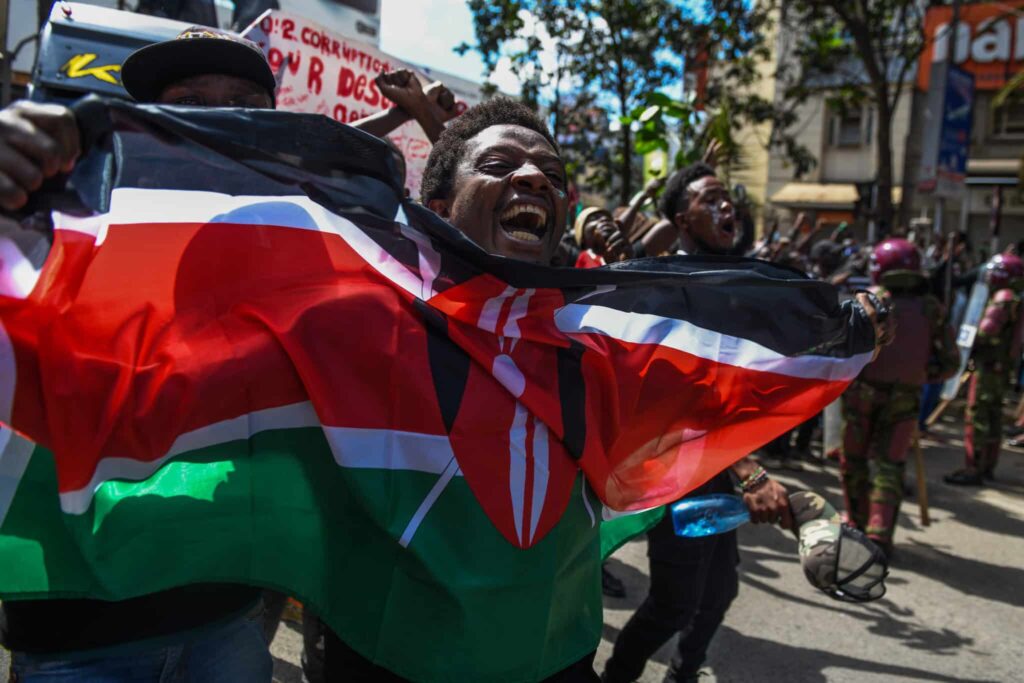
Kenyan youth stage protests in June – Image courtesy of CNBC Africa.
In a groundbreaking decision affirming the constitutional right to peaceful assembly, the High Court has ruled that a protest ban imposed within Nairobi’s Central Business District (CBD) was unlawful and unconstitutional.
Justice Bahati Mwamuye, presiding over the case, ruled that the blanket ban issued by Nairobi Police Commander Adamson Bungei during the anti-Finance Bill demonstrations in June 2024 violated the rights of citizens under Articles 27, 28, 29, 33, and 37 of the Kenyan Constitution.
“The directive was overly broad and not grounded in law. It unjustly limited fundamental freedoms,” Justice Mwamuye said in the judgment delivered Tuesday.
Petitioners Win Historic Case
The suit was filed by 11 protesters through their legal counsel, Pareno Solonka of Solonka & Solonka Advocates LLP, challenging the legality of the June 18, 2024, media alert by Bungei that effectively banned all protests within the CBD.
The court not only nullified the ban but also awarded Kshs. 2.2 million in general and exemplary damages—Ksh 100,000 per petitioner—as compensation for the violation of their rights.
Police in Plain Clothes Under Fire
A major point of contention in the case was the police’s deployment of plainclothes officers to disperse protesters—an issue also flagged by the Law Society of Kenya (LSK), which filed a related suit. The LSK argued that unidentifiable officers had enabled unlawful use of force, particularly during the protests that led to the death of Rex Masai, allegedly shot by an officer in civilian attire.
“This ruling confirms that rogue policing and faceless law enforcement have no place in a constitutional democracy,” said LSK President Faith Odhiambo, calling the decision “a major victory for civil liberties.”
The court directed that officers deployed for crowd control must be in full uniform and identifiable, warning that hiding faces or lacking badges was a breach of public trust and law.
This decision comes amid growing national concern over police handling of protests and the shrinking civic space. Human rights groups have repeatedly condemned excessive force used by law enforcement during demonstrations, especially during last year’s contentious Finance Bill protests.
Kenya’s 2010 Constitution guarantees the right to peaceful assembly under Article 37, yet recent state actions have sparked fears of a return to authoritarian-style policing.
For protesters, this judgment sets a vital precedent: law enforcement can no longer unilaterally restrict peaceful assemblies or deploy unidentified officers without accountability.
About Author