Hidden in Plain Sight: The Silent Struggle of Living with Endometriosis
Endometriosis is defined as a condition in which tissue similar to the endometrium, the lining of the uterus, grows outside the uterine cavity.
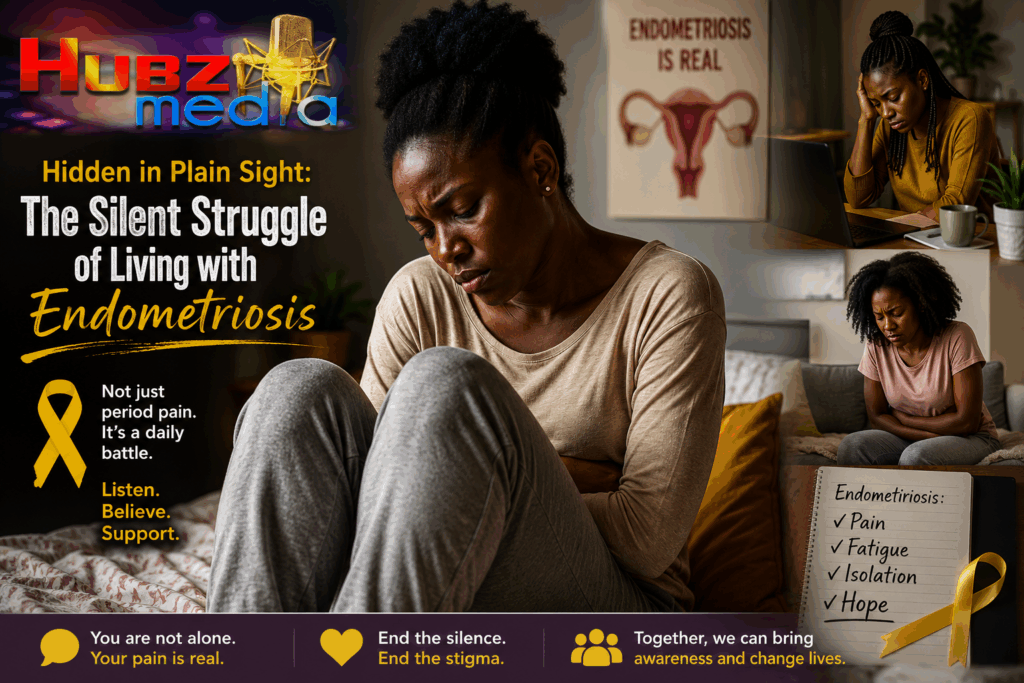
Photo: Hubz Media.
By Eve N Njeri
For centuries, severe pelvic pain in women was documented in medical literature but was frequently dismissed as a normal part of menstruation. Today, that pain is medically recognized as endometriosis, a chronic inflammatory condition that affects millions of women and girls globally, including an estimated 1.2 million in Kenya.
Endometriosis is defined as a condition in which tissue similar to the endometrium, the lining of the uterus, grows outside the uterine cavity. The ectopic tissue is most commonly found on the ovaries, fallopian tubes, and pelvic peritoneum, but can also affect other organs.
During each menstrual cycle, the misplaced tissue responds to hormonal changes by thickening, breaking down and bleeding. Unlike menstrual blood, which exits the body, this internal bleeding has no outlet. The result is chronic inflammation, severe pain, formation of ovarian cysts known as endometriomas, and development of adhesions — fibrous bands of scar tissue that can cause pelvic organs to adhere to one another.
According to the World Health Organization, endometriosis affects approximately 10 percent of women and girls of reproductive age globally, representing more than 190 million individuals. Data from the Global Burden of Disease database indicates that approximately 3.4 million new cases are diagnosed worldwide each year. In Kenya, prevalence estimates suggest 1.2 million women and girls are currently living with the condition, underscoring its significance as a public health concern.
Despite its prevalence, diagnosis remains a major challenge. Global studies show that patients experience an average diagnostic delay of 7 to 10 years. Medical experts attribute this to several factors, including normalization of severe menstrual pain, lack of awareness among primary healthcare providers, and symptom overlap with other conditions such as irritable bowel syndrome, pelvic inflammatory disease, and primary dysmenorrhea.
The clinical presentation extends beyond pelvic pain. Documented symptoms include dysmenorrhea (severe menstrual cramps), dyspareunia (pain during sexual intercourse), dysuria and dyschezia (pain during urination and bowel movements, particularly during menstruation), chronic pelvic pain, heavy menstrual bleeding, and fatigue. Endometriosis is also a leading cause of infertility, contributing to between 30 and 50 percent of infertility cases among affected women.
There is currently no known definitive cure for endometriosis. However, clinical guidelines indicate that symptoms can be managed through a multidisciplinary approach. First-line management includes non-steroidal anti-inflammatory drugs (NSAIDs) for pain control and hormonal therapies, such as combined oral contraceptives, progestins, and GnRH analogues, which aim to suppress ovulation and menstruation. For moderate to severe cases, laparoscopic surgery remains the gold standard for both diagnosis and treatment through excision or ablation of lesions and adhesiolysis.
Medical professionals emphasize that debilitating menstrual pain should not be considered normal. Women experiencing severe symptoms are advised to seek timely evaluation from a qualified gynaecologist for early diagnosis and appropriate management.
About Author