Governor Bii Faces Senate Heat Over Eldoret City Workforce Diversity, Revenue Sustainability
“But from the list of board members, I don’t know when because we are Kalenjins, but within the Kalenjin we have sub-tribes inside,” Governor Bii told the committee.
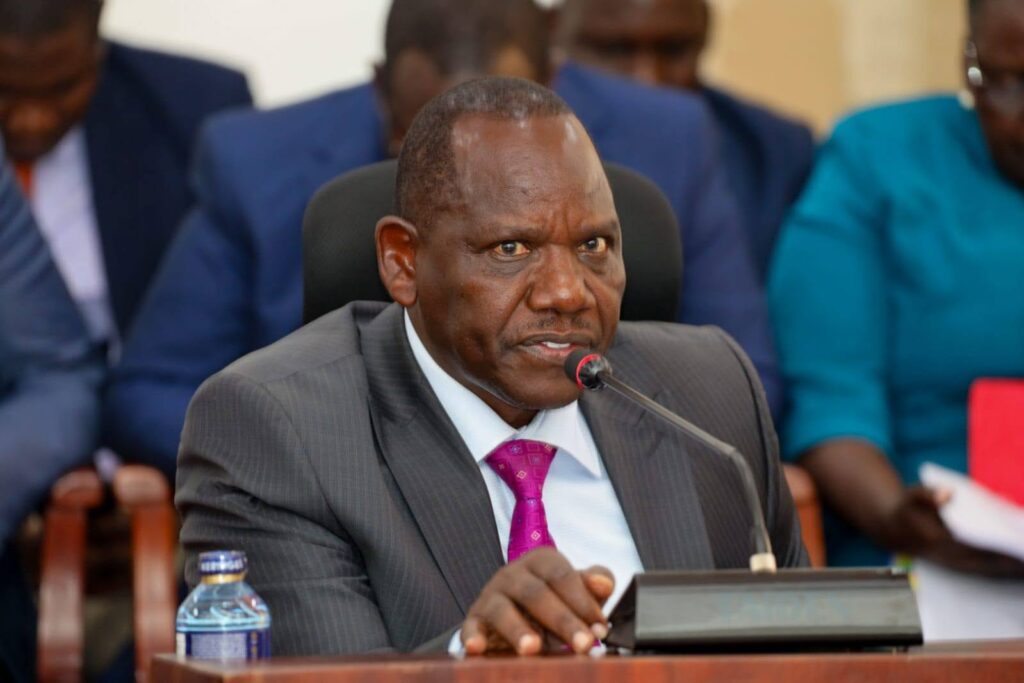
Uasin Gishu Governor Jonathan Bii Chelilim. Photo: Courtesy.
By Anneth Chepngetich
Uasin Gishu Governor Jonathan Bii Chelilim has come under renewed scrutiny over the governance and financial management of Eldoret City, with senators questioning the county administration’s record on ethnic inclusion, revenue mobilisation, project implementation and the city’s ability to sustain its expanded responsibilities.
Bii appeared before the Senate Standing Committee on Devolution and Intergovernmental Relations on Monday, where lawmakers demanded explanations over the composition of Eldoret City’s workforce and board, its revenue-raising capacity and preparations to provide services befitting Kenya’s fifth city.
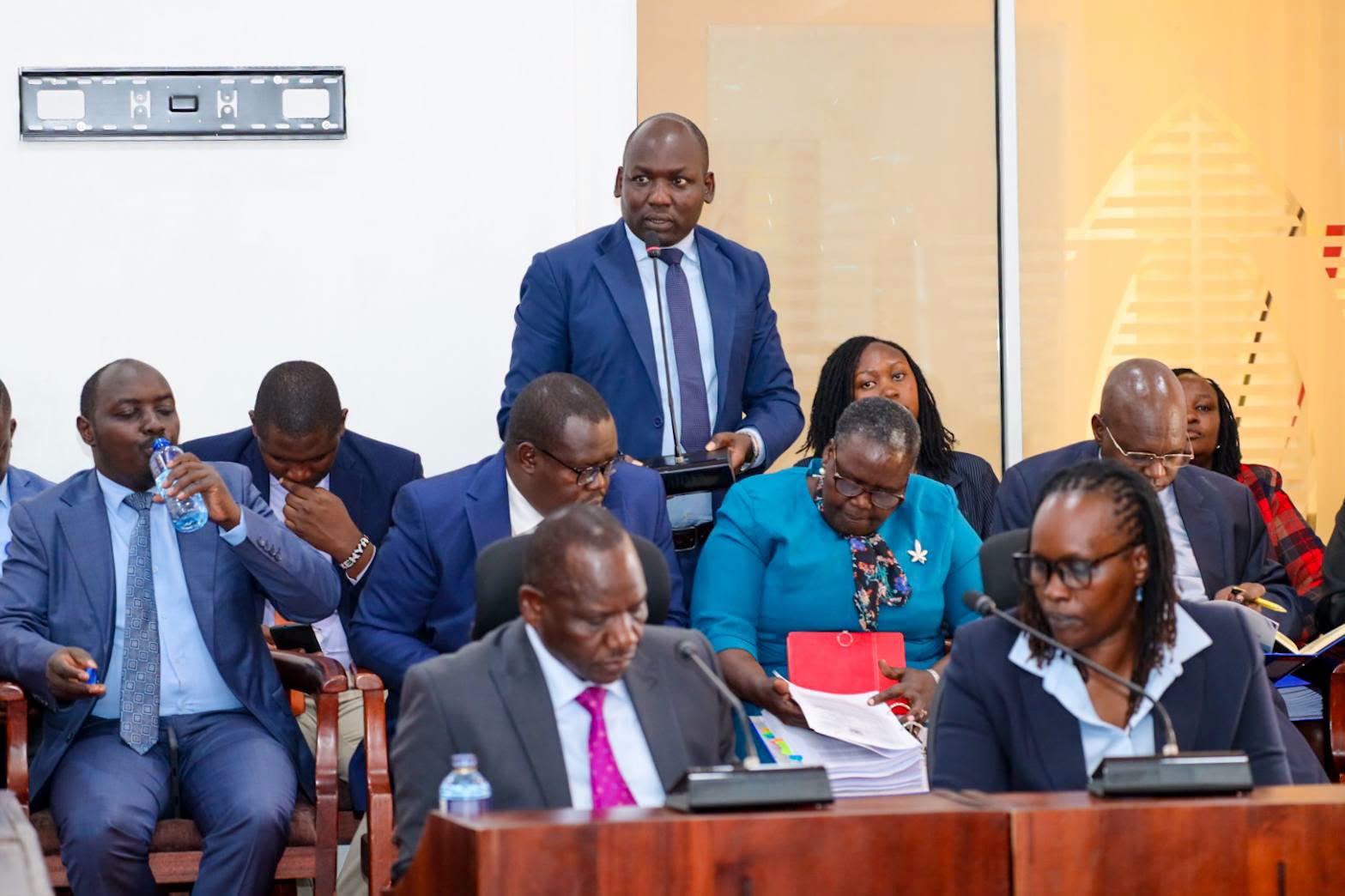
The interrogation places the Bii administration under growing pressure to demonstrate that Eldoret’s elevation to city status in August 2024 is translating into stronger institutions, better services and more inclusive opportunities for residents and Kenyans from across the country.
Senators question workforce diversity
One of the most contentious issues before the committee was the composition of Eldoret City’s workforce.
Senators raised concerns over reports that approximately 90 per cent of employees were drawn from one community, questioning whether the county had met constitutional expectations on diversity, equitable representation and fair access to public employment.
The committee also scrutinised the composition of the Eldoret City Board, arguing that the city serves a population drawn from different parts of Kenya and therefore its institutions should reflect that national character.
Governor Bii defended his administration, arguing that diversity should also be considered within the wider Kalenjin community, which has a strong presence in the North Rift.
“But from the list of board members, within the Kalenjin we have sub-tribes,” Bii told the committee.
The argument, however, attracted criticism from senators who warned against defining diversity primarily along intra-community lines when constitutional principles require broader national inclusion in public institutions.
Kajiado Senator Peris Tobiko cautioned that allowing counties to operate on such a model could encourage ethnic balkanisation and make it increasingly difficult for Kenyans to access employment opportunities outside their perceived ancestral counties.
“If Kajiado adopts a style of Eldoret, then we will be telling other Kenyans everyone to go back to his home. It’s terrible. Eldoret must behave like other parts of Kenya,” Tobiko said.
The Senate’s position is significant because Eldoret is no longer simply a municipal centre serving Uasin Gishu. Its elevation to city status has increased expectations that its administration should operate as a national commercial, educational, health, sports and investment hub.
Parliament has subsequently called for a review of the city’s governance and recruitment arrangements to ensure that future appointments comply with the law and provide equitable opportunities to qualified Kenyans.
Revenue question exposes the city’s financial challenge
The other major issue confronting Governor Bii was money.
Senators questioned whether Eldoret’s current own-source revenue base is strong enough to support a rapidly expanding city whose responsibilities include roads, drainage, waste management, street lighting, urban planning and public amenities.
Committee Chairperson and Wajir Senator Mohammed Abbas questioned the county’s revenue strategy, demanding evidence that Eldoret could finance its growing obligations without repeatedly turning to the national government.
“This is Kenya. I don’t know what your plan is for the city. Convince and convince the House that the city will meet all requirements so that you will not be embarrassed again next time that the city has failed,” Abbas told the governor.
The Senate put the city’s annual revenue collection at roughly Sh1.2 billion.
But official county financial data paints a more complicated picture.
The Controller of Budget’s FY2024/25 review shows that Uasin Gishu generated Sh1.35 billion in own-source revenue, including Facility Improvement Fund (FIF), a 4.9 per cent decline from the Sh1.42 billion collected in FY2023/24. The Sh1.35 billion represented 88.2 per cent of the county’s annual own-source revenue target.
The figures indicate that the challenge facing Eldoret is not merely how much money the city collects, but how effectively the county can expand and protect its revenue base as the urban economy grows.
Business permits were the county’s largest own-source revenue stream in FY2024/25, generating Sh254.09 million, or about 20 per cent of total own-source revenue. The Controller of Budget also reported that only two of 40 revenue streams had been automated, highlighting the potential for further digitisation and improved revenue administration.
Governor Bii, however, argued that the figures presented to senators did not capture the full revenue picture because health facilities generate additional income through Facility Improvement Funds.
He put the broader revenue figure at approximately Sh1.7 billion when hospital collections are included.
That argument comes against a history of audit questions over Uasin Gishu’s revenue management.
The Auditor-General’s audit of the county’s revenue statements for an earlier financial year identified a Sh66.04 million unexplained variance between the county’s reported own-source revenue and figures generated through the county’s payment system. The audit also questioned documentation supporting Sh124.17 million in cess revenue, including collections from farm produce and quarrying.
These findings give additional weight to the Senate’s demand for stronger revenue controls, particularly as Eldoret seeks to operate as a financially sustainable city.
Development projects raise another accountability question
The Senate’s interrogation of Eldoret’s finances comes against a broader record of project implementation challenges in Uasin Gishu.
The Auditor-General’s 2023/24 summary report listed three stalled or abandoned projects in Uasin Gishu with a combined contract value of Sh826.05 million.
The scale of stalled investments is particularly significant in a county seeking to position Eldoret as a modern investment and logistics hub.
The wider national fiscal picture also raises questions about the county’s capacity to turn budget allocations into completed projects.
According to the Treasury’s analysis based on Controller of Budget data, Uasin Gishu recorded a 48.9 per cent development-expenditure absorption rate in FY2023/24, against a national county average of 57.5 per cent. In other words, the county absorbed less than half of its development budget during the period.
The figure is important because development absorption is ultimately about whether approved infrastructure and service-delivery projects are actually implemented rather than remaining on budget documents.
The county has itself acknowledged the need to accelerate implementation.
In a recent review of ward projects, Uasin Gishu officials said they were assessing flagship, donor-funded and ward-based projects dating back to FY2022/23, while identifying stalled projects and underserved areas. The county said it was developing measures to facilitate completion of stalled ward projects.
Some projects remain unfinished
The county’s own project records provide examples of the implementation challenge.
In Moiben, the proposed Sh150 million Level IV Hospital project was listed as stalled after excavation and trenching, with the main hospital block still incomplete.
The same project records show that construction of an X-ray block at Moiben Sub-County Hospital had reached about 50 per cent, with the contractor having deserted the site and installation of specialised equipment still pending.
Another major investment, the County Aggregation and Industrial Park, had a reported project value of approximately Sh510 million and was listed at about 31 per cent implementation in the county’s project tracking records. The project is jointly funded by the national and county governments.
These projects matter to the Eldoret city debate because the city’s economic ambitions depend on infrastructure extending beyond the central business district to surrounding wards and satellite urban areas.
The challenge is therefore not simply to announce projects, but to ensure that allocated resources produce functioning roads, hospitals, drainage systems, markets, water infrastructure and economic facilities.
Previous parliamentary audit questions
The current Senate scrutiny is also not the first time Uasin Gishu’s financial and project management has attracted parliamentary attention.
In October 2024, the County Public Accounts Committee ordered Governor Bii to explain a Sh654 million disparity between revenue received by the county in FY2022/23 and transactions reflected in the Integrated Financial Management Information System.
Parliament reported that the county’s revenue receipts showed Sh9.3 billion, while IFMIS transactions totalled Sh9.9 billion, leaving the Sh654 million difference requiring explanation.
Eldoret Municipality has also previously faced audit scrutiny.
A parliamentary report on the municipality’s financial statements recorded a qualified audit opinion and raised questions including the treatment of capital grants and asset valuation. One audit issue involved Sh54.34 million in transfers from other government entities, while the municipality reported property, plant and equipment valued at Sh137.85 million whose accuracy could not be fully confirmed under the audit issue cited by Parliament.
These historical queries do not, by themselves, establish wrongdoing. They do, however, demonstrate why the Senate’s latest demand for stronger financial controls and clearer accountability carries significance as Eldoret transitions into city administration.
Bii’s economic argument
Governor Bii has sought to counter concerns over Eldoret’s financial sustainability by pointing to the city’s economic potential.
He told senators that the county intends to expand revenue and investment opportunities by leveraging Eldoret’s position in athletics and sports, healthcare, agriculture, logistics and education.
The strategy is intended to transform the city from a traditional administrative and commercial centre into a regional economic hub capable of generating more employment, investment and own-source revenue.
The argument comes at a time when Uasin Gishu is attempting to attract more private investment and complete large public infrastructure projects.
But senators’ central question remains whether the county’s revenue growth and project implementation capacity are keeping pace with the city’s expanding responsibilities.
The test for Eldoret City
The Senate’s intervention has therefore moved the Eldoret city debate beyond the question of whether the city has received its legal status.
The more consequential question is whether the county can build institutions that are inclusive, financially sustainable and capable of delivering services at city scale.
For Governor Bii’s administration, that means addressing concerns over workforce diversity while strengthening recruitment systems, improving revenue collection, closing identified revenue-control gaps and ensuring that stalled projects are completed.
The county will also have to demonstrate that its development budget translates into visible infrastructure and services.
The Controller of Budget’s revenue figures, Auditor-General’s findings on stalled projects and revenue controls, and Parliament’s previous audit queries collectively suggest that the challenge facing Uasin Gishu is not a shortage of development plans.
It is the ability to convert those plans and budgets into completed projects, stronger revenue, accountable institutions and measurable improvements in the lives of residents.
The Senate has now placed those questions squarely before Governor Bii.
The response will determine whether Eldoret’s city status becomes merely a change in administrative designation—or the foundation for a genuinely better governed and financially stronger urban centre.
About Author