Government to Impose Assets from Criminal Business of Illicit Alcohol and Drug Trade
The CS pointed out that while proceeds of crime and money laundering legislation have traditionally been applied to combat corruption

Murkomen called for judicial reforms, suggesting that the penal code be reviewed to allow presumptions of guilt where individuals lack the necessary licenses.Photo/KBC Digital
By Juliet Jerotich
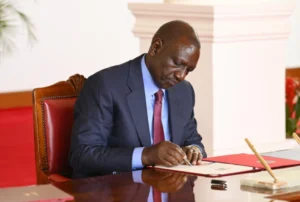
Interior Cabinet Secretary Kipchumba Murkomen has rolled out a new harsher strategy for dismantling organized crime groups that are involved in illicit alcohol production and drug trafficking. In the new plan, the government, through the Interior Ministry, will work closely with the Asset Recovery Agency (ARA) to pursue and seize assets and money earned through the illegal enterprises.
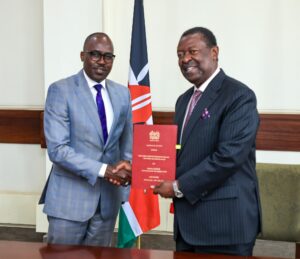
Speaking at the launch of Kenya’s National Policy on Prevention, Management, and Control of Alcohol, Drugs, and Substance Abuse, Murkomen complained of the persistent issue of illegal business in spite of continued government intervention. He was deploring that the majority of the culprits receive light judgments in court, and thus they engage in their illegal activities again immediately they are released.
“With this cycle of light fines and quick releases, criminals are only encouraged,” said Murkomen. “We intend to make dealing in substandard liquor and drugs much more punitive by going after their profits and their assets.”
The CS pointed out that while proceeds of crime and money laundering legislation have traditionally been applied to combat corruption, they also carry legal provision to recover proceeds from other serious crimes like the sale of spurious liquor and drug dealing.
“We will engage the Asset Recovery Agency to ensure the perpetrators of this venture lose lorries, vehicles, machinery, companies, and any other property they have acquired through criminal means,” Murkomen stated.
The government plans to utilize recovered assets in the process of rehabilitating buildings, awareness campaigns, and the treatment of substance abuse victims, according to him.
Murkomen also shed light on challenges faced by law enforcement officers, particularly Officers Commanding Stations (OCSs), who often become targets of political pressure when they crack down on the illicit trade. “We’ve discovered that some of these complaints against officers have little to do with governance—they are attempts by individuals trading in toxic alcohol to shield themselves,” he revealed.
The Interior CS stated the crackdown would involve all ranks of administrators, ranging from chiefs, assistant chiefs, to village elders. Police officers caught conspiring with criminals will be dismissed and prosecuted.
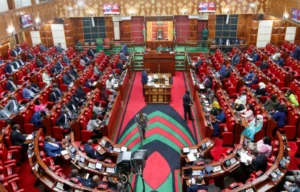
Furthermore, Murkomen called for judicial reforms and suggested employing the penal code to make assumptions of guilt where individuals do not possess the necessary licenses. He directed regional and county commissioners to visit court users’ associations to sensitize magistrates and judges regarding the seriousness of the issue.
About Author