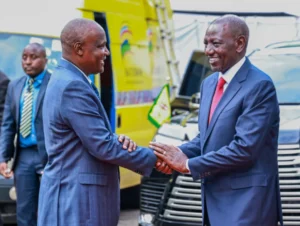
Government Rolls Out National Automotive Policy to Boost Local Manufacturing
According to the Government, this will go a long way in positioning Kenya as a competitive regional hub for automotive production through fostering innovation and value chain development.
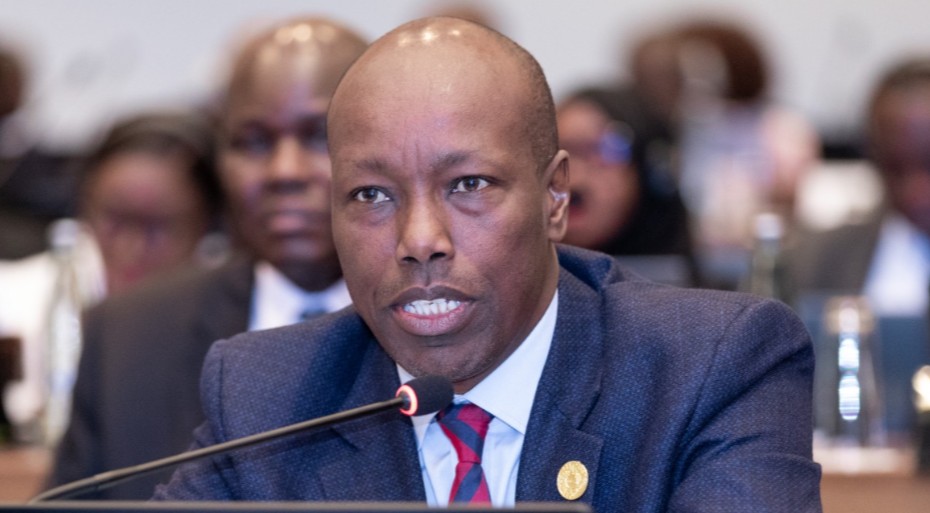
Trade Cabinet Secretary Lee Kinyanjui. Photo/Courtesy
By Ruth Sang
Trade Cabinet Secretary Lee Kinyanjui has announced that the government has rolled out the Kenya National Automotive Policy, a strategy meant to revive the country’s automotive sector by promoting local assembly and manufacturing while gradually reducing dependence on imported second-hand vehicles.
According to Kinyanjui, the policy introduces various incentives and tax measures intended to stimulate the growth of domestic industries. Included among the key provisions is the duty remission scheme, envisioned to regularize the importation of critical components while encouraging the application of parts manufactured locally. He added that these measures would significantly strengthen the capacity of local firms and heighten the competitiveness of Kenya’s automotive sector.
The Cabinet Secretary also disclosed that the government intends to float a bond in Japan, while setting aside at least Sh13 billion to offer subsidized credit to firms that can manufacture vital motor vehicle components. These are components such as tyres, batteries, windscreens, and other accessories that are mainly imported. According to Kinyanjui, the move is aimed at cushioning firms that have shown potential to contribute significantly to the growth of a viable automotive ecosystem.
He highlighted that the policy heralds a major milestone in the country’s journey toward a thriving and self-sufficient automotive industry. It is envisaged that through its implementation, various jobs will be created, technology transfer promoted, and the overall contribution of the manufacturing sector to Kenya’s Gross Domestic Product enhanced. According to the Government, this will go a long way in positioning Kenya as a competitive regional hub for automotive production through fostering innovation and value chain development.
Although Kenya imports about 7,600 second-hand vehicles monthly, with only 430 units assembled locally, Kinyanjui remained optimistic that this new policy would trim the imbalance. He added that the strategy would help in reducing overdependence on imported spare parts, adding that it would promote growth in local industries engaged in the assembly and component manufacturing of vehicles. Currently, Kenya assembles vehicles for leading Original Equipment Manufacturers like Toyota, Volkswagen, and Nissan. The CS pointed out that under the new policy environment, with improved incentives and a more clearly laid out regulatory framework, the country is well-placed to expand manufacturing capacity further. He reiterated the government’s commitment to strengthening the sector and ensuring that local manufacturers benefit from emerging opportunities within the automotive value chain.
About Author