Fish Hatchery to Scale Up Production in Homa Bay
The hatchery has also been welcomed by regional community leaders, who believe it has the potential to stimulate the local economy.

Victory Group, one of the largest players in Kenya's aquaculture sector, is poised to scale up its fish production multiple times with the launch of a new hatchery plant in Homa Bay County. Photo / Courtesy
By Juliet Jerotich
Victory Group, one of the largest players in Kenya’s aquaculture sector, is poised to scale up its fish production multiple times with the launch of a new hatchery plant in Homa Bay County. The expansion is expected to increase the company’s capacity and go a long way in addressing the country’s fish supply gap.
The hatchery opening is a significant step forward for the company, which has spent the past decade constructing and developing sustainable fish farming enterprises throughout the Lake Region.
The new plant, as per Steve Moran, Victory Group Co-founder and Chief Aquaculture Officer, can produce 30,000 metric tons of fish annually — that’s equivalent to about 60 million fish or about one kilogram of fish for every Kenyan.
This modern hatchery gives us the ability to raise production by a great amount. While last year we achieved one-fish-per-person production, this new facility allows us to triple this to three fish per Kenyan per year,” Moran remarked during the launch.
The hatchery is built to supply two large fish farming regions. The fingerlings will be bred in the hatchery and then transported to grow-out facilities and subsequently processed in a nearby plant for distribution nationally.
The venture is in tandem with national aspirations of lowering the country’s current fish production deficit. Speaking on behalf of the Director General of the Kenya Fisheries Service, Dr. Simon Macharia revealed that the country is at present producing only 25% of its total annual fish requirement of 450,000 metric tons.
He praised the role of private sector investments like Victory Group in plugging this gap, through innovations like cage fish farming. This is helping to ease pressure on dwindling wild fish stocks in Lake Victoria.
“The government is keen on supporting private initiatives. This hatchery will not only benefit Victory Group but other local farmers will also be able to obtain the fingerlings from here,” Macharia noted.
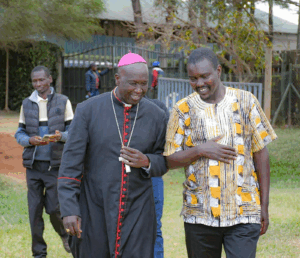
The hatchery has also been welcomed by regional community leaders, who believe it has the potential to stimulate the local economy. Secretary of the Kaksingri Council of Elders, Joab Ikawa, noted the employment possibilities offered by the facility, especially for the youth and retired individuals who would wish to rent land for fish farming.
He also called on national and county governments to invest in infrastructure—particularly road networks—to enable the easy transport of the highly perishable fish products.
Host sublocation Assistant Chief, Walter Odiga, acknowledged the role of Victory Group in lowering unemployment and crime patterns over the past decade. He said the new hatchery would further enhance livelihoods, particularly among youths and women, by creating job opportunities and increased income generation.
About Author