Elgeyo Marakwet Unveils New Policy to Coordinate and Strengthen Environmental Restoration Efforts
Such collaboration is expected to enhance the technical capacity of the county while providing practical tools for effective landscape restoration.

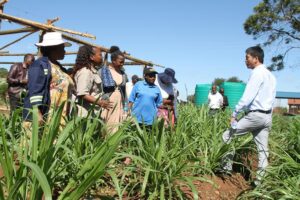
Residents-who rely on natural resources for farming, grazing, and other livelihood activities-have expressed optimism that a coordinated approach will reduce environmental degradation and foster sustainable resource use. Photo/Courtesy
By Ruth Sang
Elgeyo Marakwet County is adopting an all-inclusive landscape restoration policy meant to streamline and bring consistency in environmental conservation efforts within the region. Such a policy aims at eliminating the fragmented and uncoordinated approach that has long retarded progress in the management of natural resources and the restoration of degraded landscapes.
Over the years, different departments and organizations have undertaken multiple environmental projects within the county. Most of them, however, have worked in isolation from one another. The absence of formalized collaboration among national and county government offices, as well as other key stakeholders, has resulted in discrepancies in planning, a lack of transparency regarding implementation processes, and unpredictable timelines. The new policy launched aims at bridging these discrepancies by making sure all operators work within a standardized framework.
According to a county official who participated in developing the framework, the policy’s main objective is to establish a clear and collaborative platform where every agency involved in ecosystem restoration can coordinate their roles effectively. “This landscape restoration policy is geared toward strengthening communication among all stakeholders. By aligning efforts and encouraging synergy between the county and national government, we aim to build an effective system that produces measurable conservation outcomes,” the official said.
Indeed, the introduction of the policy has been lauded by conservationists, environmental groups, and community members. According to many, it will bring much-needed order into ecosystem management and ensure that long-lasting benefits are achieved from restoration initiatives. Residents-who rely on natural resources for farming, grazing, and other livelihood activities-have expressed optimism that a coordinated approach will reduce environmental degradation and foster sustainable resource use.
One of the strong points of the new policy is a focus on sustainability and scientific guidance. The county has collaborated with the World Resources Institute, WRI, to ensure that all the strategies and interventions applied have a core basis in research and global best practices. Such collaboration is expected to enhance the technical capacity of the county while providing practical tools for effective landscape restoration.
The policy has provisions for biodiversity conservation, land rehabilitation, and climate-resilient land management. It emphasizes participatory planning, where restoration activities are shaped by collective input of community members, government institutions, conservation groups, and development partners.
Through this policy, Elgeyo Marakwet County desires to position itself as an example in integrated environmental conservation. Through the development of this policy, a coordinated structure is aimed at bringing all actors together with the intent of setting an example for other regions that face similar challenges. The leadership believes that this policy will not only improve environmental outcomes but also support local livelihoods and build resilience against climate-related threats. However, this policy launch represents a very important step toward the holistic management of natural resources and shows that the county is committed to protecting its landscapes for future generations.
About Author