Education Stakeholders Demand Timely Release and Increased Capitation as CBE Resource Needs Grow
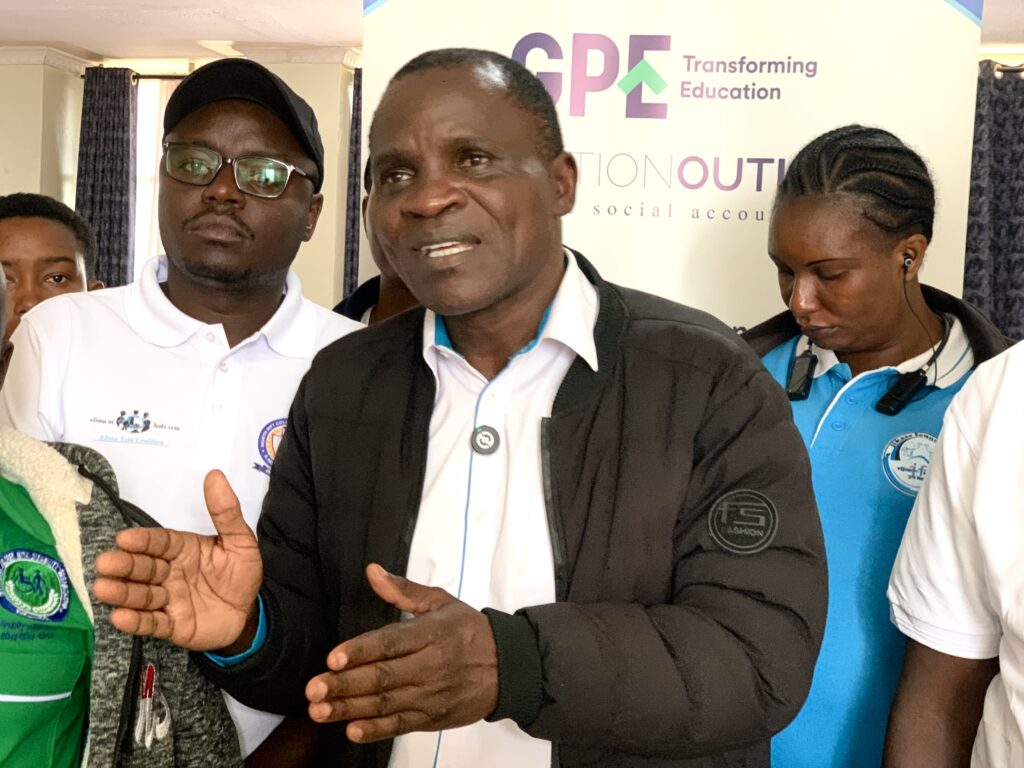
Joseph Wasikhongo, an official from the Elimu Yetu Coalition, speaks to the media during an education stakeholders' workshop in Eldoret on the need for adequate funding and support for learners.
By James Gitaka
Education stakeholders in the North Rift have urged the national government to increase capitation to public schools and ensure the funds are released on time, warning that delayed and inadequate financing is placing an increasing financial burden on families and threatening equitable access to quality education.
The concerns were raised during a meeting bringing together civil society organisations from the North Rift region, education stakeholders and parents, including representatives from informal settlements, to discuss challenges affecting learners and schools.
The stakeholders said the need to increase capitation is in line with recommendations made by the Presidential Working Party on Education Reform (PWPER), which was established to evaluate the country’s education system and guide reforms, particularly following the introduction of the Competency-Based Curriculum and the transition to Competency-Based Education.
The 42-member task force was appointed by President William Ruto in September 2022 and was chaired by the late Prof Raphael Munavu. The team was tasked with evaluating the implementation of the Competency-Based Curriculum (CBC) and recommending major legal, policy and structural reforms across Kenya’s education sector.
Among its key recommendations was the need to review education financing to reflect the increased resource requirements under the new competency-based system.
The stakeholders noted that the implementation of CBE requires schools to provide a wider range of learning materials, practical resources and other facilities, making increased and predictable capitation critical.
In its 2023 recommendations, the Presidential Working Party on Education Reform proposed a capitation allocation of KSh 2,238 per primary school learner and KSh 15,043 per junior school learner, alongside a basic needs package for schools with low enrolment.
The stakeholders are now calling on the government to implement the recommendations by increasing capitation and ensuring that schools receive adequate funding without unnecessary delays.
Uasin Gishu Parents Association Chairperson Dr Rebecca Omollo said the government must prioritise the timely release of funds and review capitation levels to enable schools to effectively meet their operational and learning needs.

“The need to increase capitation is clear because the new education system requires more learning resources. Public schools cannot effectively implement the curriculum when the available funds are inadequate or delayed,” Dr Omollo said.
Parents from low-income communities said delays in the release of capitation funds often force families to dig deeper into their pockets to provide learning materials and other basic requirements for their children.
Collins Kemboi, a parent who attended the meeting, said many families are already struggling with the rising cost of living and cannot afford additional education-related expenses.

“When schools do not receive funds on time, parents are often forced to purchase learning materials and meet other requirements. This is particularly difficult for families living in informal settlements and other low-income areas,” Kemboi said.
The stakeholders warned that delayed funding, coupled with inadequate capitation, could undermine efforts to ensure equal access to education, particularly for children from vulnerable and disadvantaged backgrounds.
Elimu Yetu Coalition official Joseph Wasikhongo said education financing must take into account the different challenges faced by learners from poor households and marginalised communities.
“The government must ensure that the implementation of CBE does not widen the gap between children from well-resourced families and those from poor households. Adequate capitation and targeted support are necessary to guarantee equal opportunities for every learner,” Wasikhongo said.
The stakeholders also called for increased investment in school feeding programmes, particularly for learners from vulnerable households and informal settlements.
They said access to regular and nutritious meals at school plays a crucial role in improving attendance, retention and participation in learning, especially among children from food-insecure families.
Beyond school meals, the participants called for targeted support to provide stationery, learning materials and other basic educational necessities to learners living in difficult circumstances.
They warned that unless the financial burden on parents is reduced through adequate government funding, children from low-income households could continue facing significant disadvantages, further widening existing inequalities in the education sector.
The stakeholders are now appealing to the national government to prioritise the full implementation of the PWPER recommendations, increase capitation in line with the resource demands of Competency-Based Education, ensure timely disbursement of school funds and strengthen targeted support programmes to ensure that no learner is left behind.
About Author