EACC Calls for Increased Funding and Personnel to Strengthen Fight Against Corruption
Speaking during the engagement, EACC Director of Legal Services David Too said the Commission requires more resources to expand its operations.
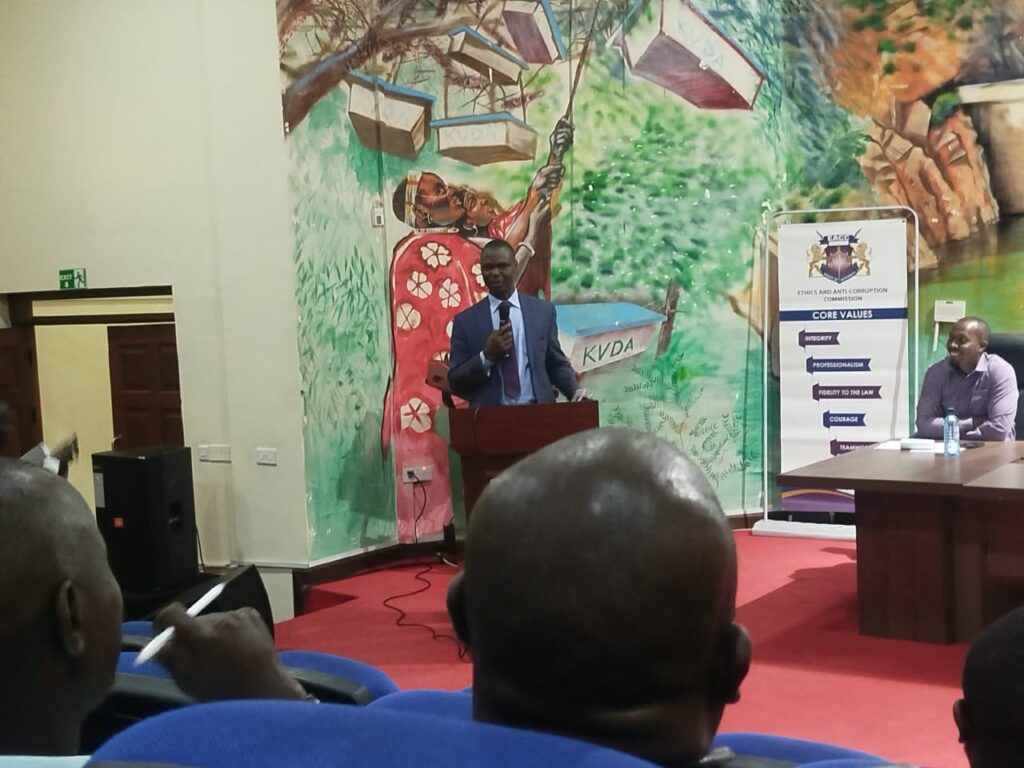
Photo by Hubz Media.
By Anneth Chepngetich
The Ethics and Anti-Corruption Commission (EACC) has called for increased funding and additional personnel to strengthen its efforts in investigating and combating corruption across the country.
The Commission says inadequate resources and capacity remain among the key challenges affecting its ability to effectively handle the growing number of corruption cases reported by members of the public.
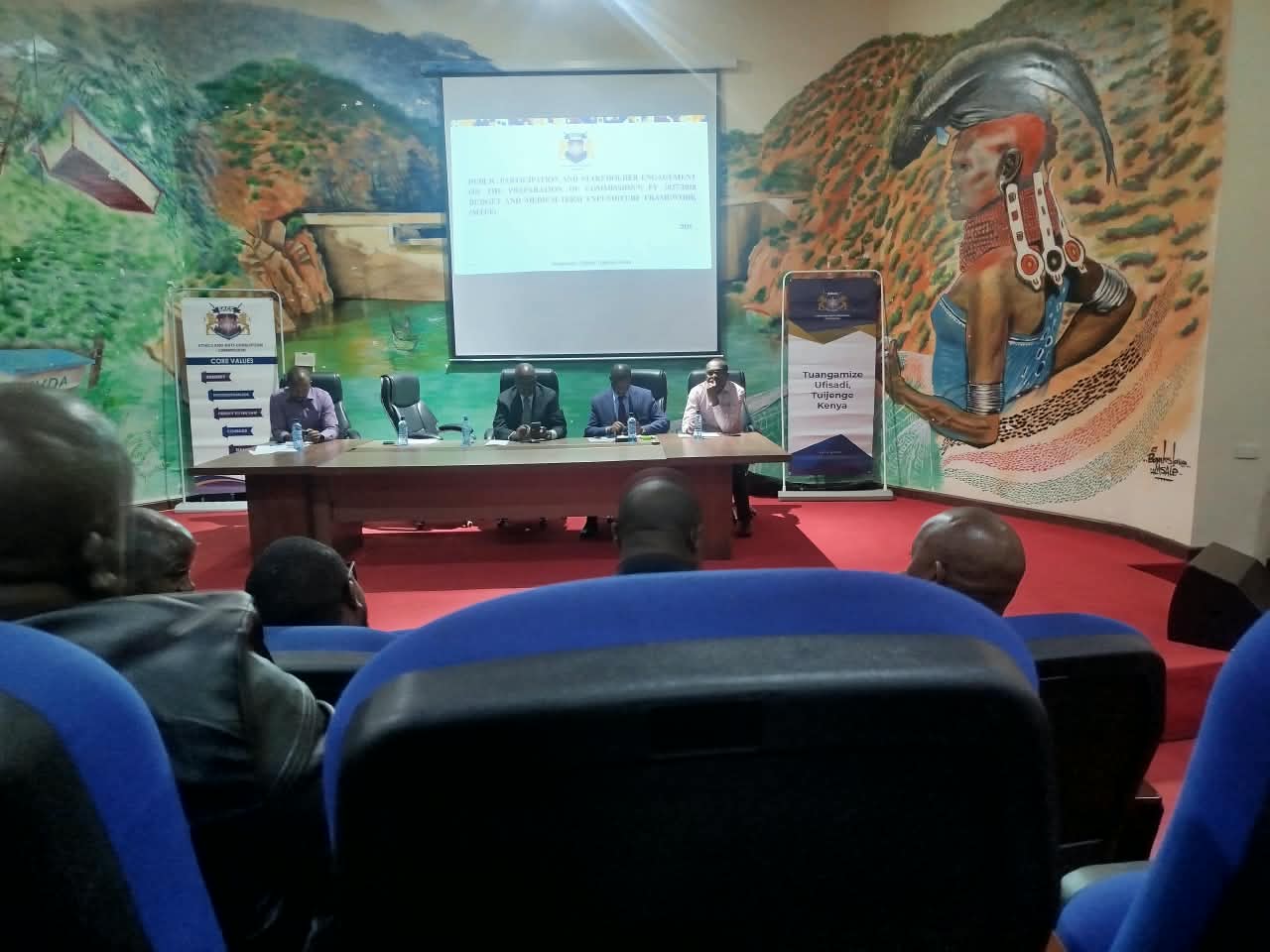
This emerged during a public participation and stakeholder engagement forum in Eldoret, Uasin Gishu County, on the preparation of the Commission’s 2027/2028 Financial Year budget and Medium-Term Expenditure Framework (MTEF).
Speaking during the engagement, EACC Director of Legal Services David Too said the Commission requires more resources to expand its operations.
“We need much more. It is not an issue that money will always be enough, but we appreciate what has been given to us for now, and we will still be asking for more,” Too said.
Too said the Commission is currently prioritising the monitoring of capital-intensive projects undertaken by both county and national governments, noting that additional funding would enable it to oversee more projects.
“The focus of the commission currently is to monitor capital-intensive projects, and with more resources we shall be able to monitor more projects that are being undertaken both in the county governments and national government,” he added.
Asset Recovery a Key Priority
The Commission is also prioritising the recovery of assets acquired through corrupt activities, which Too said is critical in deterring individuals from engaging in corruption.
“Asset recovery is key in deterring people from engaging in corruption because whatever they have benefited is taken away from them,” he said.
The Commission further identified privacy at public service delivery points as one of the areas requiring attention in its efforts to prevent corruption and unethical conduct, particularly in sectors where citizens interact directly with public officers.
Budget Increase and Recruitment
Too said the Commission’s budget has increased from KSh4.3 billion in the previous financial year to approximately KSh4.9 billion in the current financial year, an improvement that has supported its operations and recruitment.
“During the previous year, we had a budget of 4.3 billion shillings and this year we are having a budget of 4.9, close to 5 billion. So we are seeing that there is an improvement,” he said.
He said the increased allocation has partly supported the recruitment of about 100 additional members of staff, although more personnel are still required to meet the Commission’s workload and its expanding mandate across the 47 counties.
For the 2026/2027 Financial Year, the Commission’s approved expenditure is approximately KSh4.973 billion for recurrent expenditure and KSh123 million for development expenditure.
EACC Reports Achievements
During the engagement, EACC highlighted several achievements recorded in the 2025/2026 Financial Year.
The Commission investigated 572 cases involving corruption, economic crime, bribery and unethical conduct and forwarded 178 files to the Director of Public Prosecutions (DPP) for further action.
It also recovered corruptly acquired assets, unexplained wealth and irregularly obtained assets valued at approximately KSh3.6 billion.
The Commission filed 11 applications and obtained preservation orders for assets valued at approximately KSh7.3 billion, while 46 recovery suits involving assets valued at approximately KSh14.1 billion were filed before the courts.
EACC also undertook 11 system examinations and corruption risk assessments in various public institutions to identify and mitigate corruption loopholes.
Focus on Young People
The Commission has also continued to involve young people in its anti-corruption awareness programmes through schools and other platforms.
Too sad learners have not been left out of efforts to promote ethics and integrity.
“We have integrity clubs in schools and also have been using music and drama festivals to educate them, so the learners have not been left out,” he said.
The initiatives seek to equip young people with knowledge on ethical conduct and encourage them to become champions of integrity in their communities and future workplaces.
Collaboration in the Fight Against Corruption
Too said EACC cannot fight corruption alone and continues to work with regulatory and oversight agencies as well as professional organisations to strengthen accountability.
He also acknowledged the support of development partners in strengthening the capacity of EACC officers through training and technical support.
The Commission has identified several challenges that could affect its operations, including a weak legal and institutional framework, inadequate resources and capacity, increasingly complex forms of corruption, technology gaps and challenges involving the public and whistleblowers.
The public participation forum in Eldoret is expected to provide an opportunity for citizens and stakeholders to give their views on the Commission’s priorities and areas requiring increased investment. The views gathered will inform the preparation of the 2027/2028 budget and MTEF, with the Commission seeking to strengthen investigations, monitor government projects, recover corruptly acquired assets, prevent corruption and promote ethical conduct.
About Author