Court of Appeal Reinstates NG-CDF Act After Overturning High Court Ruling
The National Assembly filed an appeal against the High Court ruling which declared the NG-CDF Act unconstitutional in September 2024.
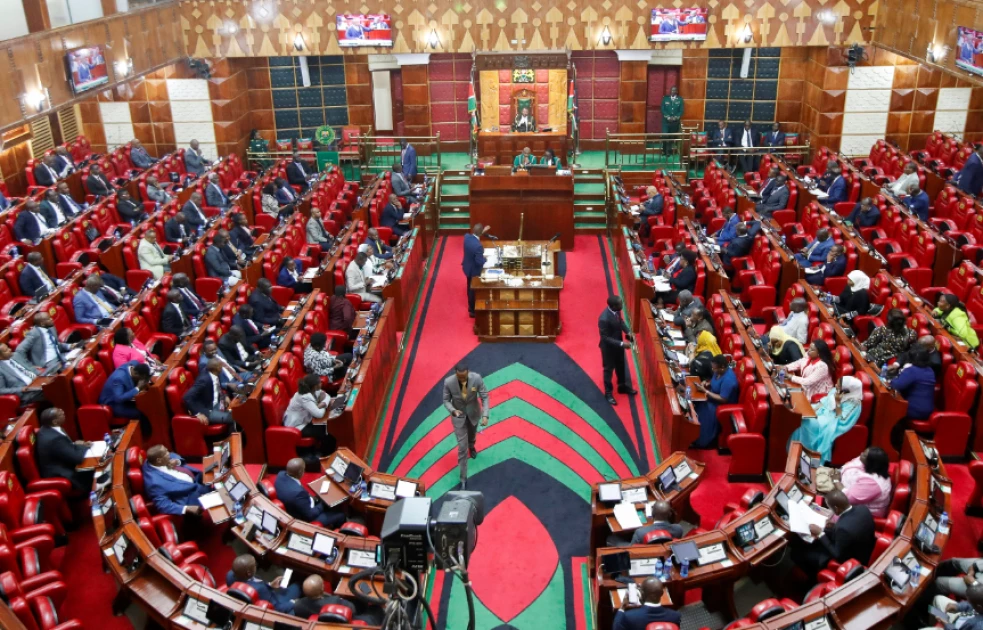
A general view shows Kenyan Members of Parliament as they discuss the impeachment of then Deputy President Rigathi Gachagua inside the Parliament buildings in Nairobi, Kenya October 8, 2024. FILE PHOTO | REUTERS
By Ruth Sang
The Court of Appeal reversed a High Court decision which had determined the National Government Constituencies Development Fund NG-CDF Act 2015 to be unconstitutional bringing relief to Members of Parliament and establishing the law’s existence again except for one minor part.
The three-judge Court of Appeal bench which includes President Justice Daniel K Musinga and Justice Francis Tuiyott and Justice A O Muchelule issued their judgment on Friday morning which nullified the High Court’s ruling and decree from September 2024.
The appellate judges determined that the High Court had made mistakes when it interpreted constitutional law and when it provided judicial remedies. The Court of Appeal found that the lower court completely nullified the entire Act without completing sufficient constitutional evaluation which required detailed examination of constitutional principles and actual textual evidence particularly regarding public finance and devolution and separation of powers.
The judges determined that the High Court case remained active despite the introduction of new amendments to the NG-CDF Act in 2022 and 2023. They concluded that the Act does not harm the system of devolution and it complies with the constitutional requirement for sharing authority between national and county governments.
The Court of Appeal reached its decision after reviewing the High Court ruling about separation of powers because it found this section to be unconstitutional according to its ruling which applied only to Section 43(9) of the Act. This section linked the tenure of a constituency fund manager to the term of Parliament and election transition timelines. The court declared this rule violated the separation of powers principle thus it must be excluded from legal regulations.
The appellate court rejected the High Court decision which declared NG-CDF Act violations of public finance principles. The court emphasized that legislation should not be struck down based on imagined or speculative harm. The judges confirmed that NG-CDF expenses form part of national expenditures which the National Assembly authorized through the Appropriations Act.
The Act includes multiple mechanisms for accountability which require organizations to complete accounting processes and undergo Auditor-General audits and receive parliamentary oversight.
The Court of Appeal overturned the earlier ruling because the High Court failed to conduct a thorough examination of the disputed provisions against constitutional standards while the High Court also failed to demonstrate specific constitutional violations which existed in the law. The judges cited the Supreme Court case U S v Butler 1936 to establish that courts exist to evaluate legislation’s constitutional status rather than its legislative merit.
The National Assembly filed an appeal against the High Court ruling which declared the NG-CDF Act unconstitutional in September 2024.
About Author