Civilians in Sudan’s al-Fashir Hide from Drones as Hunger and Violence Escalate
Local footage verified by Reuters showed bodies covered with sheets and a small prayer rug laid over the body of a child—a gruesome reminder

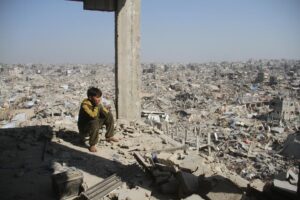
Al-Fashir, now famine-stricken, is the only remaining large stronghold of the Sudanese army after more than two years of fierce combat with the paramilitary Rapid Support Forces (RSF).Photo/ REUTERS
By Juliet Jerotich
People of al-Fashir, the North Darfur capital, are presently living in sheer fear as continuous drone bombings and shelling destroy their city. Dozens of civilians have been compelled to dig underground shelters or take refuge in improvised hideouts in a bid to evade the bombardments. The bombardments, which have become severe over the last few weeks, and focused on displacement camps, clinics, and mosques, have trapped thousands in dire circumstances.
Al-Fashir, now famine-stricken, is the only remaining large stronghold of the Sudanese army after more than two years of fierce combat with the paramilitary Rapid Support Forces (RSF). It began as a struggle between military forces for control but has evolved into a vicious civil war that has exposed ethnic violence, foreign interference, and one of the world’s most catastrophic humanitarian disasters.
A City Under Siege
More than a million individuals have been displaced from the city by the RSF’s 18-months-long siege, as estimated 250,000 civilians are still trapped within, the United Nations reports. The starving civilians who were left behind are exposed to disease and the ever-present risk of assault. The siege has rendered it very costly and risky to exit, so the city’s residents have minimal means of survival.
Civilians recount a somber daily routine: avoiding daytime movement to stay hidden from drones and sleeping in darkness at night to remain undetected.
“We can bury the dead only at night or early in the morning. It’s normal for us now,” said local journalist Mohyaldeen Abdallah.
At the then-closed-down Southern Hospital, Dr. Ezzeldin Asow demonstrated drones tend to pursue civilians even into hospitals. “When you walk, you hold against the wall like a gecko so the drone will not see you,” he explained.
Targeted Shelters and Civilian Casualties
One of the most horrific attacks was in a shelter for displaced persons at Abu Taleb school, where between Sept. 30 and early Oct. at least 18 people were killed. Footage confirmed showed the school roof smashed and the charred remains of a shelter container. Locals blamed the RSF, but Reuters could not confirm independently who was responsible.
“They don’t distinguish between civilians and soldiers; if you’re human, they fire at you,” said Khadiga Musa, head of North Darfur’s health ministry.
The RSF, which has been accused of genocide by the United States, denied deliberately targeting civilians. In a statement on October 12, the group claimed that al-Fashir was “devoid of civilians,” accusing the army of turning hospitals and mosques into military posts.
New Strikes on Dar al-Arqam Shelter
Between the nights of October 10 to October 11, another massive shelter—Dar al-Arqam, located on university grounds—came under attack several times. The facility manager, Hashim Bosh, indicated 57 deaths, 17 of which were children and three infants. He indicated that the first bomb fell right after Friday prayers, and drone attacks followed, hitting those who were trying to find shelter. Satellite imagery from the Yale Humanitarian Research Lab confirmed six impact points on the buildings of the compound.
Local footage verified by Reuters showed bodies covered with sheets and a small prayer rug laid over the body of a child—a gruesome reminder of the sacrifices suffered by al-Fashir’s non-combatants.
Starvation and Desperation Intensify
The RSF blockade has virtually encircled al-Fashir, severing food and relief. Activists confirm that even ambaz, animal feed once eaten as emergency rations, is depleted. Al-Fashir Resistance Committee estimates that around 30 people die every day of hunger, illness, or abuse.
Volunteer groups such as Abu Shouk Emergency Response Room say that corpses remain on the streets unpicked for days since it is not safe to venture out, and they pose a serious health risk.
“Al-Fashir is basically dead,” a volunteer called Mohamed said. “But attempting to leave is even worse than remaining.”
A City on the Brink
With the RSF in their viselike grip and humanitarian access little more than a dream, al-Fashir’s future remains questionable. Survival for civilians stuck inside is to go hungry, to bury their dead under night cover, and to cling to their lives below ground—out of the sight of drones that patrol the skies above.
About Author