Bt Cotton Boosts Busia’s Cotton Revival as Farmers Reap Higher Profits
“Farmers are reporting up to 90% germination rates and more than 40 bolls per plant.”
By Victoria Magar
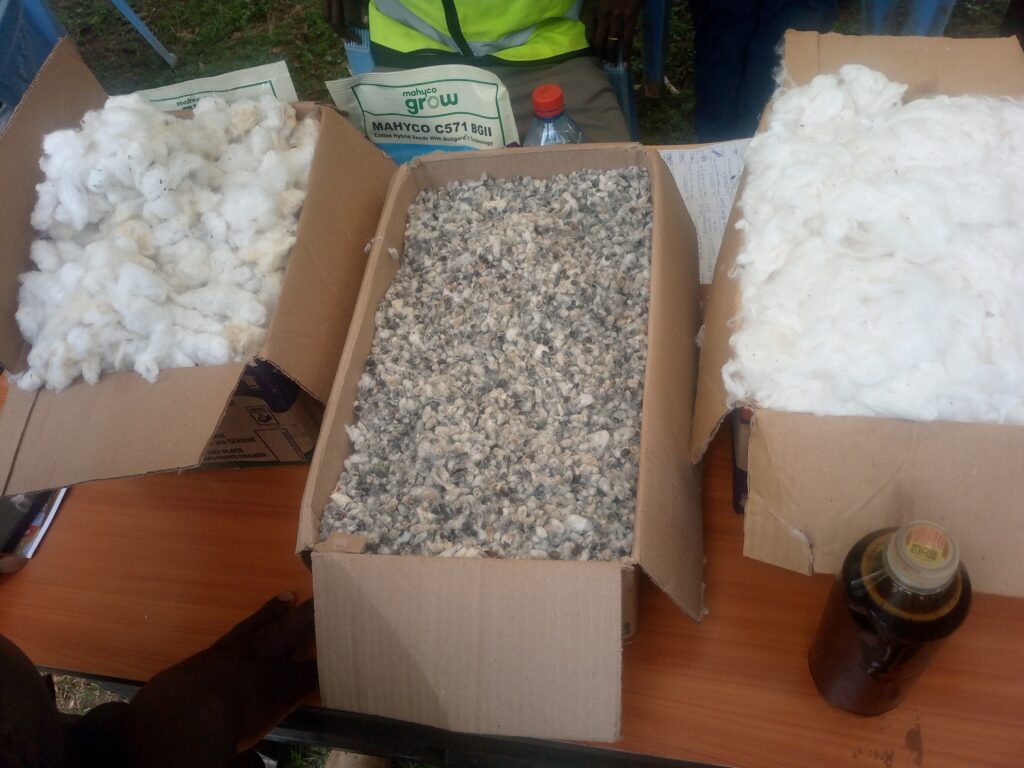
Busia County’s cotton industry is experiencing a revival, thanks to the introduction of Bt cotton—a genetically modified variety that promises higher yields, lower pest damage, and increased profitability for farmers.
In a major boost to Kenya’s efforts to restore its once-thriving cotton sector, Jairos Farmers Cooperative in Busia has received 1,930 kilograms of Bt cotton seed for the second planting season. The initiative falls under the “Buy Kenya, Sell Kenya” campaign, which seeks to strengthen local textile manufacturing while improving incomes for smallholder farmers.
Edward Oteba, a farmer and manager at Jairos Cooperative, says the shift to Bt cotton has been transformative.
“The conventional seed used to take six months to mature, but Bt cotton takes only four months. At just 128 days, you can start picking,” he explained.
The shorter maturity period allows farmers to practice multiple cropping, a significant advantage in a region where land is increasingly scarce. Many can now harvest cotton and still plant food crops within the same season.
Oteba adds that farmers are optimistic about market opportunities. Through ward-based cooperatives like Jairos, growers are linked with textile firms such as Rivatex, which provides steady and well-paying markets. Currently, farmers earn KSh 75 per kilogram of cotton delivered.
However, challenges remain. The cost of Bt cotton seed is a major concern.
“Since Busia is one of the pilot counties for Bt cotton, we ask the government to reduce the seed price. We fear that once free seed distribution ends, many farmers may not afford it and could revert to conventional varieties,” Oteba cautioned.
Illegal cross-border sales of cotton to Uganda also pose problems, especially when local markets delay purchasing produce. Additionally, a shortage of extension officers initially hindered progress—though recent government efforts have addressed this gap by deploying more officers to the region.
Norman Kojo, an Agricultural Officer in Busia, highlights the technical advantage of Bt cotton.
“Bt cotton contains a gene from the soil bacterium Bacillus thuringiensis, which produces a protein toxic to certain pests—most notably the bollworm, a long-standing threat to cotton crops,” Kojo said.
Since its adoption, pest-related damage has decreased significantly, leading to better yields and higher-quality cotton. The reduced need for chemical pesticides has also lowered production costs and improved environmental safety.
Kojo, however, warns against overreliance on a single crop variety.
“Overuse of any variety, including Bt cotton, can lead to pest resistance. We encourage integrated pest management and crop rotation to sustain the benefits,” he advised.
Agricultural Officer Teresa Okiyo, head of the Cotton Research Programme at KALRO Kibos, has been at the forefront of farmer training in Busia. She says the technology has been transformative.
“Bt cotton is genetically modified to resist pests like the bollworm, which has been a major threat for decades. This has reduced pest damage, increased yields, and lowered pesticide use,” Okiyo noted.
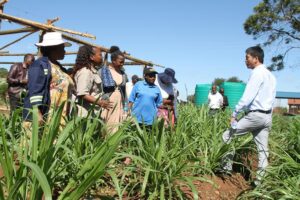
KALRO has established Kenya’s first certified seed system and distributed 17 tonnes of Bt cotton seeds along with 82,000 bags of fertilizer to Busia farmers. Extension officers have been deployed to train growers in proper agronomic practices, including spacing and pest management.
The results have been promising.
“Farmers are reporting up to 90% germination rates and more than 40 bolls per plant. With continued support, Busia could significantly contribute to the national cotton output,” Okiyo added.
As Busia’s cotton sector regains momentum, farmers are also looking forward to the revival of the Mulwanda Ginner—a local cotton processing factory—which they believe could further boost the county’s economy.
While the journey to reviving Kenya’s cotton industry is far from over, Busia’s experience underscores the transformative potential of biotechnology when combined with strong market linkages and strategic government support.
About Author