COMMONWEALTH POSITION ON MEMBER STATES REGARDING CLIMATE
Climate change is a critical issue affecting many developing countries worldwide, including Kenya.
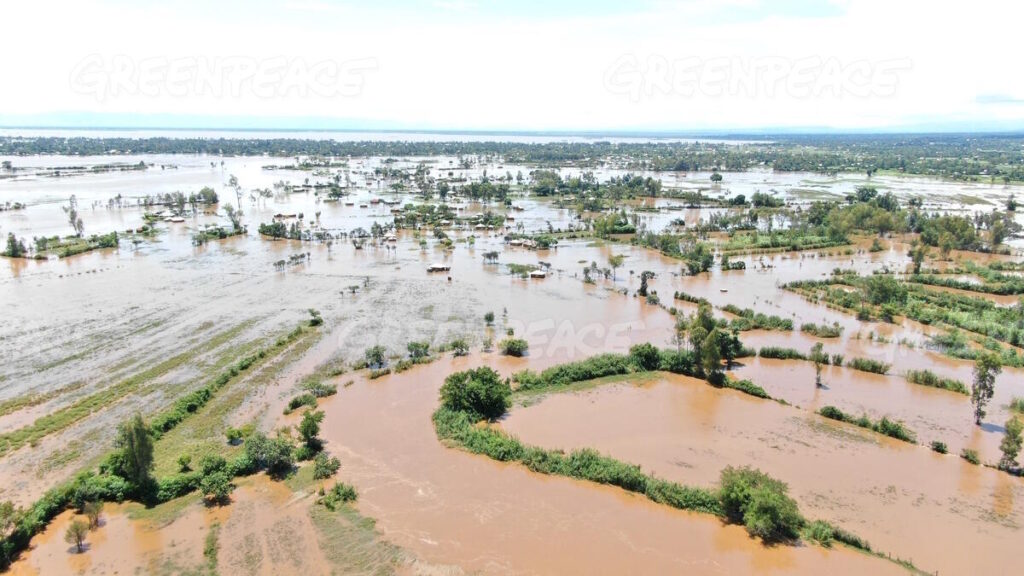
Floods in Migori and Homa Bay Counties/ Greenpeace
Recent heavy rains and floods in Kenya have claimed lives and displaced thousands, wreaking havoc in over 35 counties, including Turkana, Tana River, Garissa, Isiolo, Kisumu, Taita Taveta, Mandera, Wajir, Marsabit, West Pokot, Samburu, and Narok.
Climate change is a critical issue affecting many developing countries worldwide, including Kenya. Commonwealth Secretary-General Patricia Scotland articulates the organization’s stance on climate matters, with Kenya as one of its member states.
Since 1989, when Commonwealth leaders convened in Malaysia, the organization has prioritized addressing climate change due to its severe impact on its 56 member states, 25 of which are small highland states. “The effects of climate change on our members have been devastating, exemplified by events like the destructive floods in Kenya,” explains Patricia Scotland. The Commonwealth recognizes climate change as an extraordinary threat to the world.
The Commonwealth has concentrated efforts on developing concrete innovations as solutions for climate change. Kenya, in particular, has been focusing on generating a substantial amount of green energy, with 96% of its energy production classified as green, including geothermal energy.
As the impacts of climate change escalate, African leaders within the Commonwealth are urgently seeking action and financial support from developed countries. Patricia highlights the creation of a Climate Finance Act within the Commonwealth, providing member states with access to funds for green initiatives. “With just 7.8 billion dollars, we have already delivered over 316 million dollars to the Commonwealth, with an additional 500 million dollars in the pipeline,” she notes.
Additionally, Patricia emphasizes the Commonwealth’s commitment to leveraging new technology, citing the establishment of a consultative initiative called “Aim High,” engaging people and countries across the Commonwealth.
She underscores the achievements in innovation among member states, emphasizing knowledge-sharing and implementation. Patricia mentions that the Commonwealth has a 21% advantage in intra-block trade, with a current inter-Commonwealth trade value of 721 billion dollars, aiming to reach one trillion by 2026 and two trillion by 2030. Patricia promotes digital trade as an efficient, cost-effective, and rapid means of intra-Commonwealth trade, particularly during challenges like the COVID-19 pandemic.
Report by: JESSE ABISHECK
Email: abijessyshi@gmail.com
About Author