Kenyan Journalist Dennis Lubanga Wins Regional Recognition at 2026 IGAD Media Awards
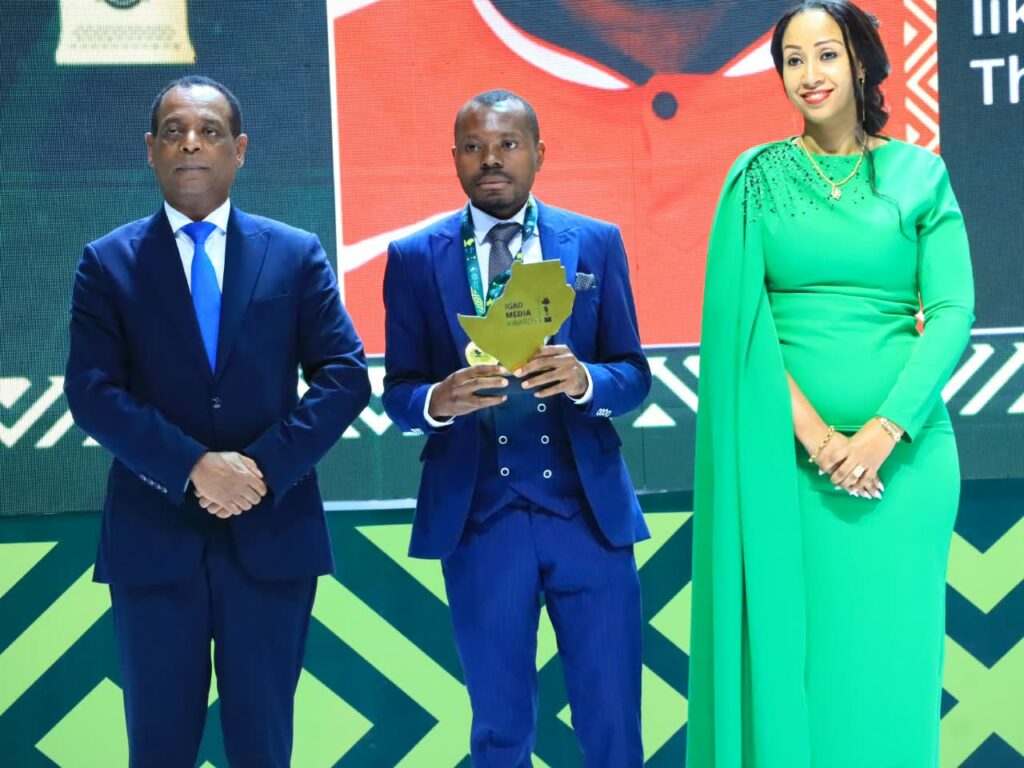
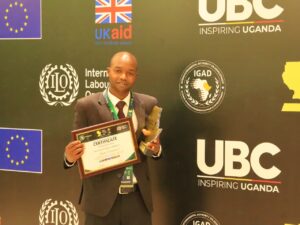
Kenyan journalist Dennis Lubanga receives the Digital Creator Award for Responsible Migration Narratives at the 2026 IGAD Media Awards held at Kampala Serena Hotel, Uganda, in recognition of his impactful storytelling highlighting the risks and realities of irregular migration along the Horn of Africa route.
By James Gitaka
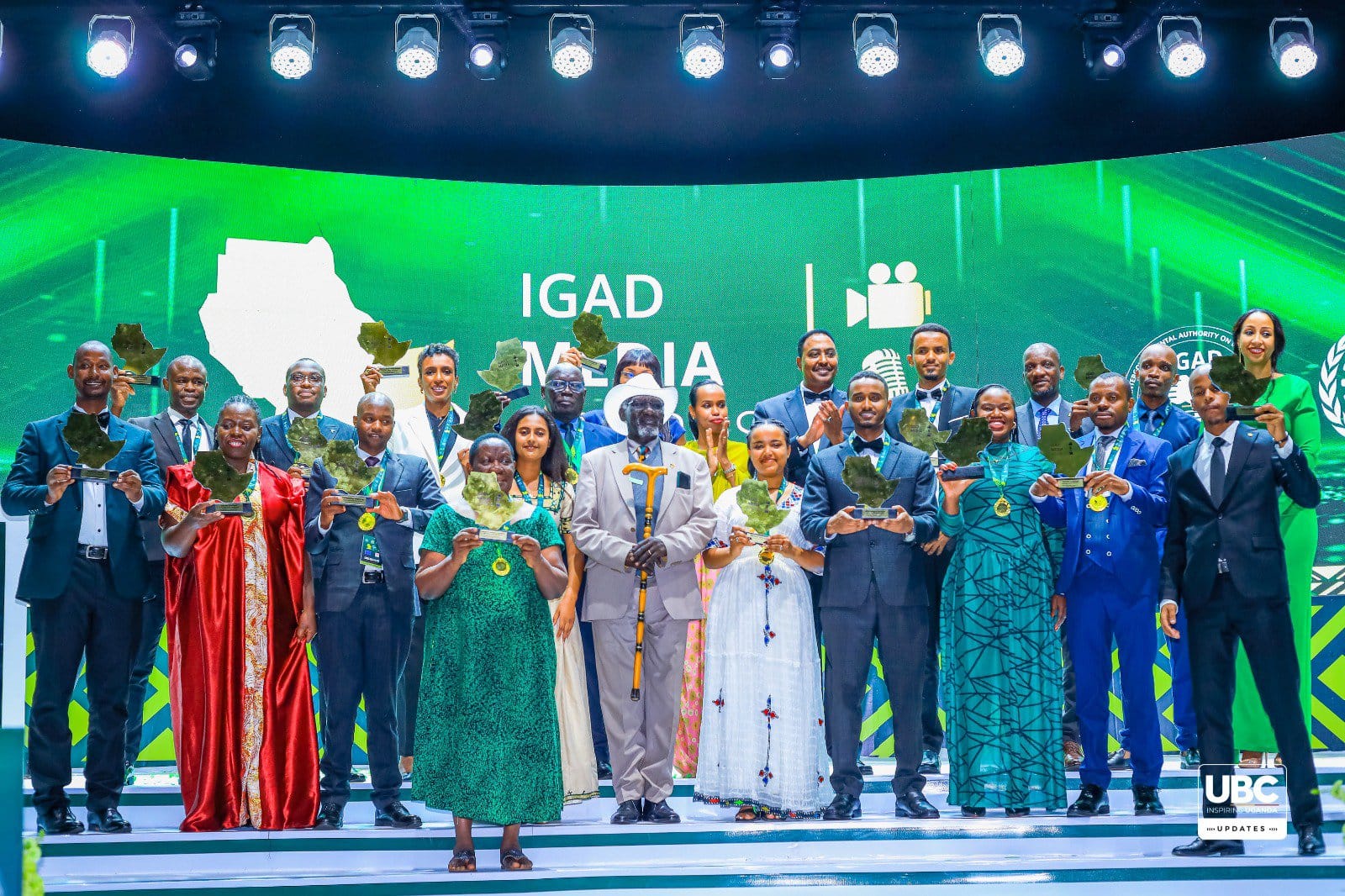
Kenyan journalist Dennis Lubanga has earned regional recognition after emerging among 20 media professionals honoured at the 2026 Intergovernmental Authority on Development (IGAD) Media Awards in Kampala, Uganda.
Lubanga received the Digital Creator Award for Responsible Migration Narratives during the ceremony held at Kampala Serena Hotel on Friday, November 20, 2026, in recognition of his contribution to responsible migration reporting and digital storytelling.
His award-winning entry, titled Game of Chance: Migrants Risk Deadly Horn of Africa Route for Better Life Amid Many Hazards, examines the dangers faced by thousands of people undertaking perilous migration journeys across the Horn of Africa in pursuit of employment, economic opportunities and better living conditions.
The story highlights the human cost of irregular migration along the Eastern Route, which connects countries in the Horn of Africa to Yemen and onward to Gulf destinations, exposing migrants to dangerous sea crossings, exploitation, trafficking, violence and harsh environmental conditions.
Reacting to the recognition, Lubanga described the award as more than an individual achievement, saying it reaffirmed journalism’s responsibility to raise awareness about migration, forced displacement and labour mobility.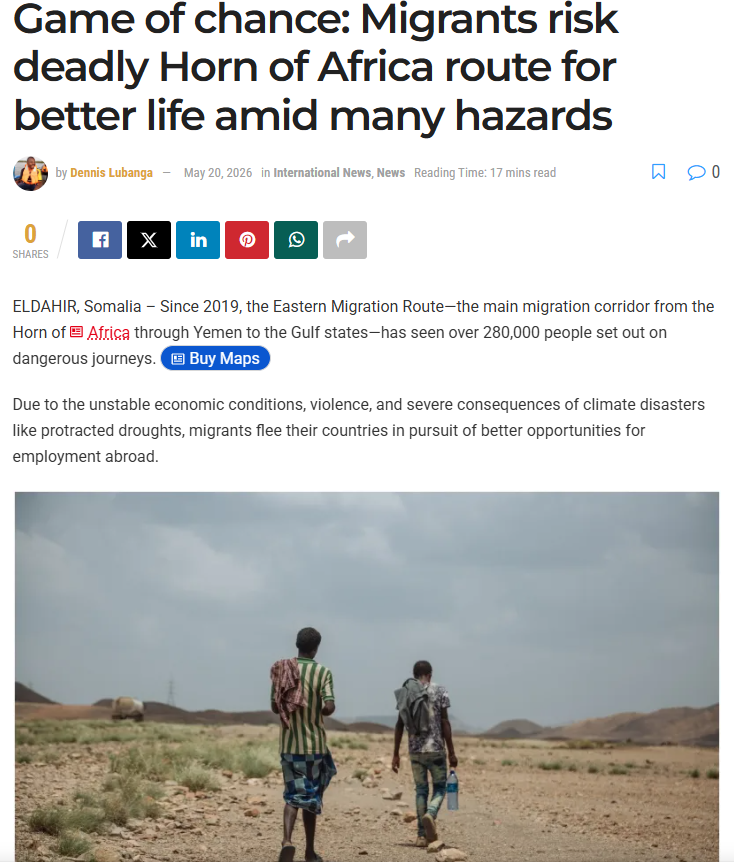
“I am grateful for being recognised at the 2026 IGAD Media Awards under the Digital Creator Award for Responsible Migration Narratives category,” Lubanga said.
“This is more than just a personal accomplishment for me. It serves as a reminder of the duty journalism has to enhance public awareness of forced relocation, labour mobility, and migration.”
He dedicated the recognition to women, young people, host communities, migrants, refugees, internally displaced persons and pastoralists, whose experiences and challenges, he said, deserve greater attention in public discourse.
Lubanga also called for a shift in migration journalism, urging reporters to move beyond documenting the experiences of migrants from an external perspective and instead actively involve affected communities in telling their own stories.
“For this reason, reporting about migrants must give way to reporting with migrants,” he said, stressing the importance of inclusive, human-centred journalism that respects the dignity and agency of people on the move.
IGAD calls for responsible and impactful journalism
IGAD Executive Secretary Dr Workneh Gebeyehu congratulated the award recipients, recognising the contribution of journalists to accountability, peacebuilding and regional integration.
“Through your fearless storytelling, investigative rigour, and unwavering dedication, you amplify the voices of our people, uphold accountability, and build bridges of peace across the Horn of Africa,” Dr Gebeyehu said.
He thanked the nominees and winners for contributing to the region’s shared narrative, while acknowledging the Government of Uganda and other partners for supporting the awards.
The awards were held under the theme “Human Mobility for Regional Integration: Free Movement, Decent Work, Protection and Shared Prosperity.”
The theme sought to encourage reporting that presents migration beyond the conventional narratives of crisis and irregular movement, highlighting its connections to economic development, employment opportunities, regional cooperation, human rights and shared prosperity.
In a message delivered by Uganda’s Prime Minister Robinah Nabbanja, President Yoweri Museveni commended journalists for producing stories capable of influencing communities, shaping public discourse and informing policy.
“I wish to congratulate the winners of this year’s award for their courage, professionalism and dedication. Journalism that informs without exaggeration can be a powerful force for opportunity, protection and shared prosperity in the IGAD region,” Museveni said.
The President challenged journalists and other stakeholders to move beyond crisis-driven narratives and recognise human mobility as a potential driver of regional integration, economic cooperation and collective prosperity.
Kenya among the leading award-winning countries
The 2026 awards brought together journalists, digital creators and media practitioners from IGAD member states to recognise excellence in reporting on migration, displacement, labour mobility and regional development.
Kenya secured seven awards, emerging among the leading countries in the regional competition. Somalia and Ethiopia each secured three awards, while Sudan received two. South Sudan and Djibouti each secured one award.
The recognition reflects the growing contribution of regional media professionals to public understanding of migration governance and the challenges affecting communities across the Horn of Africa.
According to IGAD’s official awards programme, the initiative seeks to promote evidence-based, ethical and human-centred storytelling while strengthening the media’s role in countering misinformation, harmful stereotypes and xenophobic narratives.
Deadly migration route underscores importance of responsible reporting
Lubanga’s recognition comes against the backdrop of mounting humanitarian concerns along the Eastern Migration Route, one of the most dangerous corridors connecting the Horn of Africa to the Arabian Peninsula.
Data from the International Organization for Migration (IOM) Displacement Tracking Matrix shows that approximately 506,600 outgoing movements were recorded along the route in 2025, an increase of 18 per cent from 430,200 in 2024.
Ethiopians accounted for approximately 97 per cent of the recorded outgoing movements, with economic considerations cited as the primary driver in 95 per cent of cases.
The IOM’s March 2026 regional data update further reported that 922 migrants died or went missing along the Eastern Route in 2025, almost twice the 558 cases recorded in 2024. This made 2025 the deadliest year on record since the Missing Migrants Project began tracking such incidents in 2014.
The route passes through Ethiopia, Djibouti and Somalia before crossing the Red Sea or Gulf of Aden into Yemen, with many migrants seeking onward employment opportunities in Saudi Arabia and other Gulf countries.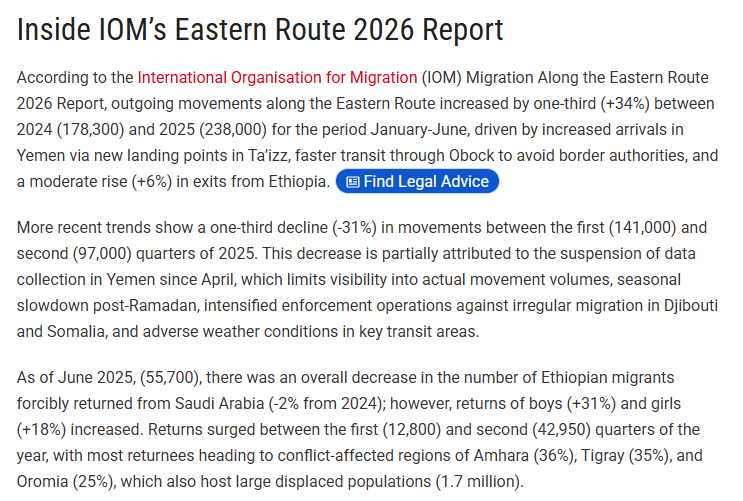
Those undertaking the journey face multiple protection risks, including drowning, trafficking, extortion, arbitrary detention, physical abuse and exploitation by criminal smuggling networks.
In April 2026, IGAD and IOM convened regional stakeholders in Tadjourah, Djibouti, to address the escalating crisis along the Eastern Route.
The meeting culminated in the Tadjourah Call for Action, which prioritised stronger regional cooperation, improved border governance, enhanced protection mechanisms for vulnerable migrants, maritime search-and-rescue capacity, and voluntary return and reintegration programmes.
The initiative underscored the need for coordinated responses among governments, regional institutions and international partners to address the underlying drivers of unsafe migration while protecting the rights and dignity of migrants.
For Lubanga, the recognition at the IGAD Media Awards places renewed attention on the role of journalism in documenting these realities, amplifying the voices of affected communities and promoting informed public debate on migration.
His award-winning work reinforces the importance of storytelling that goes beyond statistics and policy discussions to examine the lived experiences of people whose decisions to migrate are often shaped by poverty, unemployment, insecurity and the search for a better future.
About Author