U.S. Bank in Talks Over KSh129.7bn Kenya Debt Swap
The transaction is expected to form part of Kenya’s KSh700 billion external financing programme for the financial year ending June 2027.
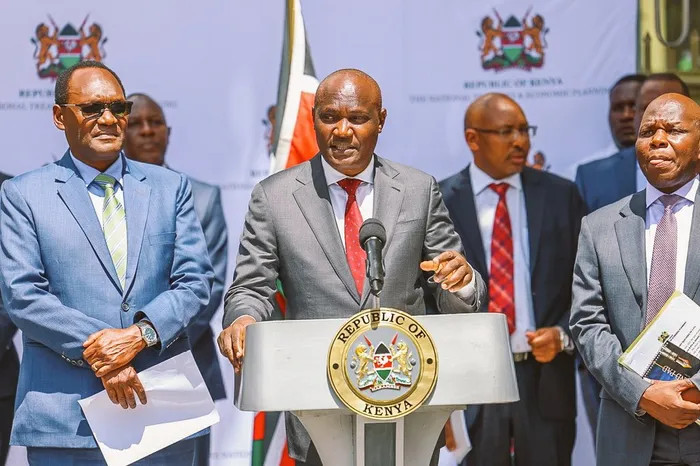
A major U.S. bank is in talks with Kenya over a proposed KSh129.7 billion debt swap as the government seeks to ease debt-servicing pressure and reduce reliance on domestic borrowing. Photo: Tuko News.
By Robert Mutasi
A major U.S. banking institution is in talks with Kenya over a proposed KSh129.7 billion debt swap as the government seeks to manage rising debt-servicing costs and reduce pressure from domestic borrowing.
According to Bloomberg, the bank has helped the Treasury revive a debt transaction that had previously stalled. The proposed deal could involve one of Kenya’s outstanding Eurobonds and is intended to refinance existing obligations on more favourable terms.
The transaction is expected to form part of Kenya’s KSh700 billion external financing programme for the financial year ending June 2027.The external borrowing programme includes several planned debt instruments.
These include a KSh38.9 billion ($300 million) panda bond, a KSh64.8 billion ($500 million) sukuk and a KSh105.7 billion ($815 million) Eurobond.The government has been exploring different liability-management options as it faces significant debt maturities and rising costs associated with servicing its existing obligations.A debt swap typically involves replacing existing debt with new financing under revised terms.
For Kenya, such an arrangement could provide additional room to manage upcoming repayments while spreading or restructuring its financial obligations.Plans for a debt swap involving Kenya first emerged in 2024 as the government prepared to meet a $2 billion Eurobond maturity in June that year.
At the time, Treasury was reported to have been exploring alternative financing arrangements with banks and investors to ease pressure arising from the maturity.The strategy was later incorporated into the government’s borrowing plans.
In September 2025, Treasury disclosed plans to explore a $1 billion debt-for-food security swap involving the World Food Programme. The proposed arrangement was intended to generate savings that could potentially be directed towards food security programmes.
It is not yet clear whether the latest KSh129.7 billion transaction being discussed with the U.S. bank is connected to the proposed debt-for-food security arrangement.Bloomberg reported that savings generated from the latest transaction could be channelled towards food support programmes.
The immediate objective, however, is understood to be refinancing existing government debt under improved terms.The proposed transaction comes at a time when Kenya is allocating a substantial portion of its budget to debt servicing.
Treasury is expected to spend about KSh2.31 trillion on debt servicing and repayments during the 2026/27 financial year.The high cost of servicing debt has become a major issue for the government as domestic and external obligations mature.
Treasury has consequently turned to liability-management operations, including refinancing and debt buybacks, to manage repayment pressures.The government has also been seeking to diversify its sources of external financing through instruments such as panda bonds and sukuk.
The planned panda bond would raise funds from China’s capital markets, while the sukuk would provide financing through an Islamic finance structure.The proposed Eurobond issuance would add another source of foreign-currency financing to the government’s borrowing programme.
Neither the National Treasury nor the U.S. banking institution involved in the reported negotiations has publicly commented on the proposed debt swap.The transaction would also need to proceed through the relevant government and financial approval processes before it can be completed.
For Kenya, the proposed arrangement comes as policymakers seek to balance the need for financing with the rising cost of existing public debt.Debt-service costs are expected to remain above KSh2 trillion in the coming financial years as large domestic debt maturities fall due and the government continues refinancing existing obligations.
About Author