Ruto Pushes Investment in Clean Cooking as Africa Seeks Energy Transition
Kenya, he said, is developing a $600 million investment opportunity targeting clean cooking in public institutions, including schools, healthcare facilities and correctional institutions.
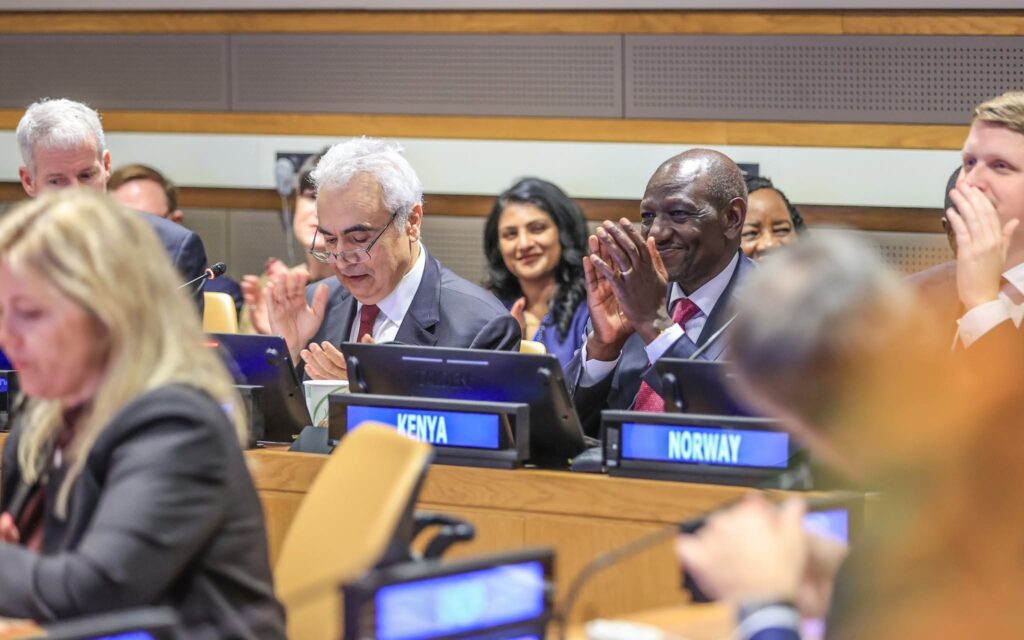
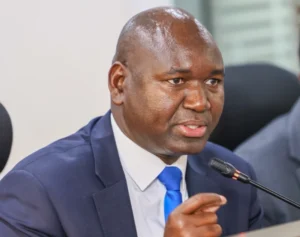
President William Ruto calls for increased investment in clean cooking, saying it is vital to Africa’s public health, economic growth and green transition. Photo: President Ruto.
By Robert Mutasi
President William Ruto has called for increased investment in clean cooking, describing access to cleaner cooking technologies as an important part of Africa’s energy infrastructure and green transition.
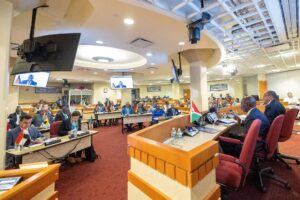
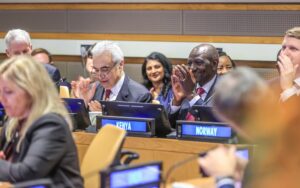
Ruto made the remarks in New York during a high-level event on clean cooking held on the sidelines of the 81st United Nations General Assembly. The event was co-hosted by Kenya and Norway and brought together governments, investors and development partners to discuss ways of expanding clean cooking across Africa.
The President said clean cooking has implications beyond household energy, linking it to public health, economic opportunities and Africa’s efforts to reduce emissions.
He said achieving universal access would require stronger investment and innovative financing mechanisms capable of turning demand for clean cooking into viable projects.
Ruto highlighted local-currency financing and guarantees among the instruments that could help attract capital into the sector.
Kenya, he said, is developing a $600 million investment opportunity targeting clean cooking in public institutions, including schools, healthcare facilities and correctional institutions.
The focus on institutions comes as Kenya seeks to reduce reliance on wood fuel and other traditional biomass sources. The State Department for Correctional Services has, for example, begun preparations to transition correctional facilities to cleaner cooking technologies, including LPG, biogas, solar-powered systems and steam cooking.
The International Energy Agency estimates that nearly two billion people globally still lack access to clean cooking, with about half of them living in sub-Saharan Africa. The agency says traditional biomass cooking is associated with household air pollution and significant health and environmental costs.
Kenya and Norway’s New York meeting is part of efforts to maintain international attention on the issue ahead of the Second Summit on Clean Cooking in Africa, which is scheduled to take place in Nairobi.
The summit is expected to bring together governments, investors, development partners and industry players to mobilise additional financial and political commitments for expanding clean cooking access across the continent.
Ruto has previously placed clean cooking within Kenya’s broader climate and energy agenda, including efforts to expand access to cleaner energy while reducing dependence on biomass fuels.
The latest push comes as African governments seek financing for energy infrastructure at a time when the continent continues to face a large clean cooking access gap. The IEA estimates that closing the gap will require sustained investment and stronger policy action.
About Author