Uasin Gishu Sets Aside KSh958 Million for Agriculture and Agribusiness
The funding is expected to support the county’s objective of improving food security and household incomes through commercial agriculture.
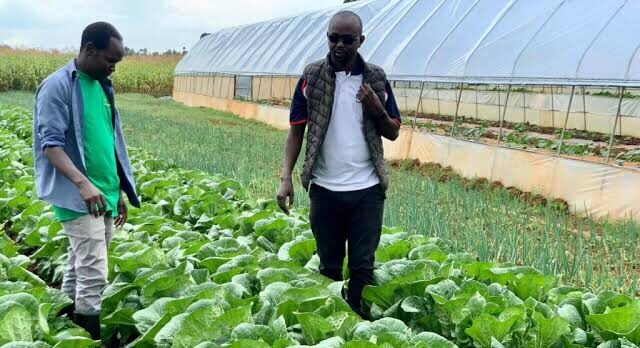
Photo: Courtesy.
By Robert Mutasi
ELDORET, UASIN GISHU
Thursday, September 17, 2026
Uasin Gishu County has allocated KSh958.18 million to the Agriculture and Agribusiness sector in the 2026/27 financial year, with a significant share directed towards supporting agricultural production, value addition and agribusiness initiatives.
The allocation is contained in the county’s approved programme-based budget for the year ending June 30, 2027. Agriculture and Agribusiness has been assigned KSh749.45 million for recurrent expenditure and KSh208.73 million for capital projects, bringing the total allocation to KSh958.18 million.
The funding is expected to support the county’s objective of improving food security and household incomes through commercial agriculture. The department’s stated mission is to improve food security and livelihoods by promoting commercial agriculture and sustainable development.
A substantial portion of the development allocation will go towards agribusiness and value addition. The budget provides KSh30 million for the coffee processing plant, KSh15.93 million for value addition crops among registered groups and KSh50 million for equipping agro-processing plants.
The county has also set aside KSh105 million under the National Agricultural Value Chain Development Project (NAVCDP), bringing the listed flagship agriculture projects to KSh200.93 million.
The investments are aimed at strengthening agricultural value chains beyond primary production by enabling farmers and groups to process and add value to their produce. The county has identified completion of the coffee processing plant, promotion of high-value crops and equipping agro-processing plants as key priorities for the 2026/27 to 2028/29 medium-term period.
The budget also provides KSh30 million under crop diversification and KSh7.8 million for ward development services. The ward allocation includes KSh1 million for promotional crops farmers’ empowerment, KSh3 million for a proposed milk cooler at Kapsaos, KSh1.5 million for bean seeds for registered women’s groups and KSh800,000 for the purchase of coffee seedlings for registered farmers.
Other allocations include KSh500,000 for distribution of high-value crop seeds and KSh1 million for coffee seeds and tubes for the Nyaru promotional crops nursery.
The county budget also sets targets for increasing agricultural productivity. Under crop production, the department plans to provide high-value crop seeds to 3,100 farmers during the 2026/27 financial year and promote four high-value crop varieties. It also targets registering and certifying 55 nurseries.
The department plans to expand extension services through the establishment of model farms, field days, trade shows and farmer exchange tours. The 2026/27 targets include 12 model farms, 18 field days, five trade shows and six exchange tours.
Post-harvest management is another area covered by the budget. The county targets increasing cereal storage facilities to two and establishing a cold storage facility during the financial year. It also plans to purchase 2,700 litres of pesticides as part of crop pest and disease control measures.
However, the budget document highlights concerns about the department’s previous absorption of allocated funds. Agriculture and Agribusiness had been allocated KSh507.59 million in 2022/23, KSh520.15 million in 2023/24 and KSh425.85 million in 2024/25. Actual expenditure stood at KSh493.93 million, KSh385.87 million and KSh243.48 million respectively, translating to absorption rates of 97 percent, 74 percent and 57 percent.
The department attributed implementation challenges to inadequate technical capacity, limited office space, insufficient utility vehicles for project supervision, inadequate budgetary allocations and slow execution of projects by service providers.
For the new financial year, the county’s agriculture budget therefore places emphasis not only on allocating resources but also on completing ongoing investments in processing, expanding high-value crop production and strengthening agricultural services aimed at increasing productivity and incomes among farmers.
About Author