OPINION | WHEN PUBLIC DEVELOPMENT ENCOUNTERS THE RESTING PLACE OF THE DEAD
Governor Jonathan Bii Owes the Bereaved an Apology
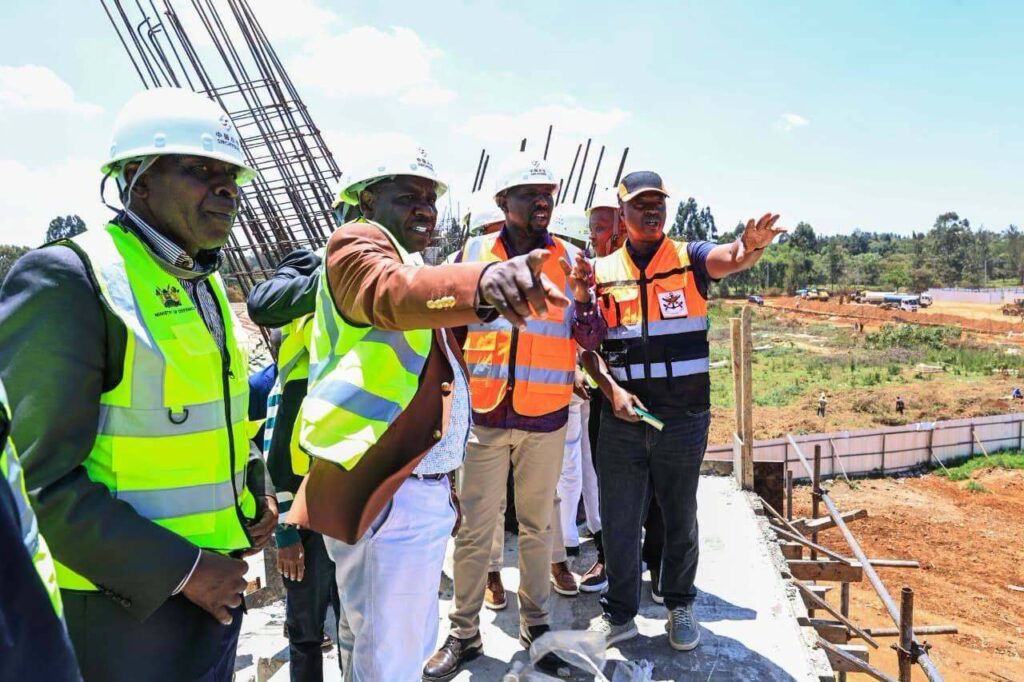
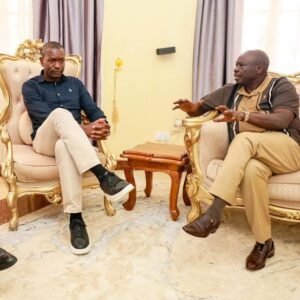
Uasin Gishu Governor Jonathan Bii and Interior Cabinet Secretary Kipchumba Murkomen inspect the ongoing construction works at Kipchoge Keino Stadium in Eldoret. On the far right is the historic Christian cemetery set to be relocated to pave the way for the stadium's expansion. Image by Hubz Media
Governor Jonathan Bii Owes the Bereaved an Apology
By Kimutai Kirui
Human Rights Activist and Governance Champion
Uasin Gishu Governor H.E. Jonathan Bii was profoundly insensitive in suggesting that because those buried at the cemetery have “gone to heaven,” their remains can simply be relocated.
That misses the point entirely.
This is not a theological question about where the dead have gone. It is a human question about those they left behind.
A grave is not merely a piece of land. It is a place of memory, mourning, identity and enduring attachment. The dead may no longer need their graves physically; the living may profoundly need them.
Nearly 2,000 years after the death of Jesus, millions still visit places associated with His burial. Across cultures, families continue to visit the graves of parents, children, spouses and ancestors—not necessarily because they believe the dead are still there, but because love and remembrance do not end with death.
Public development is legitimate. But no stadium, road or public project should require us to abandon human dignity, cultural sensitivity and compassion.
The families affected are not defending mere pieces of real estate. They are defending memory, attachment and the sanctity of final resting places.
Whatever the Governor intended, his remarks were dismissive and hurtful. He owes the bereaved an apology.
Not because development must stop, but because public leadership requires more than authority. It requires empathy, restraint and respect for human grief.
We can build for the future without trampling on the memories of those who came before us.
There are few questions a society should approach with greater seriousness than what happens to the dead when the living decide that land must be used differently.
A stadium may serve generations. A road may transform a city. A public facility may be entirely justified by the needs of a growing population. Yet none of those objectives, however legitimate, automatically extinguishes the claims of those buried on the land—or the rights of the families and communities who regard those graves as sacred.
This is why the proposed disturbance of graves for public works should never be treated as an ordinary land-development question. It is simultaneously a legal, public-health, constitutional, cultural and profoundly human question.
The Law Does Not Permit Convenience to Become Authority
Kenya’s Public Health Act, Cap. 242, provides a legal framework for the removal of human remains in specified circumstances. Section 147 contemplates the removal of bodies from graves where this is required for authorized public works or other public purposes.
The important word is authorized.
A public project does not, by its mere announcement, create authority to exhume. Neither does ownership or control of the land give a public institution an unfettered licence to disturb graves.
The appropriate legal authorization must precede the physical act.
Where an exhumation is contemplated, the relevant health authorities must be involved and the requisite permit and public-health conditions complied with. The process must be capable of withstanding scrutiny—not only administratively, but legally and morally.
The principle is simple: the State may possess the power to undertake public works; it must still exercise that power within the law.
A Grave Is More Than a Piece of Land
There is also a danger in reducing the matter to maps, acreage and construction schedules.
A cemetery is a repository of memory.
For families, a grave may be the last physical connection to a parent, child, spouse or ancestor. For communities, cemeteries can preserve histories that are not written in official archives. They may carry religious meaning, cultural identity and collective memory.
Consequently, the disturbance of graves touches the constitutional value of human dignity and may implicate cultural and religious rights.
That is why the question cannot properly be answered by asking only whether the proposed project is beneficial.
The more difficult question is whether the public good can be pursued without treating the dead as disposable obstacles to development.
Public Participation Must Be Real
If graves are to be disturbed for a public project, the affected community cannot be presented with a decision that has already been made and then invited to participate merely for appearances.
Meaningful public participation requires information, notice, opportunity to respond and genuine consideration of the concerns raised.
The families of those buried on the affected land should be identified and, where reasonably possible, notified directly.
They should know why the graves must be disturbed, what legal authority permits the process, how the remains will be identified and handled, where they will be reburied, who will supervise the exhumation, and what safeguards will protect the dignity of the deceased.
The community, likewise, deserves an explanation of why alternative sites, designs or approaches cannot reasonably avoid disturbing the cemetery.
Consultation should precede excavation—not follow it.
The Permit Is Not a Bureaucratic Detail
An exhumation permit should not be regarded as another document to be obtained merely because the law requires it.
It represents an important safeguard.
Human remains carry public-health considerations, and their removal must therefore be undertaken under appropriate sanitary conditions and professional supervision.
The process should account for identification, handling, transportation and reburial, with clear responsibility assigned to the relevant authorities and professionals.
The objective is not merely to move remains from one location to another.
It is to ensure that the transition is conducted lawfully, safely and with dignity.
The Dignity of the Dead Reflects the Character of the Living
There is an uncomfortable but important truth here.
A society’s treatment of its dead says something about its understanding of human worth.
Those lying in a cemetery can no longer petition government, attend public meetings or challenge administrative decisions. Their interests must therefore be protected through the law and through the conscience of the institutions acting on behalf of the living.
This is precisely why public authorities must exercise heightened care.
https://vt.tiktok.com/ZSVaQH3yP/
Development should not be measured solely by the structures that rise from the ground. It should also be judged by the manner in which we deal with what was already there.
A stadium can be magnificent and still be built through a process that was legally defective or socially insensitive.
Conversely, a difficult development project can command genuine public respect when the authorities demonstrate transparency, lawful authority, consultation and profound respect for those whose final resting places are affected.
The Questions That Must Be Answered
Before any grave is disturbed for a public project, the public is entitled to ask:
Where is the legal authorization?
Where is the exhumation permit?
What public participation was undertaken?
Were the families of the deceased identified and notified?
What arrangements have been made for the remains?
Who will supervise the exhumation?
Where will the remains be reburied, and under what conditions?
Was every reasonable alternative considered to avoid disturbing the graves?
These are not questions intended to obstruct development.
They are questions intended to ensure that development remains governed by law and tempered by humanity.
Public Interest Must Include the Dignity of Those Who Came Before Us
Kenya needs infrastructure.
It needs modern public facilities.
It needs ambitious development.
But development cannot become an argument for procedural shortcuts.
The State has immense power to acquire land, construct infrastructure and pursue projects in the public interest. That power is legitimate precisely because it is constrained by law.
Where human remains are involved, those constraints should be treated with particular seriousness.
The issue, ultimately, is larger than a cemetery or a stadium.
It is about whether we believe that public interest has boundaries.
It is about whether the law protects people only while they are alive, or whether the dignity attached to human life continues to command respect after death.
And it is about what kind of country we are building.
Because the measure of a civilized society is not merely the monuments it constructs for the future.
It is also the reverence with which it treats the memory of the past.
— Kimutai Kirui, Human Rights Activist and Governance Champion
About Author