Amazon Targets 2028 Launch for Direct Satellite-to-Phone Service in Major Connectivity Push
The announcement comes at a time when Amazon is deepening its footprint in Africa, positioning the continent as a key pillar in its global connectivity strategy.
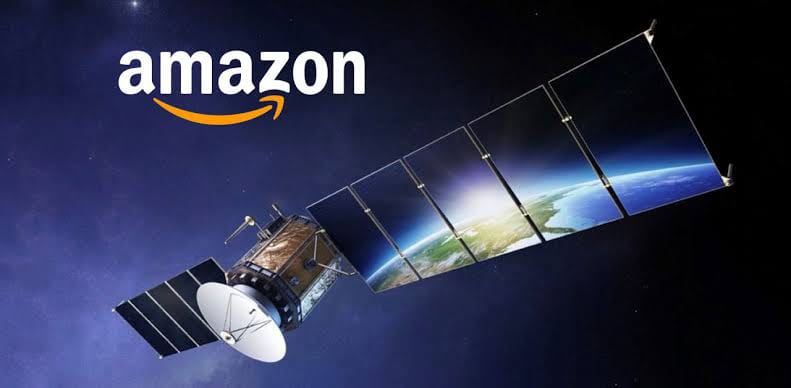
Photo: Courtesy.
By Zuriel Midambo
Global tech giant Amazon has announced ambitious plans to launch a direct satellite-to-phone service by 2028, a groundbreaking move that could completely transform mobile communication, especially in remote and underserved areas.
The planned service will allow ordinary smartphones to connect directly to satellites in orbit, enabling users to make voice calls, send text messages, and access mobile data even in locations with no traditional mobile network coverage.
The initiative is expected to be a game-changer for millions of people living in rural areas, travelers, pastoralists, maritime workers, emergency responders, and communities affected by natural disasters or prolonged network outages.
Unlike conventional networks that rely on cell towers, the satellite-to-phone technology will work independently, ensuring connectivity remains uninterrupted even when terrestrial infrastructure is damaged or non-existent.
The technology is part of Amazon’s broader and rapidly expanding effort to dominate global internet access through its Project Kuiper satellite network. Project Kuiper aims to deploy a massive constellation of over 3,200 low-Earth orbit (LEO) satellites capable of delivering high-speed, low-latency broadband services around the world.
Amazon says the direct-to-device service will leverage the same constellation to bridge the final connectivity gap.
The announcement comes at a time when Amazon is deepening its footprint in Africa, positioning the continent as a key pillar in its global connectivity strategy. The company is set to establish its first African satellite ground station in Kenya, marking a significant milestone in Africa’s growing digital infrastructure and its integration into the global space economy.
The Kenyan ground station, which will be located at the Konza Technopolis and other strategic sites, will serve as a critical gateway for Project Kuiper operations. It will communicate with satellites passing overhead and relay data to Amazon’s global network, helping to deliver internet speeds of up to 1,280 Mbps.
The facility is expected to play a pivotal role in expanding reliable, high-speed internet access across Kenya and other parts of East, Central and Southern Africa, particularly in areas that remain difficult to serve using conventional fiber or 4G/5G infrastructure.
Industry experts say the combination of satellite broadband and direct satellite-to-phone connectivity could finally help bridge the digital divide in Africa, where nearly 60 percent of the population still lacks reliable internet access.
If completed on schedule, Amazon will join an increasingly competitive race alongside companies like SpaceX’s Starlink, AST SpaceMobile, and Apple, which are all investing heavily in satellite-based communication services.
Analysts note that this signals the beginning of a new era in global connectivity, where a smartphone can remain connected anywhere on the planet – from the deserts of Turkana to the middle of the Indian Ocean – even beyond the reach of traditional cellular towers.
Amazon says it will release more technical details and consumer pricing models closer to the 2028 launch window.
About Author