Siaya Residents Urged to Reject Non-Performing Leaders as Sh2.2 Billion Rural Electrification Plan Unveiled
He announced that he would personally take an active role in ensuring that leaders who have failed to perform are voted out in the next General Election.

Photo: Courtesy.
By Violet Akinyi
Energy and Petroleum Cabinet Secretary James Opiyo Wandayi has called on Siaya County residents to reject elected leaders who have failed to deliver development, saying the county cannot afford to lag behind while other regions continue to progress.
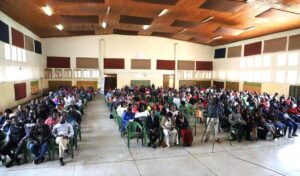
Speaking on Saturday during the funeral of the late Mzee Esau Oyiro Ogeya at Karapul on the outskirts of Siaya town, Wandayi said leadership should be judged by tangible development outcomes rather than political rhetoric and empty slogans.
“Politics is the foundation for development, and we cannot afford the trial-and-error games,” said Wandayi, who is also a former Ugunja Member of Parliament.
The Cabinet Secretary said voters must become more demanding and hold their leaders accountable for campaign promises, noting that poor leadership has cost Siaya and other regions valuable development time. He announced that he would personally take an active role in ensuring that leaders who have failed to perform are voted out in the next General Election.
“I will be at the forefront to ensure that non-performers go home during the next general elections,” he said, drawing applause from mourners.
Wandayi’s remarks come at a time when political realignments are already taking shape ahead of the 2027 General Election, with several leaders in Nyanza seeking to solidify their influence in the region.
Beyond politics, the CS used the platform to announce a major development boost for the county. He revealed that the national government has allocated Sh2.2 billion for rural electrification projects in Siaya County under the Rural Electrification and Renewable Energy Corporation (REREC) programme.
According to Wandayi, the funds will be used to connect more than 25 villages to the national grid, a move expected to transform rural livelihoods by improving access to power, stimulating small businesses, supporting learning in schools, and enhancing healthcare services in dispensaries and health centres.
“Electricity is not a luxury; it is an enabler of development. When we light up a village, we open up opportunities for welding, milling, cold storage for fish from Lake Victoria, and our children can study at night,” he said.
Development experts argue that electricity access is a key driver of economic growth, particularly in rural areas. According to the International Energy Agency (IEA), access to reliable electricity boosts agricultural productivity, creates employment opportunities, supports small and medium enterprises, and improves the delivery of essential public services such as health and education. In Kenya, the government has continued to expand rural electrification under REREC as part of its goal of achieving universal electricity access by 2030.
Siaya County currently has an electricity connectivity rate of about 68 percent, slightly below the national average, with remote sub-counties like Ugunja, Alego Usonga and Bondo still experiencing significant gaps.
Residents who spoke to the press welcomed the electrification announcement but urged the government to ensure transparency and timely implementation of the projects to avoid stalled works that have marred similar initiatives in the past.
They said they will be closely monitoring both the implementation of the electrification programme and the development records of their elected leaders ahead of the next elections.
About Author