Why Kenya and UK Failed to Reach Deal on BATUK Training
The agreement is being processed under the Treaty Making and Ratification Act, No. 45 of 2012, which gives effect to Article 2(6) of the Constitution.
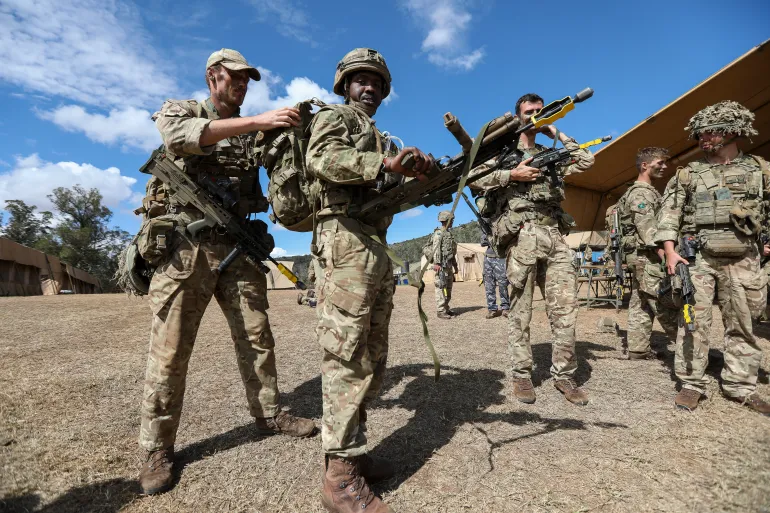
Photo: Courtesy.
By Robert Mutasi
The chairman of the National Assembly Defence, Intelligence and Foreign Relations Committee, Nelson Koech, has broken his silence on the collapse of joint military training between Kenya and the United Kingdom, dismissing claims of bribery and insisting the deadlock is about sovereignty, justice, and accountability.
The clarification comes after the United Kingdom announced last Thursday that its 2026 joint training with the Kenya Defence Forces (KDF) will be held outside Kenya after attempts to secure the necessary licences were unsuccessful.
In a statement on Sunday, Koech said the move was not a diplomatic fallout but a consequence of unresolved legal questions that have dogged the Kenya-UK Defence Cooperation Agreement for years.
He said the point of contention is well known and long-standing, concerning legal jurisdiction over British personnel, the question of immunity, and the accountability mechanisms governing the presence of foreign forces on Kenyan soil.
Central to those concerns is the murder of the late Agnes Wanjiru, whose 2012 killing in Nanyuki has been linked to British soldiers attached to the British Army Training Unit Kenya (BATUK), and the long-standing grievances of affected communities in Nanyuki and Laikipia.
Koech revealed that the committee undertook a two-year inquiry into BATUK’s operations in Kenya and tabled its report before the National Assembly in November 2025. That report, he said, recommended that ratification of the renewed Defence Cooperation Agreement should proceed only subject to firm accountability conditions.
“That report recommended that ratification proceed subject to firm accountability conditions including jurisdiction for Kenyan courts over serious offences committed by visiting troops, binding cooperation with Kenyan criminal investigations and parliamentary inquiries, environmental responsibilities, welfare and child-support obligations, and stronger protection for host communities,” Koech said.
The agreement is being processed under the Treaty Making and Ratification Act, No. 45 of 2012, which gives effect to Article 2(6) of the Constitution.
According to Koech, the impasse has directly affected Exercise Haraka Storm — a six-week combat training program held by the British Army in Kenya. The exercise has been conducted since 2023 in Laikipia and Lolldaiga and Kenya was expecting the arrival of 1,500 British soldiers for training in September 2026.
“Kenya values its long defence partnership with the United Kingdom, which has delivered real benefits in counter-terrorism, interoperability and the building of our defence capacity,” Koech said. “But partnership must rest on equality, on respect for Kenyan law, and on genuine accountability. That is the standard the Committee has upheld — transparently, and on the record — and it is the standard we will continue to uphold: for the people of Nanyuki and Laikipia, for the family of the late Agnes Wanjiru, and for the sovereignty of the Republic of Kenya.”
His statement comes after Democracy for Citizens Party (DCP) leader and former Deputy President Rigathi Gachagua alleged that the cancellation was caused by a Sh3 billion bribe demand from Parliament.
Gachagua alleged that the Parliamentary Committee on Defence and Foreign Relations, chaired by Koech, had told the British to part with Sh3 billion to renew the BATUK deal, with Sh1 billion to be kept by the British negotiators and Sh2 billion allegedly meant for President William Ruto’s 2027 campaign kitty.
Parliament has firmly denied the claims, terming them politically motivated and false. Koech maintained that the committee’s position has been public, on record, and driven solely by the demand that serious crimes, including murder, allegedly committed by visiting troops must be tried in Kenyan courts.
About Author