Kenya’s Recurring Nightmare: decades of deadly fires in girls’ schools
From the 1998 Bombolulu Girls tragedy to the latest deadly blaze at Utumishi Girls Academy, Kenya continues to grapple with recurring dormitory fires that have claimed dozens of young lives.
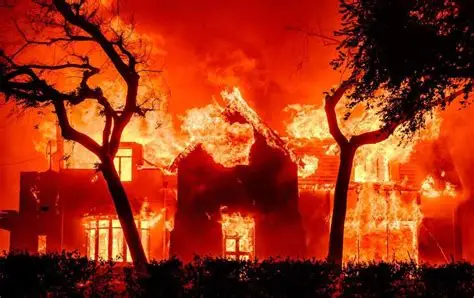
Flames and heartbreak once again expose the painful reality of recurring school fires in Kenya, as the nation mourns young lives lost in tragedies that many believe could have been prevented. Photo/Courtesy
By Achieng Kemuma
Since that grim Bombolulu Girls High School fire of 1998, where 26 young lives were lost, Kenya has kept on paying a heavy price, again and again, in girls’ dormitories. The latest incident at Utumishi Girls Academy on May 28, 2026 has really lit up, the same old weaknesses in boarding school safety, and it’s not pretty, at all.
On the night of March 25/26, 1998, fire ran through the dormitory of Bombolulu Girls Secondary School in Kwale County. Twenty-six girls died, and lots of them were reportedly stuck because the doors were locked and windows were barred, in a place that was overcrowded. The aftermath led to a Judicial Commission of Inquiry, headed by Bishop Lawi Imathiu (RTD), and the report was later delivered to President Daniel arap Moi in July 1998.
Still, almost three decades later, the grim pattern just carries on. On May 28, 2026, at least 16 girls were confirmed dead, and roughly 70–79 others were injured in a dormitory blaze at Utumishi Girls Academy in Gilgil, Nakuru County. Many of those victims were daughters of police officers. The fire started around 1 a.m., and since then the school has been closed indefinitely as investigations continue, with arson being mentioned early on in reports.
When you look at major documented girls’ school fires in Kenya since 1998, there is a painful rhythm. In August 2012, eight girls, who were Standard 7 pupils, died at St. Theresa’s Asumbi Girls Boarding Primary School in Homa Bay after an electrical fault. Accounts said students were trapped behind a locked dormitory door, and that situation triggered action including the sacking of some local education officials.
Then, in September 2017, nine to ten girls lost their lives at Moi Girls High School in Nairobi, and it was described as a confirmed arson case. The suspect was a 14-year-old Form One student, and later she was sentenced, allegedly after what was described as an effort to push for a school transfer.
Other fires in girls’ institutions have also produced serious injuries, but in some cases fewer, or no, deaths were publicly reported. One example is the 2021 fire at Buruburu Girls Secondary School in Nairobi, where about 60–63 students were hospitalized, mainly from smoke inhalation.
So overall, these major dormitory and school fire incidents since the Bombolulu tragedy have taken an estimated 60–70 or more young lives. And that number is only part of a wider and even more devastating record of school fire deaths across the country, which also includes boys’ schools.
Time after time, investigations into these tragedies point back to the same causes: overcrowded dormitories, poor fire safety arrangements, like narrow corridors, inward-opening doors, and heavy iron grilles on windows, plus electrical faults and also deliberate arson. In some incidents, the arson has been tied to student frustrations over harsh conditions, strict rules, or grievances related to exams. Even with repeated government circulars, task forces, and safety manuals released after every disaster, the basics aren’t being enforced consistently, or properly, on the ground.
As Kenya mourns again, this time the girls at Utumishi Girls Academy, the country has to face a hard truth: these deaths are largely preventable. The recommendations from the 1998 Bombolulu report, and later inquiries too—outward-opening doors, regular fire drills, workable extinguishers, removing window grilles, and sticking strictly to approved capacity—have not been carried out fully in many boarding schools.
The hopes of far too many talented Kenyan girls have been wiped out in the middle of the night. It’s well past time for firm and continuous action from the Ministry of Education, school administrators, parents, and the wider government, so this dangerous cycle is finally broken and so history stops repeating itself.
May the souls of all the girls lost in these fires rest in eternal peace
About Author