Kithure Kindiki Urges Renewed Focus on Culture and Creativity to Foster National Unity and Youth Development During Music Festival In Uasin Gishu
They noted, “We must not allow the world to dictate the identity of our children. Our role models should begin at home.
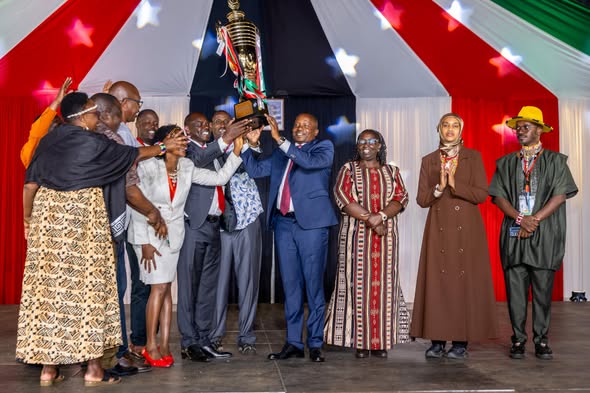
Parents were encouraged to actively pass on their traditions, values, and languages to their children. Photo/Courtesy
By Ruth Sang
Arts leaders and other stakeholders in Kenya have called for a fresh emphasis on culture, creativity, and traditional values as the bedrock for national unity and youth development. During a major cultural festival, leaders said art remains among the strongest tools in shaping identity and strengthening the social fabric.
Performances, music, and drama from across the country marked the 98th edition of the festival. The event was graced by senior government officials, among them the Deputy President, who attended for the first time. Organizers hailed this as a gesture that showed growing support for the creative sector from the national government.
Speakers reiterated that Kenya’s rich mosaic of cultures provides a strong foundation for unity when well nurtured. They added that the scripts, songs, poems and performances showcased during the festival convey stories that identify Kenya’s shared identity.
“This stage reflects the Kenya we want: one that is united, peaceful, and culturally rich,” one speaker said, before adding that cultural expression is a major avenue toward the construction of understanding across communities.
The scriptwriters were advised to develop contents that uphold values, teach life lessons, and build responsible youth. The leaders warned against a trend where art was used only for criticism or sensationalism, adding that constructive storytelling can have a greater and lasting impact.
“Good art endures,” they said, “but vulgar and purely provocative art may go viral, yet fades quickly. Timeless work raises a generation.”
They were encouraging artists to balance modern trends with the traditional cultural forms so that the artwork would be relevant to the youth, yet not lose its genuine cultural expression.
In lighter moments, leaders hailed the Deputy President for adopting artistic language and stylistic devices in his recent public speeches marked by repetition and rhetorical flair, saying such creativeness resonates with young people.
They even lauded him for keeping his calm in the face of political turmoil, citing dignified communication as setting an excellent example for young people across the country.
The leaders expressed concern over the growing influence of social media among youths, observing that many teenagers currently imitate foreign celebrities, ways of life, and languages at the expense of their own culture.
Parents were encouraged to actively pass on their traditions, values, and languages to their children.
They noted, “We must not allow the world to dictate the identity of our children. Our role models should begin at home.
They reiterated that the State Department for Culture has a core commitment in supporting diverse communities, including minority and marginalized groups in line with Article 11 of the Constitution.
They emphasized that culture is not entertainment, but it represents the core of the community’s identity, national cohesion, and Kenya’s story to the world. “When you remove politics, roads, and big projects, you have the people,” they said. “Culture is what binds us.” The call for Kenyans to write and own their stories brought the festival to a close, celebrating local traditions while embracing creativity for unity and national pride.
About Author