The Making of Singapore: Why the Asian Tiger Model Remains Out of Reach for Kenya
Development priorities have focused on immediate interests serving the basic characteristics of political regime legitimization rather than long-run national planning.
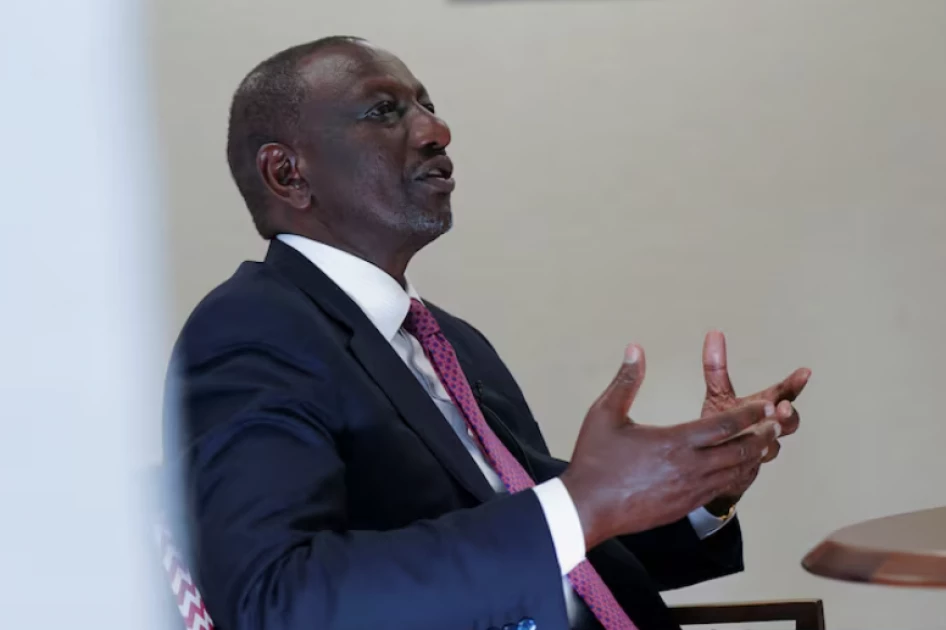
William Ruto, President of Kenya. Photo/Courtesy
By Ruth Sang
In the past few months, Kenya’s political leadership has repeatedly revived the ambition to transform the nation into “the Singapore of Africa.” The idea has been most loudly trumpeted by President William Ruto, who often boasts about plans for grand infrastructure and maintains that Kenya can follow in the footsteps of the famed Asian Tigers. While the aspiration may sound inspiring, the reality of how Singapore rose suggests just how unfeasible, even complex, this comparison might be in the case of Kenya.
A Small Island With a Big Reputation
Singapore, on the southern edge of the Malay Peninsula, has been repeatedly held up as a blueprint for development. Barely larger than Nairobi in land area, the city-state has near six million people packed into its 719 square kilometres. Kenya, by contrast, spreads over 580,000 square kilometres and has a population close to 54 million. If one were to compare like with like, the fairer analogy might be between two cities—Singapore and Nairobi—not between Singapore and an entire country.
Still, Kenya’s political class has elevated Singapore as the peak of economic achievement: the model of how a struggling post-colonial society can rise to first-world prosperity within a generation.
Centuries in the Making
While gaining independence roughly at the same period as Kenya, Singapore’s story stretches much further back: by the 14th century, it was already a thriving trading outpost known as Temasek, which later developed as Singapura, the “Lion City,” into a multicultural commercial center long before the British established their foothold there.
From the short-lived union with Malaysia to its separation in 1965, Singapore emerged as a fragile, resource-poor island state. Its first leaders faced daunting problems: unemployment, slums, ethnic tension, and hostile neighbours. But through discipline, strict governance, and a long-term economic vision, Singapore was able to capitalize on its geography, strengthen the rule of law, weed out corruption, and aggressively attract foreign investors.
It invested heavily in education, technology, and manufacturing, enabling the island to move rapidly from exporting simple goods in the 1970s to producing advanced electronics, pharmaceuticals, and financial services by the 1990s. Today, GDP per capita stands above $60,000, among the highest in the world.
Kenya’s Divergent Path
While Kenya started its life as an independent nation with the natural resources and arable land, it adopted a very different trajectory. Corruption set in at independence and became deeply entrenched. Ethnic politics triumphed over national cohesion, resulting in cycles of instability that discouraged long-term investment. Public institutions remained weak; economic strategies changed with the seasons, and year by year, debt dependency mounted.
However, in general, development priorities have focused on immediate interests serving the basic characteristics of political regime legitimization rather than long-run national planning. Consequently, sectors like manufacturing, education, and healthcare lag behind.
What Kenya Could Learn
The Kenya attempt at emulating even a fraction of the Singapore model would have to restart with a few key pillars: trusted institutions, consistent policy direction, rural-focused development, strengthened ports, and a serious commitment to meritocracy. It has natural advantages: strategic ports, a young population, and leadership in ICT that could propel regional economic dominance, if nurtured properly.
The Singapore Dream: Mirage or Guide?
President Ruto is adamant that Kenya can take the path of the Asian Tigers. But at the base of Singapore’s transformation were incorruptible leadership, discipline, and unwavering long-term planning—values Kenya is yet to firmly adopt. The gulf between the two countries is still wide, though not insurmountable. The question that still lurks on everyone’s lips is whether Kenya is ready to embrace the tough, at times uncomfortable, reforms that fuelled Singapore’s rise—or whether the dream will remain political rhetoric rather than actionable reality.
About Author