Kindiki Calls for Human Rights Safeguards in Expanding Multi-Door Justice Systems
Prof. Kindiki concluded by urging judiciaries to continue embracing innovation and people-centred solutions, saying justice must be accessible not only in physical courts, but through inclusive and responsive systems that meet citizens where they are.
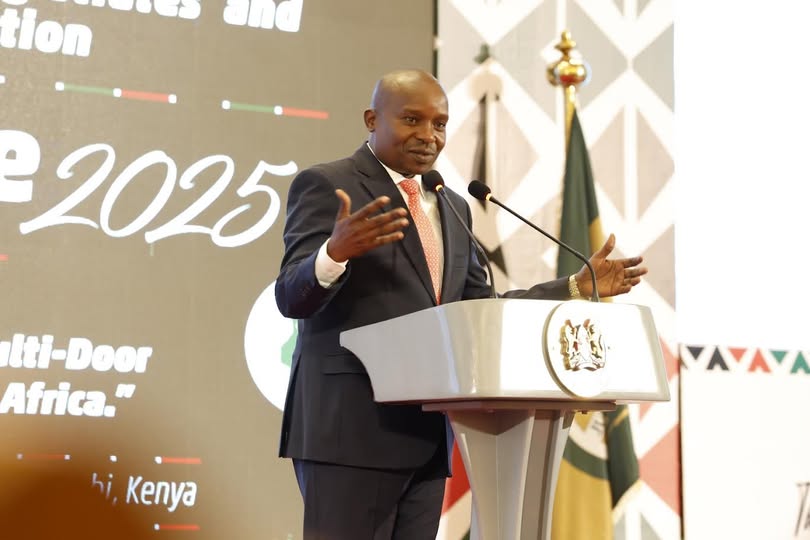
He said Kenya supports collaborative initiatives towards addressing shared challenges, harmonizing best practices, and strengthening judicial independence. Photo/Courtesy.
By Ruth sang
The Deputy President Prof. Kithure Kindiki emphasized that all multi-door justice initiatives must, therefore, be anchored on strong constitutional principles, human rights protection, and gender-sensitive frameworks, since these will always be essential ingredients for building people-centred justice systems throughout East Africa.
Speaking at the 22nd East Africa Magistrates and Judges Association Annual Conference, Prof. Kindiki said that reforms in justice should be designed to empower and not alienate citizens. The conference, themed “Justice Beyond Brick and Mortar: Unlocking Multi-Door Pathways for People-Centred Justice in East Africa”, brought together judicial officers, policymakers, and experts in law from across the region.
Prof. Kindiki said that for the region to build justice systems that genuinely serve the people, the foundation must remain the protection of dignity, fairness, and fundamental freedoms. “Gender-sensitive guidelines, human rights protections, appellate pathways, and constitutional guardrails must form the backbone of all multi-door justice initiatives,” he said.
The Deputy President, while acknowledging gains towards reform in the judiciary, emphasized that for many citizens, especially women, the youth, small traders, and rural communities, court procedures continue to be perceived as fearsome, costly, slow, and physically inaccessible. He said these barriers hinder economic participation and undermine public confidence in justice institutions.
“Too many people continue to view the formal court process as removed or intimidating. Justice should never feel out of reach,” he explained, calling on the judiciary to fortify mechanisms that bring justice closer to the people, such as Alternative Dispute Resolution, traditional justice systems, mobile courts, and digitized judicial services.
While advocating for their broader application, Prof. Kindiki cautioned that such methods must not erode key procedural safeguards; efficiency and citizens’ rights protection must always be in balance. “In expanding options for justice, we must never allow expediency to compromise fairness, accountability, or constitutional freedoms,” he warned.
The Deputy President further highlighted Kenya’s commitment to working with other East African judiciaries to improve regional access to justice. He said Kenya supports collaborative initiatives towards addressing shared challenges, harmonizing best practices, and strengthening judicial independence throughout the East African Community.
Prof. Kindiki hailed judges and magistrates in the region as a pillar in the dispensation of justice, asserting that the East African region stands to benefit from continuous innovation, cooperation, and modernisation of justice systems.
The annual EAMJA conference provides a forum for judicial officers to share ideas on emerging issues and develop reforms that reflect the changing needs of the region’s growing population. Prof. Kindiki concluded by urging judiciaries to continue embracing innovation and people-centred solutions, saying justice must be accessible not only in physical courts, but through inclusive and responsive systems that meet citizens where they are.
About Author