Kenya Strengthens Refugee Integration Agenda as Dadaab and Kakuma Officially Become Municipalities — CS Murkomen
He emphasized that Kenya will work with neighboring countries and international partners to help create safe, stable conditions that encourage refugees who wish to return home to reintegrate successfully.
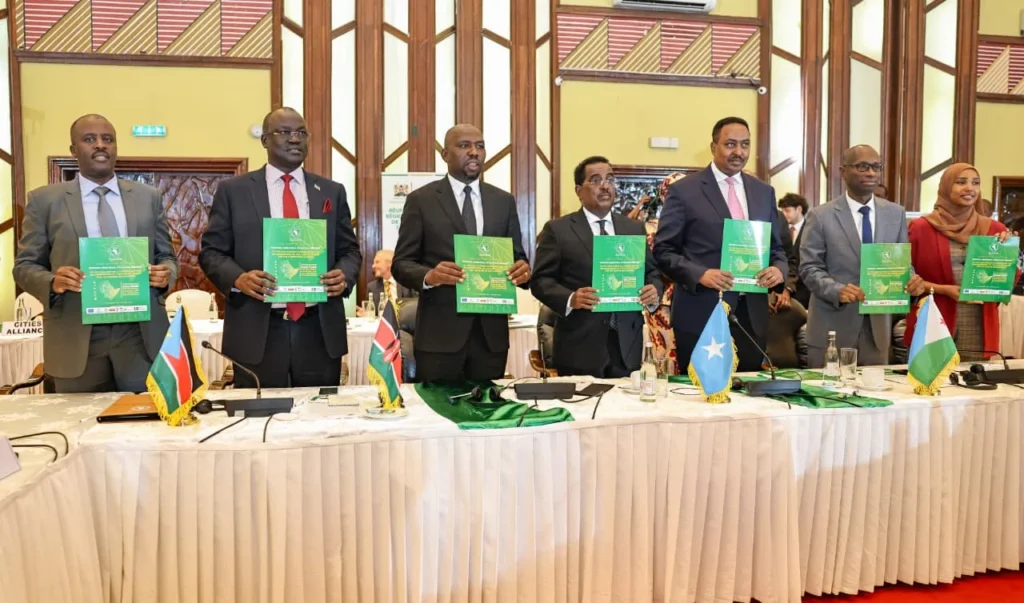
Murkomen also reiterated Kenya's continued commitment to regional stability initiatives, including voluntary repatriation programs. Photo/Courtesy
By Ruth Sang
Kenya has reiterated its commitment to ensuring increased refugee self-reliance and deeper socio-economic inclusion for displaced people and their host communities. This was stated anew by Interior Cabinet Secretary Kipchumba Murkomen, who spoke at the IGAD Support Platform Regional Inter-Ministerial Stock-Taking Meeting on Thursday.
Murkomen emphasized that the country remains fully aligned with regional and international frameworks aimed at improving refugee protection while advancing long-term, development-oriented solutions. He pointed out that the efforts to address these issues are anchored in Kenya’s ambitious Shirika Plan, a comprehensive strategy guiding the integration of refugees into national and county systems.
The Shirika Plan, according to the CS, has been instrumental in changing Kenya’s refugee management approach from reliance on short-term humanitarian support to one that increasingly sustains itself through leveraging government structures. Under this plan, refugees and their host communities are increasingly accessing health, education, and livelihood support among other essential services just like any other Kenyan population.
“The Shirika Plan is a transformative framework that ensures refugees and host communities benefit from national service delivery mechanisms, allowing them to participate meaningfully in social and economic life,” Murkomen said.
Perhaps the most significant development in this initiative is giving full municipality status to Dadaab and Kakuma. Murkomen reiterated that the formal municipal charter status to these two long-standing refugee-hosting regions signifies a turning point in how development resources and services are deployed in these areas. The move is set to enhance governance structures, develop infrastructure, and improve public service delivery for hundreds of thousands of refugees and local residents.
“The elevation of Dadaab and Kakuma to municipality status opens up new prospects for planned development and infrastructure. This will not only be of benefit to refugees, but to communities who have graciously hosted them for years,” he observed.
Murkomen also reiterated Kenya’s continued commitment to regional stability initiatives, including voluntary repatriation programs. He emphasized that Kenya will work with neighboring countries and international partners to help create safe, stable conditions that encourage refugees who wish to return home to reintegrate successfully.
“We reiterated, during the IGAD inter-ministerial meeting, our commitment to strengthening conditions conducive to voluntary return and reintegration while building on progress made so far,” he added.
This position by Kenya reinforces its long-time leadership in progressive refugee policies. The country continues to collaborate closely with IGAD member states, humanitarian actors, and development partners in the pursuit of durable solutions for displaced populations, while advancing resilience and opportunity within host communities. Murkomen’s remarks come at a time when Kenya is globally recognized for transitioning toward a rights-based, development-focused refugee management model—one that seeks to empower refugees not as dependents but rather as contributors to economic and social development.
About Author