2027 crisis looming? By-elections marred by violence and intimidation
Police said they had deployed extra officers to high-risk zones to maintain order. Community leaders called for more proactive measures to protect voters and election officials.
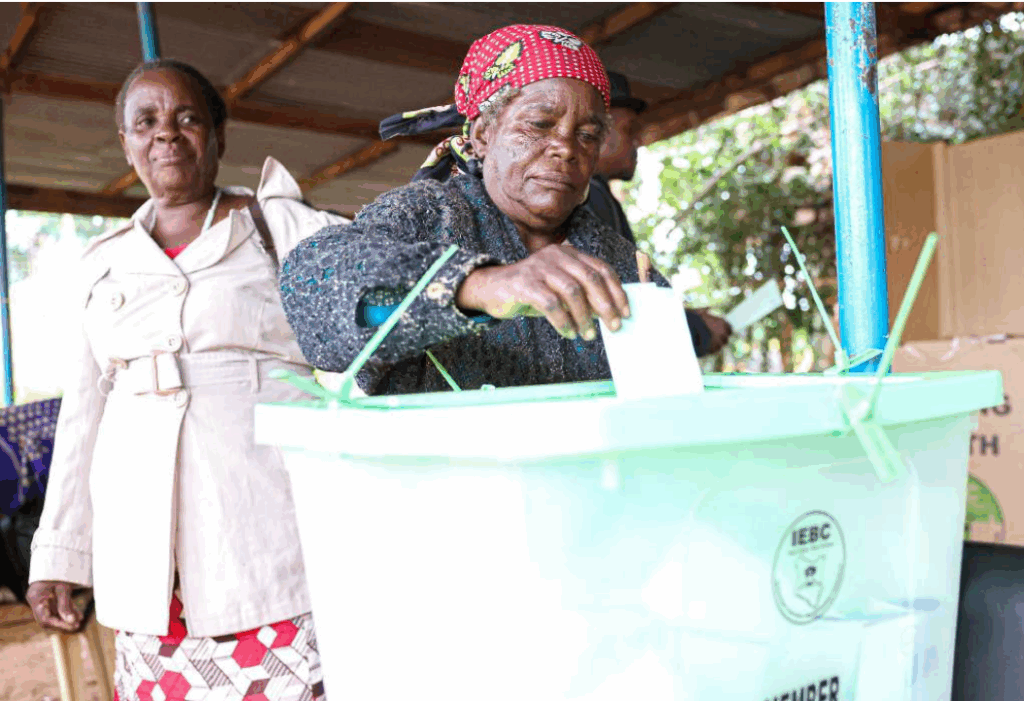
Malava, Mbeere North, Kasipul and Magarini—seen as political bellwethers—recorded the worst disruptions. Photo/Courtesy.
By Ruth Sang
Thursday’s by-elections were overshadowed by chaos, threats, and allegations of electoral misconduct—offering an early and troubling preview of the tensions that could influence the 2027 General Election as political rivals compete for dominance.
Several regions reported injuries and destruction of property as clashes unfolded throughout the day, with four key constituencies experiencing the most serious unrest.
Malava, Mbeere North, Kasipul and Magarini—seen as political bellwethers—recorded the worst disruptions.
In Malava, violence erupted in the morning and escalated. Several vehicles were vandalised or torched in what residents described as attacks by organised groups targeting opponents. Among the vehicles destroyed was a Toyota Prado associated with DAP-K leader Eugene Wamalwa, according to locals.
DAP-K aspirant Seth Panyako accused security officers of failing to protect him when unidentified attackers allegedly targeted him overnight, injuring his agents and damaging property. His camp also questioned changes in the voter register after Panyako discovered he had been moved to a different polling stream without prior notice.
In Mbeere North, UDA candidate Leonard Wa Muthende raised security concerns after spotting groups he described as hostile loitering near polling stations. “When large crowds accompany individuals to a polling centre, it creates doubt about their intentions,” he said.
The same constituency witnessed former Public Service CS Justin Muturi engage in a heated confrontation with people witnesses identified as UDA agents. Tensions mounted when Muturi objected to a polling agent wearing a yellow jacket, arguing it breached election rules on party attire. Muturi and his supporters escorted the agent out, sparking verbal exchanges before police stepped in.
Kasipul also descended into violence when Homa Bay Town MP Peter Kaluma was injured in a scuffle involving backers of independent candidate Philip Aroko. Kaluma, serving as the chief agent for ODM candidate Boyd Were, became embroiled in a dispute that quickly spiralled out of control. His bodyguard’s firearm went missing during the fracas, prompting police action at Agoro Sare Primary School. Although order was eventually restored, tensions lingered. The constituency had witnessed similar clashes earlier in the month.
Nyansiongo ward in Nyamira also saw rival groups face off before officers dispersed them. Residents reported sudden eruptions of violence close to voting centres.
In Machakos, former MCA Paul Musengu was confronted by locals who accused him of attempting to bribe voters. The situation escalated, forcing him to leave the scene amid rising tempers.
Political leaders condemned the widespread unrest, warning that the incidents could foreshadow serious risks ahead of the 2027 elections. Siaya Senator James Orengo said the events exposed how vulnerable Kenya’s electoral environment remains. “We cannot move forward if, more than a decade after the 2010 Constitution, we still struggle to hold peaceful and credible elections,” he wrote on X, cautioning against what he called the growing militarisation of campaigns.
Jubilee secretary general Jeremiah Kioni said the violence may be a sign of deeper problems to come, questioning whether authorities were equipped to maintain order and fairness. He faulted electoral institutions for not ensuring stronger accountability.
Suba North MP Millie Odhiambo also voiced alarm, saying the level of chaos reported in several constituencies risked undermining public trust. “This violence is unacceptable and jeopardises the credibility of the vote,” she said.
ODM secretary general Edwin Sifuna blamed weak security coordination for the disturbances and urged state agencies to act firmly to prevent violence from influencing outcomes.
The unrest did not begin on polling day. In the weeks before the vote, several regions had already experienced clashes. In Kabuchai, Bungoma county, Trans Nzoia Governor George Natembeya’s convoy was attacked during a DAP-K campaign event, injuring several people and damaging vehicles. Opposition leaders condemned the incident and pushed for investigations.
In Ugunja, Siaya county, an ODM rally turned violent following disagreements between rival factions, leaving several people injured by gunfire. Police launched investigations into the cause of the clashes.
In Magarini, ODM candidate Harrison Kombe claimed that some of his agents were denied access to polling centres, raising questions about due process. The constituency has been closely watched since the Supreme Court nullified its 2022 election.
By the time voting began, many areas were already highly charged, with local disputes and national political undercurrents heightening tensions. Though the contests were local, major political figures descended on the regions, turning the by-elections into a test of emerging political alliances.
Reports from the ground pointed to various forms of disruption—intimidation, fights, arrests and disputes over entry into polling stations.
With tensions rising, the Independent Electoral and Boundaries Commission came under fresh scrutiny over its preparedness to manage volatile conditions. The IEBC urged politicians to refrain from spreading unverified claims that might inflame the situation and reminded candidates that breaching electoral rules could lead to penalties, including fines or disqualification.
However, critics argued that the commission needed stronger systems to guarantee order and rebuild confidence.
Earlier clashes in Kasipul had resulted in fatalities, prompting the IEBC to fine the two leading contenders Sh1 million each in an effort to deter further violence. Despite the penalties, mistrust remained high, with both camps accusing each other of provoking unrest.
Across the country, police said they had deployed extra officers to high-risk zones to maintain order. Community leaders called for more proactive measures to protect voters and election officials.
Civil society organisations monitoring the polls demanded thorough investigations into all violence and intimidation. They said accountability was key to deterring similar behaviour ahead of future elections. Election observers also highlighted the need for improved voter education, particularly on the roles of agents and security officers, to reduce disputes.
As counting continued into the night, officials stressed transparency while political leaders urged calm and appealed to supporters to await the final results.
About Author