By-elections Offer Crucial Trial for Newly Appointed IEBC Commissioners Ahead of 2027, Says Deputy Speaker Gladys Boss
According to her by-elections will not just be a test of IEBC’s preparedness but also an assurance to the public that the country’s electoral integrity remains intact as the next General Election approaches.
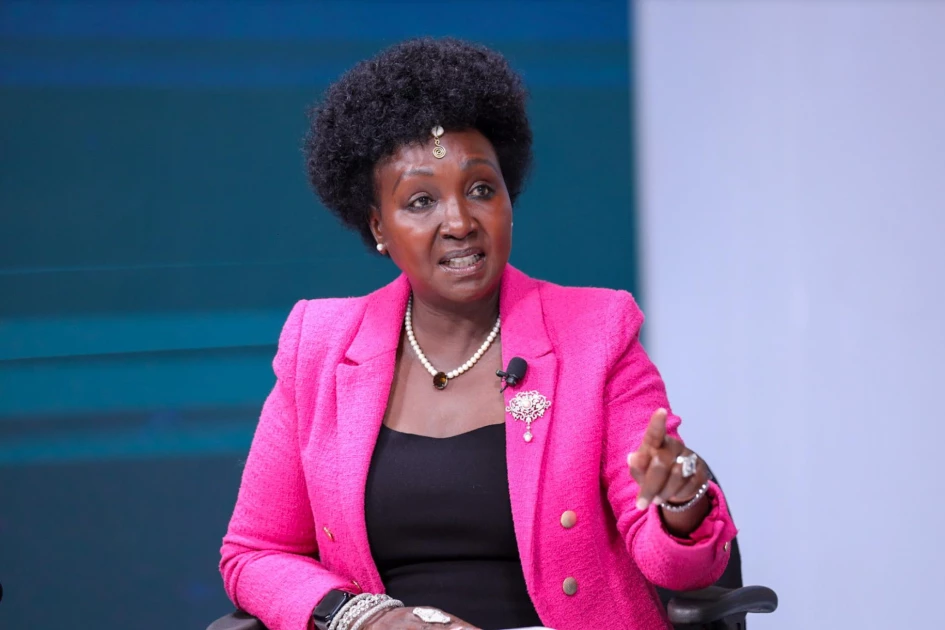
National Assembly Deputy Speaker Gladys Boss speaks to Citizen TV on January 14, 2025. PHOTO/courtesy
By Ruth Sang
Deputy Speaker of the National Assembly, Gladys Boss Shollei, has described Kenya’s electoral infrastructure as one of the most secure in the region, adding that the upcoming by-elections present an important opportunity for the newly constituted Independent Electoral and Boundaries Commission (IEBC) to demonstrate its readiness ahead of the 2027 General Election.
Shollei said during an interview on Citizen TV’s Daybreak on Tuesday that the mini polls offer a practical learning platform for the new commissioners, where they sharpen their operational skills and identify any gaps that may need to be addressed before the next nationwide election cycle.
“We now have a completely new IEBC with a fresh set of commissioners. By-elections serve as an excellent training ground. They allow the commissioners to understand the system better, test processes, and gain hands-on experience,” she remarked.
Shollei also praised the new commission for taking bold action in response to violence experienced in the Kasipul parliamentary by-election campaigns. IEBC fined two candidates Ksh.1 million each and forced them to sign a peace pact after clashes between their supporters led to the death of two people.
Recalling her previous experience, the Deputy Speaker noted that similar measures were taken years ago during the Makadara by-election, when former Nairobi Governor Mike Sonko first contested.
“We told all candidates that if any further violence occurred, we would not hesitate to call off the election. Ensuring your supporters maintain peace is your responsibility, and once candidates understand that, the environment changes,” she stated.
Shollei said the critics, who argue that Kenya’s election is prone to manipulation, have no basis for their argument. She observed that many of those peddling the narrative do not understand how robust the system has become over the years.
She explained that the Kenya Integrated Election Management System (KIEMS) kits are geo-fenced, meaning they can only operate within their assigned polling stations. Biometric identification—using fingerprints, facial recognition or iris scans—further ensures that fraud such as voter impersonation or multiple voting is impossible. Party agents, she emphasized, verify every step of the process.
“If someone lacks fingerprints, the system uses their eye pupil or facial features. All identifications must be approved by the agents, and everything gets recorded. This is why I insist that Kenya truly has one of the safest electoral systems in the world,” she argued.
Shollei also pointed out the transparency that has come with QR-coded ballot papers and result forms, which are instantly scanned and uploaded to the public portal upon counting. She said this openness allowed the public and media houses to independently tally the 2022 results with a high level of accuracy even before official pronouncements were made.
Kenyans will go to the ballot in 24 different electoral areas on November 27: a Senate seat in Baringo County, six parliamentary constituencies including Kasipul, Mbeere North, Ugunja, Magarini, Banissa and Malava, and 17 ward representative seats. According to Shollei, the by-elections will not just be a test of IEBC’s preparedness but also an assurance to the public that the country’s electoral integrity remains intact as the next General Election approaches.
About Author