From Ruins to Renewal: Inside Mogadishu’s Rapid Construction Wave
Authorities say these precautions have drastically reduced attacks, reporting an 86 percent decline in insurgent activity in the city between 2023 and mid-2025.
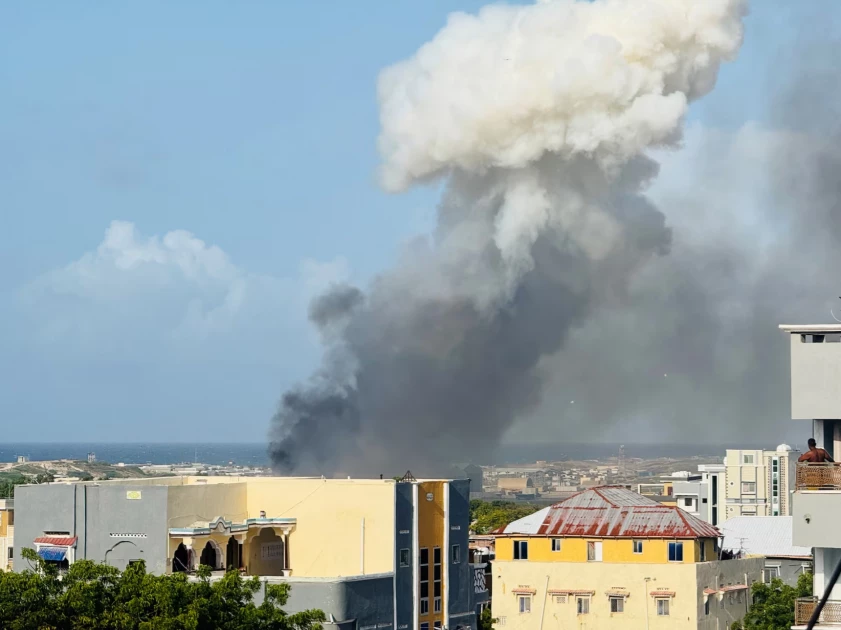
Smoke rises in the direction of Aden Adde airport in Mogadishu. Photo/Courtesy.
By Ruth Sang
Mogadishu, once synonymous with destruction, is undergoing a profound transformation as the Somali capital slowly rebuilds after decades of conflict. Though many streets are still lined with bombed-out structures, and the pavements still carry the marks of past gun battles, the dominant sound in the city today is no longer that of explosions but of hammers, cement mixers, and bustling construction crews.
A decades-long history of chaos, from the civil war of the 1990s to the years of intense Islamist insurgency, has crippled Somalia’s development across generations. The United Nations estimated that almost 70 percent of the population experienced “multidimensional poverty,” bereft of decent education, health services, infrastructure, and economic opportunities. Yet despite the challenges, Mogadishu’s roughly three million residents are experiencing a level of physical development that has not been seen in decades.
Piles of sand, steel bars, and bricks molded into their familiar rectangular shapes monopolize sidewalks across the city. Construction sites have become a part of the scenery, a sign of cautious hope. On Makkah Almukarramah Avenue, the city’s main commercial strip, builders are racing to finish new multi-storey buildings with big glass windows – a scene that says a lot about renewed confidence, said Habib Farah, who lives in the city. For the first time in years, people are installing glass without fearing it will be shattered by nearby explosions.
While official data is limited, Mogadishu’s mayor recently revealed that upwards of 6,000 buildings have gone up within the past five years. According to government officials, improved security brought about by a restructured checkpoint system inside and on the outskirts of the capital should be credited for spurring the recent growth.
Every night, security officials carefully check cars passing through main entry points like the Jazeera checkpoint, some 10 kilometers from the city center. Vehicles that have been outside Mogadishu for more than 20 days are not allowed in, under the assumption that such time is sufficient to place hidden explosives in them. Authorities say these precautions have drastically reduced attacks, reporting an 86 percent decline in insurgent activity in the city between 2023 and mid-2025.
Although occasional incidents still occur — including a dramatic Al-Shabaab attack on a jail in October involving vehicles disguised as government convoys — officials insist the city is safer than it has been in years. National Security Advisor Awes Hagi Yusuf maintains that Mogadishu’s residents feel secure enough to continue investing in their city.
The Somali diaspora is a major driver of growth, with remittances reaching almost 15 percent of Somalia’s GDP in 2023. Inflows have almost doubled in just over a year, an indication of the rising pace of economic activity. Returning Somali entrepreneurs are investing money in real estate, banking, trade, technology, and infrastructure, according to the Somali National Bureau of Statistics. Mohamed Gheedi, CEO at Premier Bank, says the diaspora’s expertise combined with growing local financial services is driving unprecedented development in an under-served market.
But with rapid growth comes complications. As new buildings are going up, poorer communities are increasingly being pushed out of central areas in a pattern echoing the gentrification of other growing cities. Mahad Wasuge, a policy analyst at Somali Public Agenda, says that though diplomats and wealthy elites benefit from increased comfort, many ordinary residents have been displaced and end up further away from basic services like schools and hospitals. Tensions over forced evictions boiled over in August, as confrontations between residents and security forces in southern Mogadishu left several people dead. Wasuge cautions that even though the government now projects a narrative of a “rising Mogadishu,” the burden of progress is unequal. While the city rebuilds, the pertinent question becomes: who benefits from this new chapter, and who gets left out?
About Author