Two Police Officers Killed and Five Others Injured in Suspected Al-Shabaab IED Blast in Kulan
The use of IEDs presents serious challenges, they warn, for patrol teams since they are usually set along the roads or bush paths commonly used.
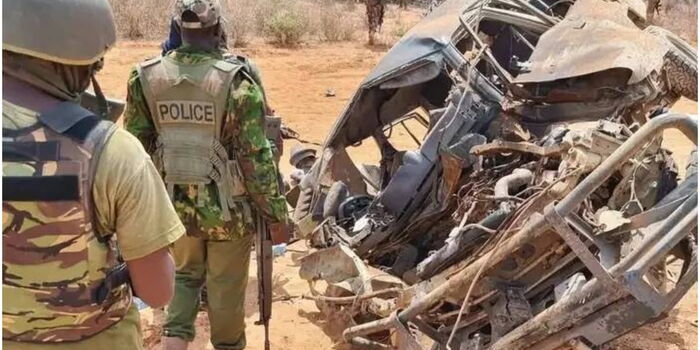
An image of a mangled police vehicle after it stepped into an IED in Kulan, near Daadab on Wednesday, November 19. Photo/Courtesy.
By Ruth Sang
Two Administration Police AP officers died on Tuesday when their patrol vehicle was hit by an IED at Kulan in Garissa County, near the Dadaab refugee complex. Initial reports from security personnel on the ground said the deadly explosion occurred when the officers’ vehicle unknowingly drove over the device and triggered a powerful blast.
At least five other police officers were severely injured during the incident. All the injured were of the same patrol team and were travelling in the vehicle when it exploded. Emergency response teams rushed the injured to nearby medical facilities, while reinforcement units have been deployed to the area.
The local security officials, who requested anonymity since the investigations are still ongoing, believe that the explosive device could have been planted by Al-Shabaab militants. Although no armed group had claimed responsibility by the time this report was published, authorities believe the nature of the attack and the area’s recent security pattern point strongly to the Somalia-based extremist group.
Kulan and its surroundings have, in the last few months, witnessed a disturbing resurgence of insecurity. Multiple incidents involving the use of roadside IEDs targeting police convoys and patrol units and security installations have been recorded by security agencies. This has become one of the most common ways hostile groups inflict maximum damage without direct confrontation with Kenyan forces.
This incident happened in May 2025 when three officers escaped with their lives after their Land Cruiser patrol vehicle hit an improvised explosive device during the early morning routine patrol. The impact destroyed the front part of the vehicle, but the officers survived largely because the device detonated prematurely, reducing the force of the blast.
Security experts observe that the latest attacks form part of a larger pattern meant to destabilize the region through the weakening of counter-terrorism operations near the Kenya–Somalia border. The use of IEDs presents serious challenges, they warn, for patrol teams since they are usually set along the roads or bush paths commonly used.
With investigations now launched into the latest attack, the security apparatus is expected to increase surveillance, deploy more patrols, and engage local communities in the interest of enhancing intelligence. Regional leaders have frequently called on residents to report suspicious activities, citing community cooperation as an important component in deterring such deadly actions. The deaths of the two officers add to the growing list of security personnel who were killed or injured while carrying out operations in this volatile area. The government is yet to release the names of the fallen officers, as families are being notified.
About Author