Amnesty International Urges World Bank to Persuade Uganda to Scrap Anti-Gay Law
the Finance Ministry of Uganda issued a statement last Monday that the nation would get $2 billion in funding from the World Bank
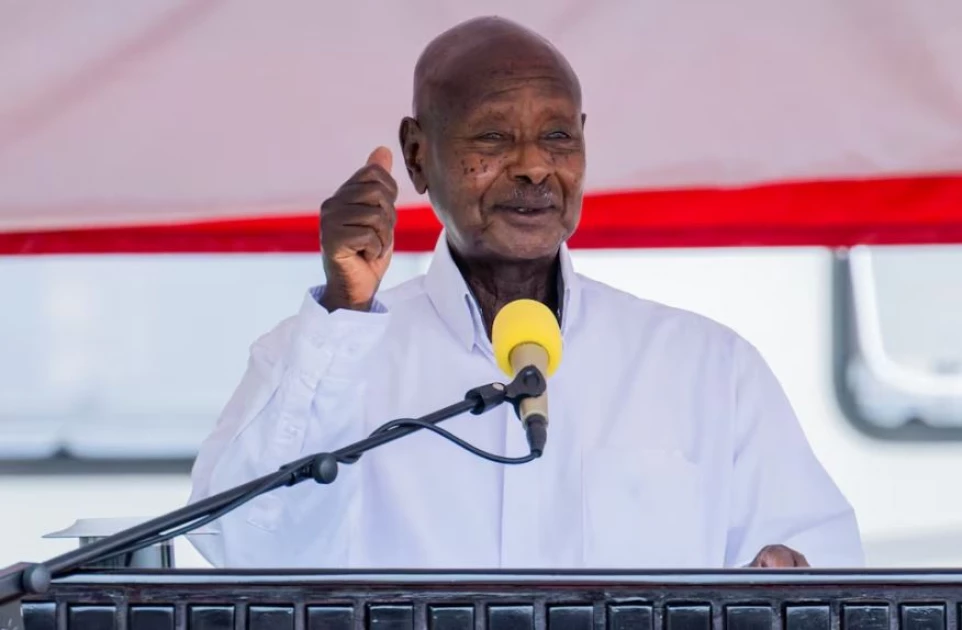
Uganda's President Yoweri Museveni delivers the 2025 State of the Nation Address at Kololo Ceremonial Grounds, in Kampala, Uganda June 5, 2025. Photo/Courtesy
By Ruth Sang
Amnesty International called on the World Bank to use its increased financial engagement with Uganda to pressure the East African nation to roll back its discriminatory anti-gay law. The appeal comes after the global lender signaled the removal of a suspension on fresh loans that had been imposed as a measure of reprisal following the Ugandan government passing one of the world’s most draconian anti-LGBTQ+ laws.
Uganda’s Anti-Homosexuality Act, signed into effect by President Yoweri Museveni in May 2023, criminalizes gay sex and solicitation of homosexuality. Its worst provisions include life imprisonment and capital punishment in “aggravated homosexuality” cases. Following its enactment, the World Bank froze all new financing for Uganda on grounds of supporting policies that advance inclusion and prohibit discrimination.
But the Finance Ministry of Uganda issued a statement last Monday that the nation would get $2 billion in funding from the World Bank over the next three years of its budget period. There has been no official statement from the World Bank on this fresh financial aid.
Roland Ebole, an Amnesty International researcher for Uganda and Tanzania, explained that while Amnesty generally tries to stay away from laying down political conditions for aid, this scenario offers a rare opportunity for the World Bank to insist on equality. “Since the Bank has made a choice to resume its contributions, it should also hold out to achieve the abolition of discriminatory laws and practices,” Ebole said. He pointed out that the World Bank, as a large financial institution, can already have sufficient leverage to safeguard government programs from marginalizing or hurting LGBTQI people.
Similarly, Open for Business, a UK-based economic inclusivity and diversity agency, was also disappointed in the decision to revive financial assistance. The agency said this move goes against the calls of several civil society organizations which have persistently urged international players to pressure Uganda into changing its laws.
The World Bank signaled in June that it was going to revive its lending to Uganda, citing that if poor communities are excluded from the benefits of its projects, it cannot adequately fulfill its aim to “end poverty and promote shared prosperity on a livable planet.”.
Uganda has lost massive sums of money—estimated at between $586 million and $2.4 billion annually—since the anti-LGBTQ+ law, according to Open for Business. The majority of these losses are from delayed foreign aid and reduced flow of investments, as foreign friends step back from Uganda because of its discriminatory laws.
Amnesty International’s recent intervention is putting renewed pressure on the World Bank to ensure that its role promotes not just economic development, but also the promotion of human rights and equality for all citizens.
About Author