Murkomen Unveils Plans for Special Police Unit to Combat Human Trafficking Amid Rising Child Disappearances in Eldoret
“We are not just dealing with isolated cases; we are looking at an organised criminal network that targets the most vulnerable. Some of these children are taken for forced labour, and in more sinister cases, some parents have sold their children ,” Murkomen stated.
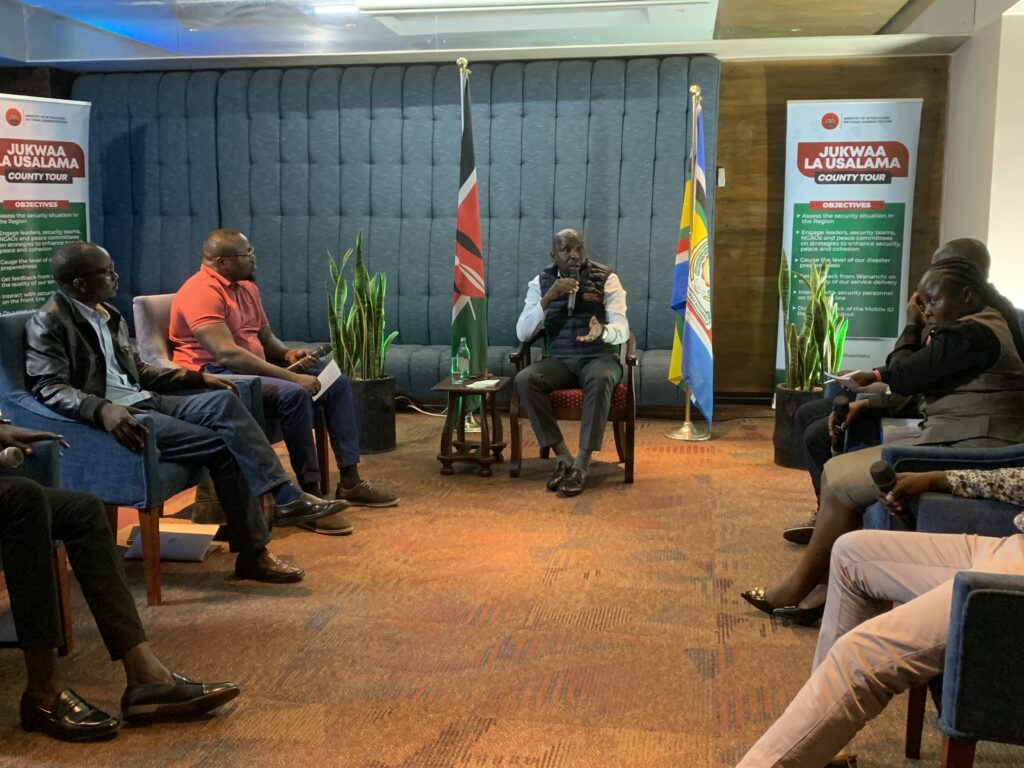
Interior Cabinet Secretary Kipchumba Murkomen has announced plans for the formation of a specialised police unit to tackle the escalating threat of human trafficking in Kenya. Speaking in Eldoret during a Jukwaa la Usalama media roundtable, Murkomen said the government is stepping up its response to what he described as a “serious transnational crime that requires urgent and coordinated action.”
Responding to a question from Mildred Mukhwana, a journalist from Upendo FM, regarding reports of child disappearances in Langas Estate, Uasin Gishu, the CS acknowledged the growing concern, noting that many cases are linked to forced labour, exploitation, and other criminal enterprises.
“We are not just dealing with isolated cases; we are looking at an organised criminal network that targets the most vulnerable. Some of these children are taken for forced labour, and in more sinister cases, some parents have sold their children ,” Murkomen stated.
He revealed that a dedicated anti-human trafficking unit will soon be established within the Directorate of Criminal Investigations (DCI). The unit will operate alongside existing anti-narcotics and anti-terrorism departments, focusing on intelligence gathering, victim rescue, and prosecution of traffickers.
“We will ensure that the next cohort of police recruits receives specialised training on identifying and responding to trafficking cases, especially those involving children,” he said. “Our law enforcement must be equipped, not just in numbers but in expertise.”
Murkomen also pointed out that while Kenya has ratified major international treaties on human trafficking and adopted the Counter-Trafficking in Persons Act (2010), enforcement still lags. Many cases go unreported, and victims often lack access to justice or protection services.
“The law is there, but it’s not enough. The challenge is enforcement, and that’s what we are now prioritising,” he noted.
In a sobering moment, Murkomen referenced the Kepenguria case, where several children reportedly disappeared and were later found dead in what authorities suspect was a ritualistic crime.
“That case should shake us all. It shows how deep this crisis runs and why we must act now. We cannot wait for more tragedies before taking serious action,” he said.
The CS further appealed to the public to be vigilant and report any suspicious activities. He expressed concern over reports that some parents in informal settlements may be involved in selling their children due to extreme poverty and lack of support.
“Desperation should never be an excuse for such acts. We must strengthen social support structures and ensure no child is traded or trafficked,” he urged.
Murkomen concluded by reaffirming the government’s resolve to make anti-human trafficking efforts a central pillar of national security, especially in known trafficking corridors like Eldoret and the North Rift region.
“This is no longer just a security issue—it’s a moral one. We must protect our children at all costs.”
The formation of the new unit, alongside improved training and increased public awareness, is expected to strengthen Kenya’s ability to combat trafficking and safeguard its most vulnerable populations.
About Author