Kenya’s Gen Z: The Digital Generation Demanding Accountability
Public outcry was swift and loud. Under mounting pressure, Deputy IG Lagat voluntarily stepped aside, saying he would cooperate fully with investigations.

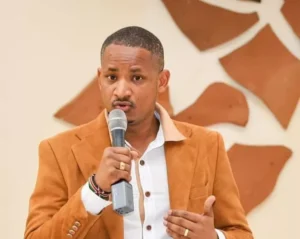
What began as a protest against the 2024 Finance Bill has grown into a broader, evolving movement—driven by Kenya’s youth—demanding more than regime change: they want real, systemic transformation. Photo/Kitanet.
By Mercy Chelangat
In the aftermath of a tragic death, a new generation has emerged as the driving force for change in Kenya—tech-savvy, outspoken, and fiercely committed to justice.
The killing of 31-year-old teacher and blogger Albert Omondi Ojwang while in police custody has galvanized Kenya’s youth, especially Gen Z, into powerful, sustained action against police brutality and impunity.
Ojwang’s arrest on June 6 in Homa Bay was allegedly linked to his online criticism of Deputy Inspector General of Police, Eliud Lagat. Just two days later, he was declared dead at Nairobi’s Mbagathi Hospital after being transferred to Central Police Station.
Authorities initially claimed suicide. But leaked photographs and a postmortem report told a different story—one marked by signs of physical assault.
Public outcry was swift and loud. Under mounting pressure, Deputy IG Lagat voluntarily stepped aside, saying he would cooperate fully with investigations.
The Independent Policing Oversight Authority (IPOA) launched a probe that has already led to the arrest of two officers—Samson Talam and James Mukhwana—as well as a technician implicated in tampering with CCTV evidence.
But the strongest response came from Kenya’s youth.
Protest in the Digital Age
Just days after Ojwang’s death, protests erupted across Nairobi, led largely by Gen Z activists. Roads near the City Mortuary were blocked. Marchers descended on Central Police Station, demanding justice with chants, placards, and hashtags: #JusticeForOjwang and #StopPoliceBrutalityKE.
For Kenya’s Gen Z, activism is no longer about waiting for change—it’s about creating it in real-time. Using platforms like X (formerly Twitter), TikTok, and WhatsApp, they mobilized rapidly.
They distributed legal aid contacts, debunked fake news, and livestreamed confrontations with police. Their organization was digital-first and grassroots-powered.
This isn’t their first rodeo.
In 2024, the same generation spearheaded a massive nationwide protest against a controversial Finance Bill, proving their influence extends beyond the streets and into the corridors of political power. They are a generation of university students, freelance creatives, first-time voters, and tech workers—socially conscious, politically aware, and increasingly unwilling to remain silent.
Justice or Gesture?
In a move that divided public opinion, President William Ruto offered Ojwang’s family a sum of Ksh. 2 million in condolence. While Ojwang’s father publicly thanked the government for its support, many Gen Z activists viewed the gesture with skepticism.
To them, financial compensation doesn’t replace justice. And it certainly doesn’t fix a broken system.
Their demands are clear: mandatory CCTV in all police cells, independent prosecution of officers accused of misconduct, and a national rollout of civic education focused on youth and constitutional rights. These are not fringe demands—they are systemic solutions proposed by a generation deeply aware of its rights and responsibilities.
The Power of Now
Whether they are dismissed as “radical” or celebrated as “woke,” one thing is certain—Kenya’s Gen Z is not waiting for elections or political favors. They are forcing urgent conversations on accountability, transparency, and justice.
This is a new kind of civic engagement: fast, digital, informed, and relentless.
And it raises an important question:
Will Gen Z be the generation that finally holds Kenya’s system accountable—or just the loudest voice in a long line of protests?
About Author