Deputy Governors Push for 40% of County Budgets to Strengthen Their Offices
They specifically called for 40 percent of each county governor’s budget to be allocated to the office of the deputy governor.
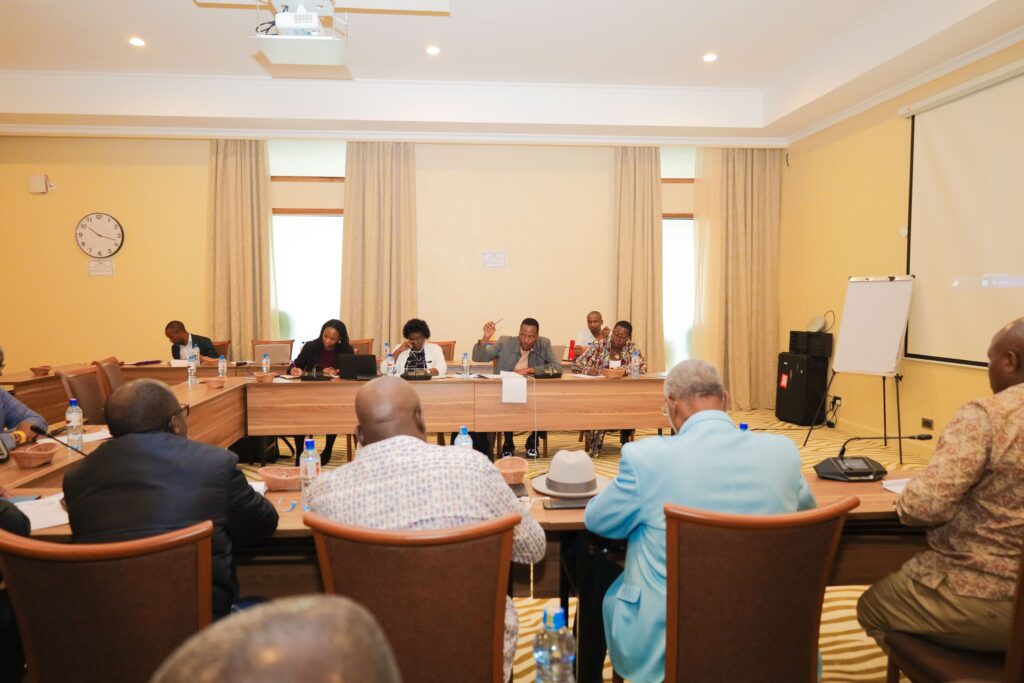
Deputy Governors Push Senate to Formalize Roles, Seek More Funds for County Administration. Photo/Parliament of Kenya.
By Robert Assad
Deputy Governors from across Kenya’s 47 counties are mounting pressure on the Senate to formalize their roles and significantly boost funding for their offices, in a bid to enhance their effectiveness in county administration.
Speaking during a meeting with the Senate Standing Committee on Devolution and Intergovernmental Relations held in Nakuru on Friday, 9th May, the Deputy Governors’ Caucus, led by Laikipia’s Deputy Governor Reuben Kamuri, urged lawmakers to amend key sections of the County Government Act.
They specifically called for 40 percent of each county governor’s budget to be allocated to the office of the deputy governor.
Kamuri, who chairs the caucus, lamented that deputy governors are currently relegated to the role of “personal assistants” to their county bosses, with little say in day-to-day county operations.
“The deputy governors are more of personal assistants to the governors. We are not involved in the running of the counties,” Kamuri decried, highlighting a long-standing grievance over the ambiguous legal status and underfunding of their offices.
Under the current framework, Section 92 of the County Government Act states that a deputy governor’s main function is to deputize for the governor and perform duties assigned by the governor.
However, the deputies argue that this provision leaves their roles ill-defined and dependent on the goodwill of the governors.The caucus is proposing amendments to Section 32 of the Act to clearly spell out their responsibilities in the Constitution.
Among the suggestions is granting deputy governors the authority to chair specific county programs, akin to the way the Deputy President chairs the Intergovernmental Budget and Economic Council (IBEC).
Senators present at the Nakuru meeting, led by committee chair Senator Mohamed Abass, acknowledged the plight of the deputy governors. They expressed support for dignifying the office and enhancing its role in implementing executive decisions.
However, they also cautioned the deputies to avoid power struggles with governors, suggesting that any reforms should establish a clear division of roles to ensure smooth governance.
Kisii Senator Richard Onyonka advised the deputy governors to provide comprehensive research and comparative examples from other jurisdictions.
“Research on what others have done and then propose a well-researched formula for budget allocation and funding for the deputy governor’s office,” Onyonka recommended.
The deputy governors’ push for more resources and authority marks the latest development in Kenya’s evolving devolution framework.
About Author