Senators Grill CS Kabogo Over Delayed Network Connectivity in Kenya
Senators raised concerns about accountability, with Edwin Sifuna (Nairobi) questioning the Ministry’s reliance on private firms over Telkom Kenya for the Fibre Optic project.
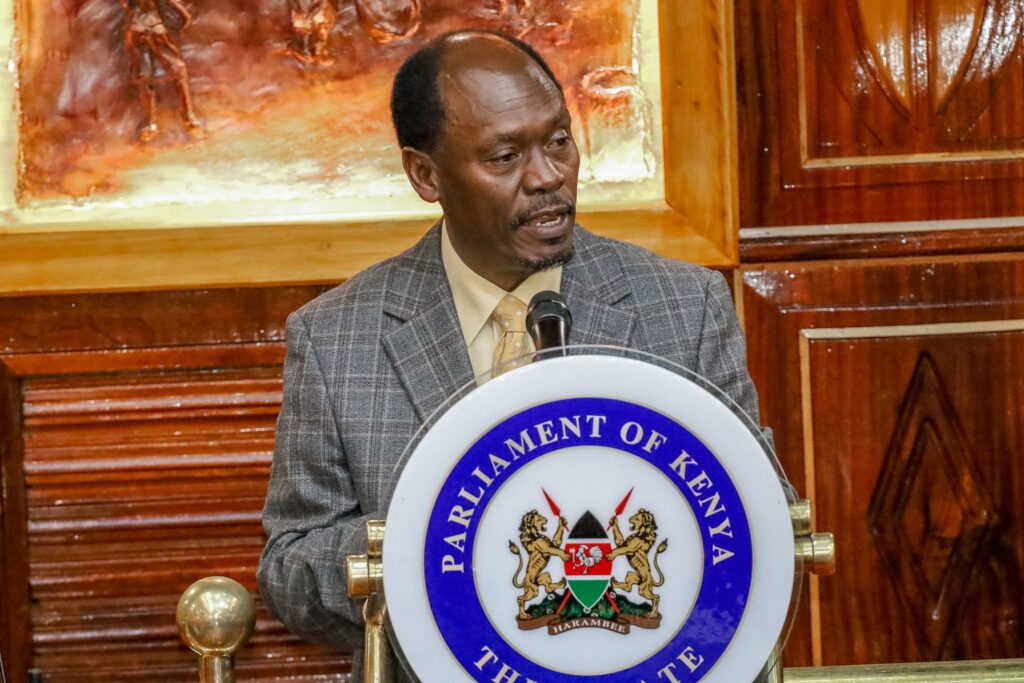
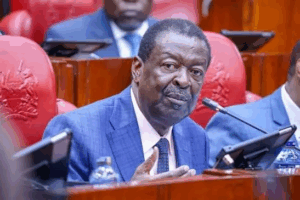
Cabinet Secretary for Information, Communication, and the Digital Economy, William Kabogo, faced intense scrutiny during a Senate Plenary session at Parliament Buildings on Wednesday. Photo/Parliament of Kenya.
By Robert Assad
Cabinet Secretary for Information, Communication, and the Digital Economy, William Kabogo, faced intense scrutiny during a Senate Plenary session at Parliament Buildings on Wednesday.
Senators, led by James Lomenen (Turkana), pressed for answers on the government’s slow progress in improving network connectivity in underserved and high-risk areas, particularly in Turkana County and other border regions.
Sen. Lomenen demanded clarification on the Ministry’s efforts to enhance communication infrastructure in areas like Todonyang, Merikuka, and Natira, emphasizing the need for reliable networks to support security operations and community services.
Kabogo highlighted the Communications Authority of Kenya’s (CA) work through the Universal Service Fund (USF), noting that a mobile cell tower in Todonyang now provides over 80% coverage in Natira.
“We are prioritizing connectivity in Turkana to secure borders and protect communities,” he assured.
Despite these efforts, Senators, including Danson Mungatana (Tana River), Fatuma Dullo (Isiolo), and Enoch Wambua (Kitui), criticized the pace and scope of implementation.
They urged faster action to address persistent connectivity gaps in insecure and remote areas. Kabogo responded by outlining ongoing Quality of Service assessments and engagements with telecom providers like Safaricom and Airtel to meet universal service obligations.
He revealed that 10 of 18 targeted sub-locations in Turkana now have operational mobile infrastructure under USF Phase II.
The session also touched on national security, with Kabogo confirming that exclusive frequencies are allocated to the Kenya Defence Forces and National Police Reservists for secure communication.
Additionally, the Ministry is collaborating with satellite providers like Starlink and advancing a 100,000-kilometer Fibre Optic rollout to boost connectivity nationwide.
Senators raised concerns about accountability, with Edwin Sifuna (Nairobi) questioning the Ministry’s reliance on private firms over Telkom Kenya for the Fibre Optic project.
Deputy Speaker Kathuri Murungi (Meru) sought transparency on the USF’s expenditure, asking, “Is it being used prudently?” Kabogo defended the fund’s management, promising lawful utilization.
On education, Senators Karungo Thangwa (Kiambu) and Richard Onyonka (Kisii) inquired about integrating AI into the curriculum.
Kabogo affirmed collaboration with the Ministry of Education to prepare students for global technological advancements.
While the government’s commitments were acknowledged, Senators stressed the urgency of delivering reliable communication to underserved regions, signaling continued oversight of the Ministry’s progress.
About Author