KEMRI Unveils Groundbreaking Herbal Medicine Programme to Combat Cancer, Boost Farmers’ Incomes in Kenya
The programme aligns with commitments made by Health Cabinet Secretary Aden Duale in February 2026 to integrate traditional medicine into Kenya’s national healthcare system by 2028

KEMRI Director General Prof. Elijah Songok addresses the media alongside Wesley Rotich in Elgeyo Marakwet County during the announcement of a landmark herbal medicine programme aimed at integrating traditional remedies into Kenya’s healthcare system and boosting local livelihoods.
The Kenya Medical Research Institute (KEMRI) has unveiled an ambitious plan to integrate herbal medicine into Kenya’s healthcare system through the cultivation and commercialization of medicinal trees with proven therapeutic value.
Speaking in Elgeyo Marakwet County, KEMRI Director General Prof. Elijah Songok announced that the institute will collaborate with county governments, farmers, and traditional herbalists to grow selected medicinal tree species already validated through scientific research.
“We held extensive discussions with Governor Wesley Rotich, and Elgeyo Marakwet will serve as our pioneer county in implementing this programme funded by the National Treasury,” said Prof. Songok. “We thank Parliament for recognizing the importance of mainstreaming herbal medicine in disease treatment and management, as is done in countries such as India and China, where patients can choose between conventional and traditional therapies.”
Prof. Songok revealed that KEMRI has already identified six tree species with confirmed efficacy in the treatment of various ailments, including cancer. The plants will be processed into pharmaceutical forms such as syrups, capsules, and inhalers.
He added that Memoranda of Understanding (MoUs) will be signed with participating county governments to support farmers in cultivating the medicinal trees as a sustainable economic venture.
On his part, Wesley Rotich welcomed the initiative, lauding both KEMRI and the national government for recognizing the role of traditional medicine practitioners.

“We appreciate KEMRI for acknowledging our herbalists and identifying over 100 plant species in our county with medicinal value,” said Governor Rotich. “We hope to establish structured engagement frameworks that respect cultural practices while ensuring intellectual property rights are protected so that practitioners can benefit from their knowledge.”
The governor noted that several local herbalists in the county have already demonstrated success in treating chronic illnesses, including cancer, though many remain largely undocumented due to cultural sensitivities.
The initiative has also been welcomed by practitioners in the sector. Dr. Mungatana Jamal Diriwo of Tana River Arabic Herbal Clinic and a member of the National Traditional Health Practitioners Association of Kenya (NATHEPA) termed the move “long overdue,” but called for clear legal frameworks.

“We support this initiative, but there must be policies to safeguard intellectual property rights and ensure practitioners receive royalties from their innovations,” he said.
The programme aligns with commitments made by Health Cabinet Secretary Aden Duale in February 2026 to integrate traditional medicine into Kenya’s national healthcare system by 2028. The plan includes policy recognition, regulatory frameworks, quality assurance, and increased research and innovation.
KEMRI, with over four decades of research in traditional medicine, is spearheading this transition under the Ministry of Health. Through funding from the National Treasury, approved by Parliament’s Health Committee, the institute is piloting the integration of herbal therapies—particularly those targeting cancer—into mainstream healthcare.
Six herbal anti-cancer formulations developed from indigenous plant species are set to undergo pilot testing in referral hospitals starting July 2026. To ensure a steady supply of raw materials, KEMRI is working with the Kenya Forest Service, Community Forest Associations, and local farmers to cultivate the identified species.
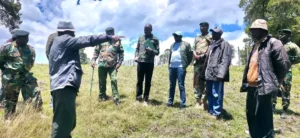
Elgeyo Marakwet County has been selected as a key implementation site due to its rich biodiversity. A tree nursery has already been established in Msekekwa, Keiyo North, where seedlings are being prepared for distribution to farmers.
Officials say the initiative is expected not only to enhance access to affordable cancer treatment but also create new income streams for farmers and preserve indigenous knowledge systems.
generate a mor e powerful insightufl and SEO ptimized headline
KEMRI Unveils Groundbreaking Herbal Medicine Programme to Combat Cancer, Boost Farmers’ Incomes in Kenya
About Author