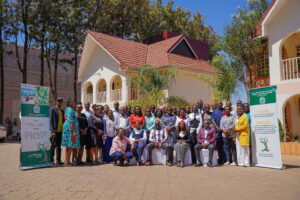
Voices for Change: Senator Kamar, Governor Bii Champion Grassroots Action on GBV in Uasin Gishu
“We cannot normalize violence. No one should die because of love, rejection, or misunderstanding. Kenya must rise above this,” Prof. Kamar

In response to the alarming surge in femicide and gender-based violence (GBV) across Kenya, a powerful town hall meeting was held in Uasin Gishu County, bringing together over 500 residents, policymakers, mental health professionals, and civil society leaders for an open and urgent dialogue on solutions to this growing crisis.
The event was convened by Nominated MCA Hon. Mercy Jepkirui, a gender rights advocate, in partnership with experts including mental health practitioners, marriage counselors, legal professionals, and police officers from the Gender Desk, who together helped frame a people-centered discussion around GBV.
Nominated Senator Prof. Margaret Kamar, speaking in her capacity as a representative of the Kenya Women Senators Association (KEWOSA), called for urgent, coordinated, and multisectoral efforts to address the escalating cases of GBV and femicide.

“This is no longer just a women’s issue — it is a national crisis. President William Ruto’s administration has recognized the gravity of this matter by forming a task force under Justice Nancy Baraza to address femicide and GBV. This forum is a continuation of that important work,” Prof. Kamar stated.
The forum featured a dynamic five-member expert panel including a lawyer, a counselor from Moi Teaching and Referral Hospital (MTRH), a police officer attached to the gender desk, a youth human rights advocate, and a GBV survivor. They unpacked the multilayered drivers of gender-based violence — from deep-rooted patriarchal norms to digital abuse — and outlined legal, psychological, and community-based responses.
Attendees also included members of the Uasin Gishu County Assembly, reflecting a growing political will to confront the issue. In a show of solidarity, Uasin Gishu Governor Jonathan Bii, who was also present, affirmed his administration’s commitment to action.

“GBV is tearing apart our families and our communities. My government is keen on expanding public awareness, especially in rural and underserved areas, and will allocate resources to support community sensitization and survivor support initiatives,” said Governor Bii.
The conversation was grounded in recent findings. According to the Kenya Demographic and Health Survey (2022), 45% of women aged 15–49 have experienced physical or sexual violence. Meanwhile, Amnesty International Kenya reports that 23% of women online have been targeted with digital abuse, underscoring the need to address both physical and virtual dimensions of GBV.
Panelists warned against relying on outdated traditional dispute resolution methods, arguing that they often silence victims and allow perpetrators to go unpunished. Parenting, trauma, economic stress, and toxic masculinity emerged as recurring themes throughout the discussion.
“Many young people are growing up without proper guidance. When children witness violence in the home, they carry that trauma into adulthood. The cycle continues,” noted a counselor from MTRH.
Importantly, participants were given a platform to ask questions, share lived experiences, and suggest community-led solutions. A local lawyer pledged to offer pro bono legal services to survivors, while the MTRH counselor highlighted available safe spaces, reporting centers, and psychosocial support programs.
Prof. Kamar reaffirmed her commitment to translating community input into legislative action.
“As a legislator, I will carry these insights back to the Senate. We need stronger laws, better enforcement, and more funding for survivor support services. But this must also begin at the grassroots — in our homes, churches, schools, and even on social media,” she said.
Jonathan Ngetich, MCA for Kaptagat Ward, also praised the initiative and called for the county government to include anti-GBV programs in the upcoming budget.

“This forum was eye-opening. If these discussions can happen at the ward level, we can change mindsets, reduce stigma, and prevent violence before it happens,” he remarked.
The meeting concluded with a resounding and unified message: Gender-based violence is a crisis that Kenya must face head-on. Through education, policy reform, survivor support, and collective action, communities can become safer for all — regardless of age, gender, or background.
“We cannot normalize violence. No one should die because of love, rejection, or misunderstanding. Kenya must rise above this,” Prof. Kamar declared.
About Author