Uasin Gishu Residents Demand Urgent Action on Gender-Based Violence Amid National Femicide Crisis
In 2024, Kenya recorded 170 femicide cases, marking it as the deadliest year for women in the country’s history.

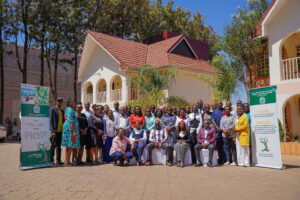
Participants engage in a public forum on gender-based violence at the Uasin Gishu County Hall, contributing their views to the Technical Working Group on GBV and femicide reforms
By Valary Kimathi
In a compelling demonstration of civic engagement, residents of Uasin Gishu County convened at the County Hall to provide their input to the Technical Working Group on Gender-Based Violence (GBV), including femicide. The forum, attended by members of Uasin Gishu civil society network, community-based organizations, and concerned citizens, aimed to address the alarming rise in GBV cases and advocate for critical reforms.
Calls for Educational Reforms and Legal Accountability
Valentine Simei, a prominent advocate for gender equality, emphasized the importance of integrating GBV discussions into the national curriculum. “These are discussions that should not only happen at home,” she stated. “If our young people are not going to learn about consent and bodily autonomy in school, they’ll turn to the internet and potentially absorb harmful misinformation.”
Echoing this sentiment, Haleen Kochabol, a member of the Technical Working Group on GBV, highlighted the necessity of educating youth on recognizing inappropriate behavior. “Our young people need to understand where they are being touched inappropriately and that it’s wrong,” she asserted.
Mercy Jepkurui, a nominated member of the Uasin Gishu County Assembly and a prominent advocate for gender equality, raised concerns about the judicial system’s handling of GBV cases. “Why are individuals accused of killing women being released on bond or bail?” she questioned. “In the ongoing case of athlete Agnes Tirop, the suspect was released on bond and is now missing. Femicide should be criminalized as its own offense, as it represents the most extreme form of gender-based violence.”
Alarming Statistics and the Need for Comprehensive Reforms
The urgency of the forum’s discussions is underscored by recent statistics. In 2024, Kenya recorded 170 femicide cases, marking it as the deadliest year for women in the country’s history. This figure represents a significant increase from the annual average of 85 cases recorded between 2016 and 2023. Alarmingly, 72% of these killings occurred within the victims’ homes, highlighting the pervasive nature of domestic violence.

Despite existing legal frameworks, such as the Sexual Offences Act (2006) and the Protection Against Domestic Violence Act (2015), enforcement remains inconsistent. Activists argue that gaps persist, particularly in addressing issues like marital rape and domestic violence. Moreover, the Kenyan Penal Code lacks specific provisions that adequately capture the complexities of GBV, necessitating comprehensive legal reforms.
Global Context and the Imperative for Action
Kenya’s GBV crisis mirrors a global pattern. According to a UN report, an estimated 140 women and girls are killed daily by their partners or family members worldwide. In 2023 alone, 85,000 women were intentionally killed, with 60% of these deaths occurring at home. Africa, in particular, recorded the highest rates of intimate partner femicide, with 21,700 victims.
These sobering statistics underscore the need for a multifaceted approach to combat GBV. Participants at the Uasin Gishu forum urged the government to enforce stricter laws, roll out widespread awareness campaigns, and increase public forums to facilitate community engagement.
About Author