Relief for Farmers as Government Lowers Maize Seed Prices
The Deputy President announced that the government would continue its development work to bring economic changes that would benefit Kenya.

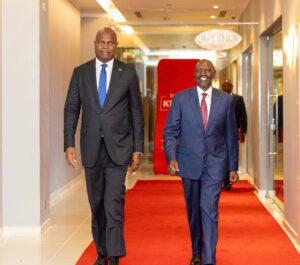
Deputy President Kithure Kindiki/ Photo/Courtesy
By Ruth Sang
The government has reduced certified maize seed prices which provided substantial support to maize farmers throughout the nation. The decision was made after farmers and agricultural leaders from important regions had requested help because they were struggling with the expensive farm inputs.
Deputy President Kithure Kindiki said the decision followed direct intervention by President William Ruto who instructed the Kenya Seed Company to immediately lower seed prices. He described the plan which aims to lower seed costs so that more people will grow maize throughout the country.
Prof. Kindiki conducted his Tuesday project inspection in Trans Nzoia County when he reported that farmers faced problems because seed prices kept increasing which stopped many from planting properly. He confirmed to them that government officials had taken their complaints seriously and acted without delay.
The new pricing structure has established a new price of 260 shillings for a 1-kilogram packet of maize seeds which previously cost 300 shillings. The 2-kilogram packet price will decrease from 600 to 525 shillings while the 10-kilogram bag price will change from 3,000 to 2,625 shillings. The price for a 25-kilogram bag has decreased from 7,500 shillings to its new price of 6,500 shillings. The financial relief measures will assist farmers as they prepare for upcoming planting season expenses.
Trans Nzoia County which people call Kenya’s breadbasket because of its heavy maize production will receive major advantages from this program. The Deputy President emphasized that maize remains a staple food in Kenya which needs to be produced more because the government considers it a top priority.
Prof. Kindiki explained how the government reduced fertilizer prices through seed price cuts and previous governmental interventions. The current fertilizer price has decreased to 2,500 shillings down from 7,000 shillings in 2022. The reduction resulted in a massive maize production increase which climbed from 44 million bags in 2022 to 75 million bags last year.
The government aims to boost production while farmers receive greater profits from the harvests. The reduction in seed prices serves as a comprehensive approach which enables farmers to cultivate crops at lower expenses while achieving greater yields.
The Deputy President praised Trans Nzoia local leaders who included Senator Allan Chesang and Woman Representative Lilian Siyoi because they defended farmer rights. He emphasized their presentation of the issue to the President value showed their strong leadership which they used to protect their people.
Development Projects in Trans Nzoia
Prof. Kindiki examined multiple active government initiatives during his visit which aim to enhance local infrastructure and community prosperity. The Maili Tatu Affordable Housing Project in Saboti Constituency will build 1,035 housing units which back the initiative through 2.7 billion shillings in total project expenses. The 73-kilometre Kitale–Aturkan–Maili Saba–Kesogon–Chepareria–Murpus road project which he assessed currently has a project value of 15.4 billion shillings.
The Deputy President presented to Maili Saba trading centre locals a complete list of ongoing projects which the county planned to execute. The planned county projects will include building 326 kilometres of pathways which will cost 38 billion shillings and establishing 10 modern marketplaces together with multiple affordable housing projects. He confirmed that Kitale National Polytechnic started building student dormitories which will house 1,160 students when the project finishes.
The government uses these projects to achieve its national development strategy which seeks to create equal development opportunities for all regions. The current administration will not permit any area of the nation to experience exclusion from its activities.
About Author