NACADA Welcomes President’s Anti-Drugs Pledge as Clergy, Rights Groups Renew Criticism
“Today, NACADA has what it long claimed it lacked—clear presidential backing and political cover,” Human rights activist Kimutai Kirui.
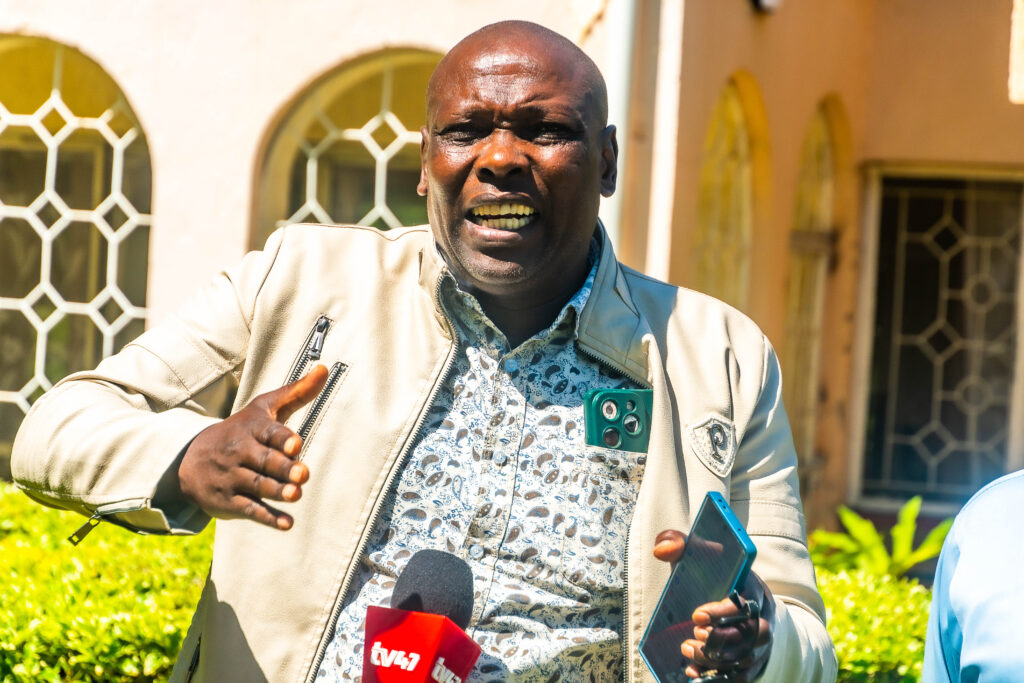
Human rights activist Kimutai Kirui addresses members of the press in Eldoret, calling for urgent reforms and decisive action in the fight against alcohol and substance abuse. Photo: Gideon Ngeno.
The National Authority for the Campaign Against Alcohol and Drug Abuse (NACADA) has welcomed President William Ruto’s renewed commitment to combating alcohol, drug, and substance abuse, following his New Year’s address to the nation, even as the authority faces sharp criticism from sections of the clergy and human rights activists over its track record.
In a statement issued by NACADA Board Chair Bishop Dr. Stephen Mairori, the authority said the President’s address underscored the government’s resolve to confront alcohol and substance abuse as a critical national challenge with far-reaching consequences.
“The President’s New Year’s message reaffirms the Government’s resolve to confront alcohol and drug abuse due to its impact on public health, national security, productivity, and social cohesion,” Dr. Mairori said. “The NACADA Board fully aligns with this national direction and reiterates its commitment to ensuring that Kenya becomes a nation free from the harms of alcohol and drug abuse.”
NACADA said it would strengthen its operational and governance frameworks in line with the President’s remarks, while deepening multi-agency collaboration to enhance prevention, enforcement, and public education efforts.
“Through stronger policy measures, coordinated action, and sustained collaboration across government agencies and stakeholders, NACADA remains resolute in safeguarding the well-being of all Kenyans,” the statement added, noting that the authority appreciated the President’s “leadership and goodwill” in the fight against alcohol and drug abuse.
However, the authority’s endorsement of the President’s address comes barely a day after a section of the clergy in Eldoret, together with human rights activists, called on the Head of State to overhaul NACADA, accusing it of failing to effectively address the alcohol and substance abuse crisis.
Human rights activist Kimutai Kirui was particularly critical of NACADA’s response, describing it as belated and largely symbolic.
“NACADA must awaken from its institutional stupor and confront the crisis it has long abandoned,” Kirui said. “For years, the agency has been absent in practice, present only in name. What we are witnessing now is not leadership but a knee-jerk performance—an exercise in optics rather than governance.”
Kirui argued that Kenya’s challenge is not a lack of policy pronouncements, but weak implementation and enforcement.
“Public compliments do not dismantle criminal networks. Press statements do not rescue poisoned youth. Action does,” he said, adding that NACADA’s failure was “not technical, but political.”
The Centre Against Torture also condemned NACADA’s reaction, terming it a “knee-jerk response” that fails to address the structural and political barriers undermining enforcement against illicit alcohol and narcotics.
According to activists and clergy, the authority has in the past been weakened by political interference and intimidation from powerful actors linked to the illicit trade, leading to stalled enforcement and selective action.
Background data from NACADA and previous reporting by national media indicate that alcohol and substance abuse remains a persistent problem across the country, particularly among young people. Illicit brews have been repeatedly linked to deaths, permanent injuries, and long-term health complications, despite periodic government crackdowns.
In his New Year’s address, President Ruto reiterated that his administration would intensify the fight against illicit alcohol and drugs, warning that the menace poses a serious threat to public health, youth productivity, and national security. He called for enhanced coordination among government agencies and firm action against criminal networks involved in the trade.
Critics say the President’s renewed backing removes any justification for inaction by NACADA.
“Today, NACADA has what it long claimed it lacked—clear presidential backing and political cover,” Kirui said. “This is not the moment for ceremonial praise. It is the moment for enforcement, prosecution, and sustained disruption of criminal networks. Anything less amounts to complicity.”
As pressure mounts, attention is now focused on whether NACADA will translate the President’s commitments into consistent, visible action on the ground in communities most affected by alcohol and drug abuse.
About Author