MP Ndindi Nyoro Sounds Alarm Over State’s Plan to Sell Safaricom Shares, Warns of Massive Losses
According to him, selling Safaricom at a total valuation far below Ksh.2.5 trillion amounts to a deliberate sacrifice of public wealth.

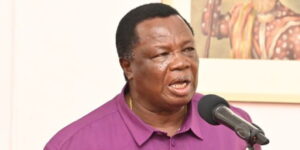
Kiharu MP Ndindi Nyoro speaks during a past fucntion. Photo/Courtesy
By Ruth Sang
Kiharu MP Ndindi Nyoro has sternly warned the government against its plan to sell a 15 per cent stake in Safaricom to Vodacom Group Limited, a deal worth Ksh.244.5 billion. Nyoro accused the proposal of posing a great financial risk to the country and may end up costing the taxpayers billions while addressing the media on Thursday.
The government currently plans to offload 6,009,814,200 ordinary shares at Ksh.34 each. The new sale would see the State’s ownership in Safaricom drop significantly, from the current 35 percent to 20 percent. Nyoro believes the pricing and timing of the sale are deeply flawed, adding that Safaricom should not be disposed of at such a low valuation.
He recalled that the government previously transacted Safaricom shares at Ksh.45 before the company’s major expansion into Ethiopia, where its operations were officially licensed in 2021. According to him, this prior value is proof that the current sale figure severely undervalues the powerhouse telecom.
Nyoro accused those supporting the sale of either mismanaging the national assets or acting out of personal interest. According to him, selling Safaricom at a total valuation far below Ksh.2.5 trillion amounts to a deliberate sacrifice of public wealth.
“There is no basis for selling Safaricom at less than Ksh.2.5 trillion unless incompetence or hidden interests are dictating the process,” Nyoro argued. “The government is taking the side of the buyer and voluntarily walking into a loss. Ultimately, Kenyans will suffer.”
The proposed deal entails an upfront payment of about Ksh.40.1 billion, granted to the government in exchange for the right to future dividends worth about Ksh.55.7 billion—dividends the State would have collected from its remaining stake. Nyoro criticized this move as a short-term approach meant to quickly top up government revenues instead of seeking sustainable economic growth.
“We appear to be more interested in chasing instant cash than in ensuring long-term economic development,” Nyoro said. “Safaricom should never be treated as a short cut towards raising money. If we continue taking the easy option, then this is just the beginning.”
Alternatively, Nyoro suggested that the government should first sell the subsidiary businesses of Safaricom or other non-core investments instead of touching the primary shareholding. He went further to recommend the restructuring of Safaricom into three independent entities, which can be valued and sold separately to ensure maximum value for Kenyans if divestiture were to be an option.
Moreover, the transaction cannot go through until all the regulatory bodies from Kenya, South Africa, and Ethiopia approve of the sale. Additionally, the Capital Markets Authority will also have to rule on whether to exempt Vodacom from making a mandatory takeover offer to minority shareholders. The country awaits whether the government will proceed with the deal or reconsider the issue, as debate around the deal heats up.
About Author