Kisumu Airport Unveils Modern Control Tower in Major Upgrade to Aviation Infrastructure
Company director Polycarp Mburo said the team had finalized the building and completed the ICT infrastructure, leaving KCAA to install the newly acquired operational equipment.

The airport will continue to play a significant role as a major gateway to the Lake Region Economic Bloc and neighboring countries such as Uganda, Rwanda, and Burundi. Photo/Courtesy
By Ruth Sang
A modern air traffic control tower has been completed by the government at Kisumu International Airport, a key milestone in efforts to enhance safety, efficiency, and air management at one of Kenya’s rapidly expanding aviation centres. The new facility will greatly improve operations once the final equipment transfer is completed ahead of its official commissioning.
Interior Principal Secretary Dr. Raymond Omollo led the National Development Implementation Committee in an oversight and verification tour of the new tower. The delegation toured the facility that has now been fully constructed and awaits installation of its operational systems by the KCAA. The project is part of the broader aviation modernization agenda, bolstering Kisumu International Airport’s Class 3 status. The airport will continue to play a significant role as a major gateway to the Lake Region Economic Bloc and neighboring countries such as Uganda, Rwanda, and Burundi.
Dr. Omollo, the chairman of the Governance and Public Administration Sub-Committee of NDIC, was accompanied by more than ten principal secretaries, the solicitor-general, chief executives of several state agencies, regional security officials and senior Kisumu County leaders. He said the mission was part of the government’s plan to track the progress of priority development projects across Nyanza and ensure that ongoing works meet the timelines for delivery.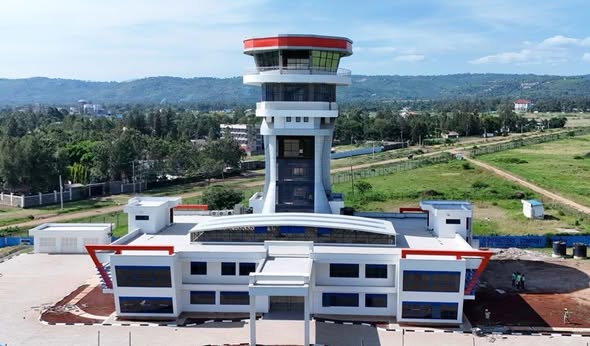
The PS pointed out that the Kisumu control tower was the first of the four flagship projects being evaluated in the region. Others include the Kenya Maritime Rescue Centre, the Lumumba Affordable Housing Estate, and the stalled Kisumu International Convention Centre whose revival is now underway through collaboration between the State Department for Devolution and the county government.
“At this facility, besides the new tower, there is ongoing renovation and expansion of the runway and several other modernisation programmes,” Dr. Omollo said. He added that within the last three years, numerous projects in Nyanza and other parts of the country had been completed or were nearing completion. He called on the media to highlight development achievements realised under the Kenya Kwanza administration.
Principal Secretary in charge of Aviation and Aerospace Development Teresia Mbaika indicated that the new tower meets international aviation regulatory standards, thus enabling air traffic controllers to have full end-to-end visibility of the entire runway, a capability that was lacking in the old tower. “Aviation is highly regulated, and we must meet International Civil Aviation Organization requirements. The previous tower could not offer clear visibility of the whole runway, so this new tower was critical,” she said.
She said that further upgrades are ongoing, with the State Department upgrading the terminal building and the Kenya Airports Authority expanding the remaining 300 metres of runway to accommodate improved aircraft handling. Mbaika maintained that developing regional airports like Kisumu will ease congestion at Jomo Kenyatta International Airport and open western Kenya for more passengers and cargo traffic.
The new tower was constructed by Polish contractors working in partnership with local professionals. Company director Polycarp Mburo said the team had finalized the building and completed the ICT infrastructure, leaving KCAA to install the newly acquired operational equipment. He added that the successful delivery of the project demonstrates the capability of local contractors to implement high-standard public infrastructure when given the chance. “This facility shows that local contractors can deliver to international standards. When we are trusted with major projects, we deliver value and ensure capital remains within the local economy, unlike when international contractors dominate,” Mburo said.
About Author