Kenya to Resume Railway Extension After Six-Year Delay
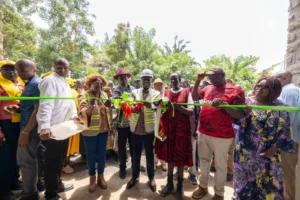
President Ruto will initiate construction work restarting through a Naivasha ceremony which marks an important stage in the country’s efforts to finish its long-stuck railway extension project.

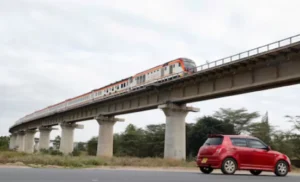
A car passes under a bridge as a train moves along the Standard Gauge Railway (SGR) line constructed by China Road and Bridge Corporation (CRBC) and financed by the Chinese government in Athi River, Kenya, June 3, 2022. Photo/Courtesy
By Ruth Sang
Kenya will restart its multi-billion-shilling railway extension project on Thursday after a six-year shutdown which happened when Chinese funding was cut back. The government will use a new funding method which bases financing on revenue securitisation to restart project operations after using external loans for an extended period.
The railway’s first section between Mombasa and Nairobi became operational in 2017. The project experienced major delays when China stopped financial support for its Belt and Road Initiative which included infrastructure projects throughout Africa. The project stopped construction at Naivasha because of Chinese financing reductions which left the railway more than 350 kilometres away from its Ugandan border. The delay caused disruptions to the regional railway project which aimed to improve East African cross-border trade and regional transportation links.
The halted project faced criticism because it allegedly demonstrated the practice of “debt trap diplomacy” which forces developing nations to accept oppressive infrastructure loan agreements with ambiguous terms. The Chinese government has consistently dismissed these allegations.
Kenya and China renegotiated their existing loan agreements during 2024 after facing increased financial difficulties which allowed Nairobi to decrease its yearly railway repayment schedule during the first two railway construction phases.
Kenya has developed a new financing method to advance the project. The Railway Development Levy funds which governments charge on current cargo transportation will now serve as initial funding to support following construction work. The levy will produce 35 billion shillings which equals approximately 270 million dollars and this revenue will enable upcoming railway project development.
Chinese participation in the project will continue despite changes to the funding plan. Kenya Railways confirmed that China Road and Bridge Corporation remains a contractor but neither project costs nor details about the new contract have been publicly shared.
Analysts state that current progress signals a new phase in China-Africa relations. The 2024 Beijing summit led to both parties deciding to establish investment-based partnerships which would replace their current debt-oriented funding system. The system will maintain ongoing infrastructure projects while addressing the problem of increasing debt.
China stopped lending African nations money after 2019 because it had already invested billions in infrastructure which raised debt sustainability issues. Beijing pledged 50 billion dollars of credit and investments to Africa during the 2024 summit which demonstrated its renewed dedication to the continent. Kenya currently receives advantages from this system through its active joint ventures with Chinese companies which include a 1.5 billion dollar highway expansion project.
The new financing arrangement for Kenya arrives during an essential period. The country cannot borrow more money while it struggles to collect enough tax revenue after protests against tax increases occurred in 2024. President William Ruto’s administration now uses revenue stream securitisation as its primary method to finance essential infrastructure developments.
President Ruto will initiate construction work restarting through a Naivasha ceremony which marks an important stage in the country’s efforts to finish its long-stuck railway extension project.
About Author