Government Moves to Sell 15% Safaricom Stake to Vodacom in Ksh.245 Billion Deal
This places further significance in the deal as Safaricom recently entered the Ethiopian market-one of Africa’s biggest untapped telecom markets.
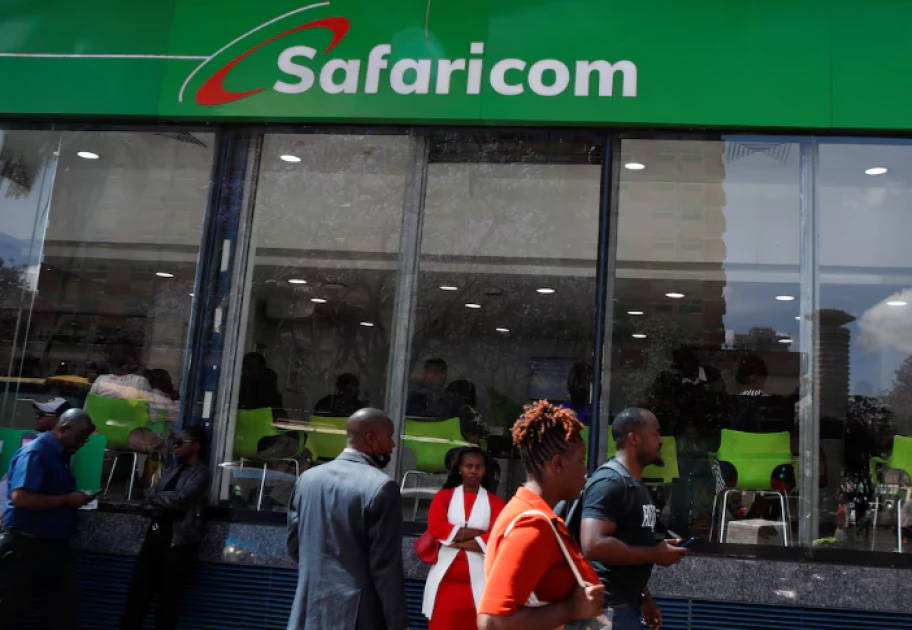
Pedestrians walk outside the Safaricom mobile phone customer care centre.Photo/Courtesy
By Ruth Sang
According to the details of the transaction released by the telecommunications giant, the Kenyan government is planning to sell a 15 percent shareholding interest in Safaricom to Vodacom Group Limited for an estimated Ksh.244.5 billion. The stake represents 6,009,814,200 ordinary shares with a price tag of Ksh.34 apiece, marking a significant shift in ownership of the company.
If the sale goes through as planned, the government’s direct stake in Safaricom will decrease from the current 35 percent to 20 percent. This move forms part of a wider strategy by the National Treasury to unlock capital and generate immediate revenue from its investment in Safaricom, considered the most profitable firm in East Africa.
Concomitantly with the stake sale, Vodacom has committed to an upfront payment of about Ksh.40.1 billion in exchange for the right to receive approximately Ksh.55.7 billion in future dividends that the government would have earned from its remaining 20 percent shareholding. In essence, Treasury is opting to convert its expected future earnings into immediate cash flow, providing a substantial boost to its short-term financial position.
The deal extends beyond the government’s portion: Vodacom will take up an extra 5 percent stake from Vodafone International Holdings. Once both acquisitions go through, Vodacom’s total control in Safaricom will rise from 35 percent to 55 percent, handing the South African telecom powerhouse majority ownership for the first time since Safaricom was listed on the Nairobi Securities Exchange in 2008.
This change in ownership will have significant accounting effects: with majority control, Safaricom will no longer be accounted for as an associate company in Vodacom’s books but will see its full financial performance consolidated into the results of the Vodacom Group. Analysts estimate this will significantly increase Vodacom’s reported revenue, possibly even propelling it toward KES 1.6 trillion once the integration takes hold.
The transaction underscores the increasing influence of Vodacom in Safaricom’s strategic direction, marking a new phase in the telecom’s governance and regional expansion plans. This places further significance in the deal as Safaricom recently entered the Ethiopian market-one of Africa’s biggest untapped telecom markets.
The entire process, despite the excitement around the restructuring, remains subject to various regulatory approvals. It will need approval from various regulatory authorities in Kenya, South Africa, and Ethiopia before the deal can be finalized. In Kenya, the CMA will also determine whether Vodacom qualifies for an exemption from issuing a mandatory takeover bid to minority shareholders. If approved, the transaction will reshape the ownership landscape at Safaricom while further entrenching Vodacom’s footprint in the region’s telecommunications sector.
About Author