UoN Students Block Waiyaki Way as Lecturers’ Strike Sparks Fresh Protests
The demonstrations erupted after students exited the Museum Hill area towards Parklands, blocking the road and disrupting traffic as tensions mounted.
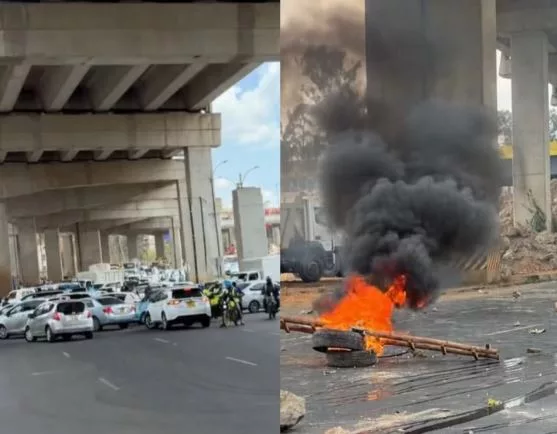
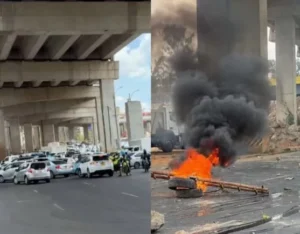
Traffic along Waiyaki Way is brought to a standstill on Tuesday after University of Nairobi (UoN) students took to the streets to protest the ongoing lecturers’ strike, lighting bonfires and barricading sections of the busy highway with stones. Photo: The Star Kenya.
By Robert Mutasi
Traffic along Waiyaki Way was brought to a standstill on Tuesday after University of Nairobi (UoN) students took to the streets to protest the ongoing lecturers’ strike, lighting bonfires and barricading sections of the busy highway with stones.
The demonstrations erupted after students exited the Museum Hill area towards Parklands, blocking the road and disrupting traffic as tensions mounted.
Motorists were forced to turn back or seek alternative routes as police officers moved in to disperse the protesters. Officers fired tear gas, sending students fleeing in different directions as the confrontation escalated.
Police later began removing the barricades in an effort to restore normal traffic flow along the affected section of the highway.
Tuesday’s protests came less than a week after a similar demonstration on October 21, when UoN students blocked parts of Waiyaki Way to demand an end to the lecturers’ strike and the resumption of normal academic activities.
During the earlier protest, students also lit bonfires and barricaded the highway, prompting police intervention to disperse the demonstrators and clear the road.
The renewed unrest underscores growing frustration among university students over the prolonged disruption of learning, with concerns mounting over missed lectures, interrupted examinations and uncertainty about the completion of academic programmes.
The demonstrations come amid a nationwide lecturers’ strike that began on October 2, 2026, following a dispute over the implementation of the 2025–2029 Collective Bargaining Agreement (CBA).
Negotiations between university staff unions and the government have remained contentious, with unions demanding firm financial commitments to implement the agreement, which covers salaries, allowances and other employment terms.
The dispute intensified after talks stalled over a government counteroffer of KSh 11.9 billion to fund the four-year agreement, a proposal the unions rejected as inadequate.
Universities Academic Staff Union (UASU) Secretary-General Constantine Wasonga has maintained that the agreement must be backed by clear funding commitments, particularly from the National Treasury.
The strike has paralysed teaching in public universities across the country, leaving thousands of students uncertain about when lectures and other academic activities will resume.
Tuesday’s demonstrations are likely to increase pressure on the government and university staff unions to resolve their differences and reach an agreement that will end the industrial action.
As the standoff continues, students remain caught in the middle of the dispute, with the prolonged closure of academic activities raising concerns about delayed examinations, disrupted academic calendars and the timely completion of their studies.
About Author