Back Pain on the Rise as Everyday Habits Take a Toll on Kenyans
According to orthopaedic surgeon Dr Gerald Wasena, many of these everyday routines can place repeated stress on the structures that support the spine.
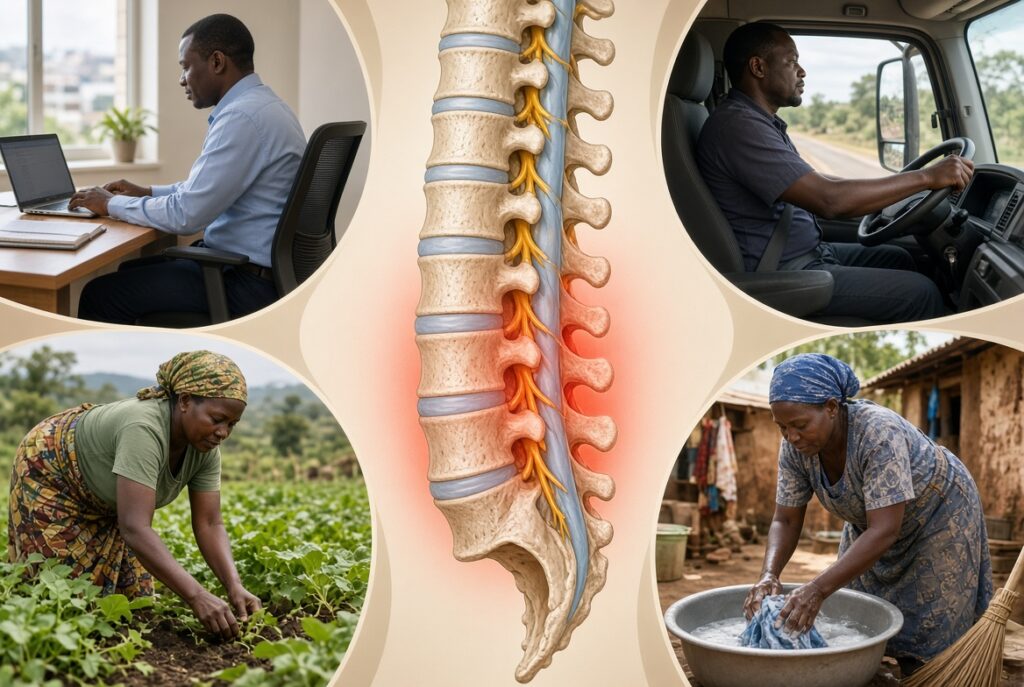
Everyday strain on the spine: From office desks and long-haul driving to farming and household chores, common Kenyan routines place repeated stress on the lower back, a leading cause of rising back-pain cases. Photo: Generated by Hubz Media.
By Robert Mutasi
For years, back pain was widely associated with ageing, heavy manual work and physical injuries. Increasingly, however, Kenyans of different ages and occupations are finding themselves dealing with persistent pain in the lower back.
The problem can affect an office worker who spends most of the day behind a desk, a driver seated behind the wheel for hours, a farmer working in a bent position, or a domestic worker repeatedly bending while cleaning. According to orthopaedic surgeon Dr Gerald Wasena, many of these everyday routines can place repeated stress on the structures that support the spine.
Speaking on Citizen TV’s Jukwaa la Afya, Dr Wasena explained that lower back pain is particularly common because the lumbar region carries much of the body’s weight and is involved in almost every bending, lifting and sitting movement.
The spine is made up of vertebrae separated by discs that act as shock absorbers. The spinal cord passes through the spinal column, while nerves branch out at different levels to connect the brain and spinal cord with the rest of the body. Facet joints, ligaments and muscles also contribute to the stability and movement of the back.
When these structures are repeatedly placed under strain, pain can develop.
The workplace can be part of the problem
Dr Wasena pointed to several occupations in which workers may be exposed to repeated back strain.
Farmers can spend hours bending while planting, weeding or harvesting. Domestic workers may repeatedly bend while sweeping, washing clothes or cleaning floors. Construction workers and traders can lift heavy objects throughout the day.
The manner in which these activities are performed can make a difference.
Repeatedly bending from the waist to pick up heavy objects places considerable stress on the lower back. Using the legs when lifting, keeping loads close to the body and avoiding unnecessary twisting can help reduce the strain.
Long-distance drivers face another challenge. Sitting behind the wheel for several hours limits movement and keeps the back in one position for extended periods.
Office workers can face a similar problem. A person may sit at a desk for much of the working day, drive home and then spend the evening sitting while watching television or using a phone.
The COVID-19 pandemic brought the issue into sharper focus as many people began working from home. Without proper desks and chairs, some workers spent long periods working from couches, beds or other unsuitable positions.
Why young people are also affected
Back pain is not limited to older adults.
Dr Wasena explained that younger people can experience pain because of muscle weakness, poor posture and prolonged periods of inactivity. Modern routines often involve long hours of sitting, whether at work, school, while travelling or using digital devices.
A weak core can make it harder for the muscles around the spine to provide adequate support. Poor posture can then place additional stress on the back over time.
Older adults face different risks. Degeneration of the spine and arthritis become more common with age and can affect the joints and discs.
Disc problems can also produce symptoms that extend beyond the lower back. A damaged or displaced disc may press on a nerve, causing pain that travels from the lower back into the buttocks and legs. Numbness, tingling or weakness may also occur.
Such symptoms can sometimes be mistaken for a hip problem because the pain may be felt in areas away from its actual source.
When back pain needs medical attention
While many episodes of back pain improve with time and appropriate care, persistent or severe symptoms should not simply be dismissed as normal tiredness.
Pain that continues, spreads down a leg, or occurs alongside numbness or weakness warrants medical assessment. Injuries and fractures can cause serious spinal problems, while less common conditions such as tumours can also affect the spine.
Children may develop spinal conditions such as scoliosis, although these represent a smaller proportion of back-related problems.
The presence of warning signs makes professional assessment particularly important because treatment depends on the underlying cause.
Treatment goes beyond painkillers
For many Kenyans, the first response to back pain is to buy painkillers or seek a massage. Dr Wasena’s discussion highlighted the importance of addressing the factors contributing to the pain.
Treatment may include medication where appropriate, physiotherapy and exercises designed to improve strength and movement. In selected cases, other forms of physical treatment may also be considered by qualified professionals.
Strengthening the muscles around the abdomen, pelvis and back can improve the support available to the spine. For some younger patients, addressing muscle weakness and movement patterns through rehabilitation can bring significant improvement.
This means that managing back pain may require changes in daily behaviour rather than relying entirely on medication.
What people eat also matters
The health of the spine is also connected to bone health.
Dr Wasena highlighted calcium-rich foods, including milk and omena, as sources of nutrients important for maintaining strong bones. Omena and other small fish that are eaten with their bones can provide calcium.
Adequate vitamin D is also important because it helps the body absorb calcium. A balanced diet and appropriate exposure to sunlight can contribute to maintaining bone health.
Good nutrition, however, should not be viewed as a replacement for medical treatment when someone has persistent or severe symptoms.
Small changes can protect the back
Preventing back pain often starts with simple changes.
People who sit for long periods can stand up, walk and change position regularly. Workstations should provide adequate support, while drivers can take breaks during long journeys when practical.
Heavy objects should be lifted by bending the knees and using the legs rather than repeatedly folding at the waist. People whose jobs require frequent bending or lifting should also learn safer movement techniques.
Regular physical activity can help maintain the strength and flexibility needed to support the spine.
For millions of Kenyans, the most important lesson may be that back health is influenced by what happens during ordinary parts of the day. The chair at work, the way a load is lifted, the hours spent behind a steering wheel and the amount of physical activity in a person’s routine can all contribute to the condition of the back.
Back pain may be common, but persistent pain, especially when accompanied by numbness, weakness or pain travelling into the legs, should not be ignored. Early assessment can help identify the cause and guide appropriate treatment before the problem becomes more difficult to manage.
About Author