CS Davis Chirchir Backs Annual Vehicle Inspections as New Centres Cost Over Ksh.300 Million
Transport CS Davis Chirchir says annual vehicle inspections will improve road safety, even as the government reveals that setting up a single inspection centre costs over Ksh.300 million.

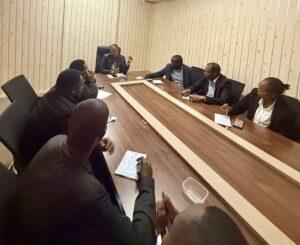
Transport CS Davis Chirchir appears before the National Assembly Committee on Delegated Legislation on May 15, 2026. Photo/Courtesy
By Ruth Sang
Transport Cabinet Secretary Davis Chirchir has defended the government’s proposal to introduce annual vehicle inspections, revealing that setting up a single motor vehicle inspection centre costs more than Ksh.300 million.
Chirchir made the remarks while appearing before the National Assembly Committee on Delegated Legislation, where lawmakers reviewed several proposed traffic regulations aimed at improving road safety and strengthening enforcement across the country.
The session, chaired by Samuel Chepkonga, examined the proposed Traffic (Commercial Service Vehicle) Rules, 2026, Traffic (School Transport) Rules, 2026, Traffic (Motor Vehicle Inspection) Rules, 2026, and the Traffic (Drink Driving) Regulations, 2026.
According to the Ministry of Roads and Transport and the National Transport and Safety Authority, the proposed regulations are designed to address the increasing number of road accidents involving both private and commercial vehicles.
Speaking before the committee, Chirchir said the reforms are necessary to improve accountability among motorists and ensure safer roads.
“These regulations are intended to ensure that only roadworthy vehicles operate on Kenyan roads while strengthening accountability among operators and improving public safety,” Chirchir told lawmakers.
The Cabinet Secretary explained that the high cost of constructing inspection centres has forced the government to consider decentralising the service through licensed private inspection facilities.
Under the proposed regulations, private vehicles older than four years will be required to undergo inspections every year instead of the current inspection cycle conducted once every two years.
The National Transport and Safety Authority says the changes are aimed at identifying mechanical faults early and improving compliance with road safety standards.
The authority further noted that commercial service vehicles continue to account for a significant number of fatal road crashes due to poor maintenance, overloading, driver fatigue, weak enforcement, and limited use of modern safety technology.
Committee Vice Chairperson Robert Gichimu questioned whether the government has sufficient capacity to implement vehicle inspections across all 47 counties without heavily relying on private investors.
“Does the government have sufficient capacity to roll out inspections countrywide, or will the Ministry require a grace period to ensure inspection centres are fully operational?” Gichimu asked.
At the same time, committee chairperson Samuel Chepkonga raised concerns over delays in removing stalled vehicles from major roads, warning that such incidents continue to contribute to deadly highway accidents.
“You need to address the issue of how long it should take to remove a stalled vehicle from the road. There should be a clearly defined minimum response period,” Chepkonga said.
In response, Chirchir assured lawmakers that the Ministry would continue engaging stakeholders and conduct nationwide public awareness campaigns before the regulations are implemented.
“We have taken note of all your sentiments and input. We will continue engaging this Committee to ensure the regulations are practical and effective,” he stated.
About Author