Kenya’s First World Objective is Preachable, Deputy President Kindiki Declared.
But the Deputy president clarified that Kenya’s development vision is not based on the imitation of the model of one country, but leaning from various successful strategies of Asian economies.
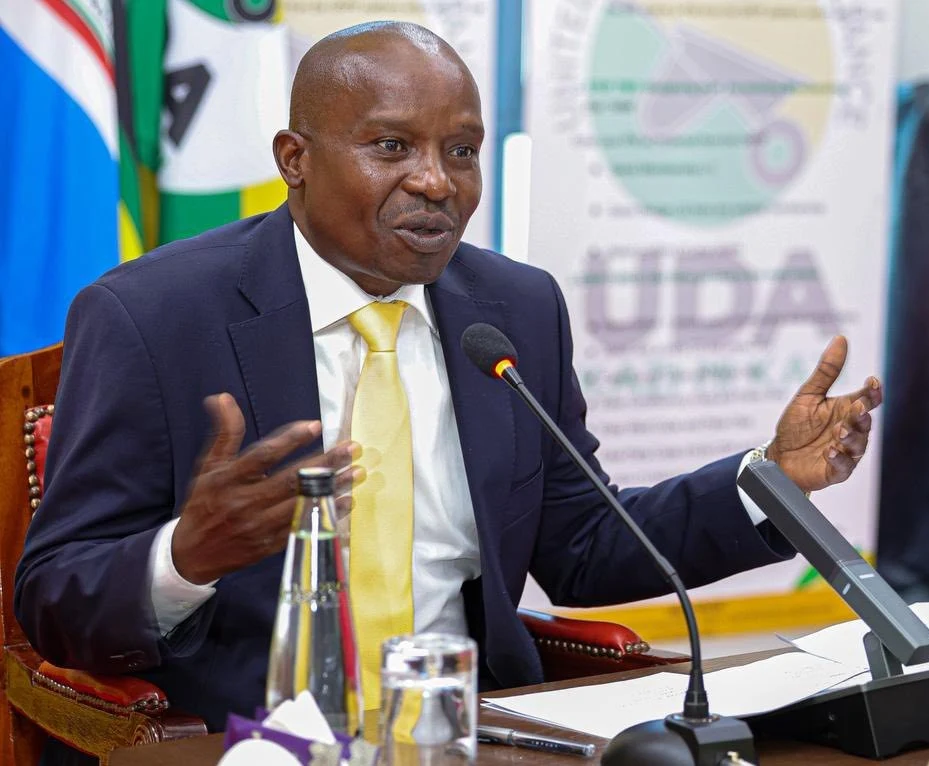
Deputy President Kithure Kindiki.Photo/Courtesy.
By Ruth Sang
Deputy President Kithure Kindiki has unshakably braved the argument of Kenya’s ambition to reaching a first-world status, dismissing claims that it is an unrealistic goal. He stated that indeed transforming Kenya from an underdeveloped to a developed state is possible and within the lifespan of the present generation, if the right prescriptions and national commitment are sustained.
In describing the long term pathway of development for Kenya, Kindiki explained that most skeptics usually downplay Kenya’s ambitions by making negative comparisons with tiny Singapore and different circumstances. But the Deputy president clarified that Kenya’s development vision is not based on the imitation of the model of one country, but leaning from various successful strategies of Asian economies.
“Kenya has been on the journey to first world status, not pegged by emulating one nation,” Kindiki said. “We are studying and applying lessons from several Asian countries that have had a very rapid economic growth due to discipline, strategic planning, and consistent reforms.”
How better leadership and foresight can fashion even very large and labyrinthine states, of which he cited China as an interesting example. He noted that in itself, China, which covers about 9.6 million square kilometres has a population of roughly 1.5 billion people, is far bigger than Kenya because both in land mass and population.
“The major shift in China’s economy began only in 1978, and that is very recent in terms of history,” he said. “In just over four decades, it went from a state of widespread poverty and isolation into becoming a global economic powerhouse and developed economy.”
According to the Deputy President, China’s experience showcases how anything is possible for fast transformation of any nation if clear policies are adhered to and a country pours efforts to invest in its people and systematic agenda for development.
Closer to home, Kindiki, said Kenya’s size and population presents opportunities rather than inhibit limitations. Approximately 582646 square kilometers and estimated to have a population of 55 million, this makes Kenya very well placed to realize acceleration in development if it continues to keep its laser focus on economic reforms, infrastructure expansion, industrial growth, and investment in its human capital.
“Our geography and population are not obstacles,” he said. “What truly matters is having a clear vision, staying consistent in implementation, and remaining committed to national priorities.”
The Deputy President again reiterated that the government sees Kenya well on the trajectory towards prosperity as a result of and due to the ongoing investments in infrastructure, education, manufacturing, agriculture, and technology. All these add up as the pillars of sustainable economic development and global competitiveness.
Kindiki remained positive and optimistic that the current generation will see the country’s throwaway targets at least give prospects or otherwise realistic goals to target. Provided citizens remained united and inculcated hard work and patience, Kenya’s dream will come true.
“Kenya will become a first-world nation in our lifetime,” he said. “History has proven that transformation is possible and, with unity and determination, Kenya will not be an exception.”
He urged the people of Kenya not to continue believing the negative and defeatist narratives; he instead called Kenyans to create a common national purpose towards building a modern, prosperous, and globally competitive country.
About Author