US and China Poised to Resume Trade Talks Amid Hopes for 90-Day Truce Extension
American security officials are concerned that these high-end chips would aid in bolstering China’s military power and technology competitiveness.
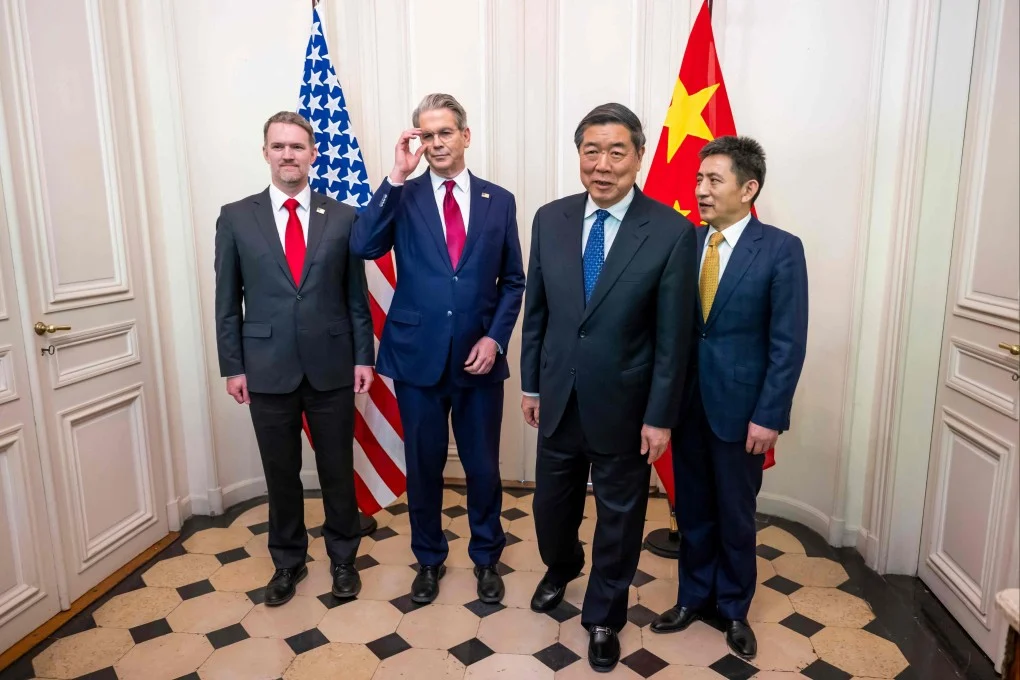
Treasury Secretary Bessent was upbeat last week, describing the negotiations with China as "in a very good place," implying that yet another truce could be agreed to during this ongoing round of talks. Photo Courtesy
By Juliet Jerotich
The United States and China are set to resume high-level talks on Monday as mounting optimism grows that the two nations will be able to agree a further 90-day extension of their existing trade war truce.
The fresh round of negotiations, to be held in Sweden, will be led by U.S. Treasury Secretary Scott Bessent and Chinese Vice Premier He Lifeng. The talks come immediately on the back of U.S. President Donald Trump‘s announcement of a tariff agreement framework with the European Union, which indicated a potential easing of global trade tensions.
The present Washington-Beijing truce, which reduced each side’s tariff on the other temporarily, runs out on August 12. Both nations have substantially imposed tariffs on each other’s imports since Trump’s return to the White House in January. Tariffs have gone beyond 100% in some cases. The temporary 90-day suspension was agreed on initially after Geneva and London meetings this year, aimed at preventing further economic tension.
Treasury Secretary Bessent was upbeat last week, describing the negotiations with China as “in a very good place,” implying that yet another truce could be agreed to during this ongoing round of talks. Sources briefed on the deal by the Hong Kong-based South China Morning Post indicate both parties are willing to extend the tariff pause by three more months.
This was followed by a parallel development where the Financial Times said that Washington has temporarily eased restrictions on the export of technology to China. This is done in order to provide that there is a favorable climate for trade talks and can result in President Trump and Chinese President Xi Jinping meeting later this year. Technology exports, particularly high-end chips used in artificial intelligence (AI), have been the focal point of the trade dispute. American security officials are concerned that these high-end chips would aid in bolstering China’s military power and technology competitiveness.
The fresh negotiations come soon after Washington struck recent trade deals with the EU and Japan. On Sunday, President Trump and European Union President Ursula von der Leyen introduced a new trade deal, ending months of acrimony between the world’s two largest economic blocs. Similarly, Trump last week announced a giant trade deal with Japan, including a $550 billion investment in America by Japan and a reduced tariff rate of 15% for Japanese goods entering American markets—much lower than the previously threatened level of 25%.
Other tariff agreements have also been reached with Indonesia, the UK, and Vietnam, as Britain secured the lowest U.S. tariff rate of 10%.
Though no major breakthrough is anticipated from the ongoing negotiations between the U.S. and China, optimism that the global economy will avoid a next wave of tariff escalation has been provided by expectations of an extension of the truce.
About Author