Lawmakers Demand Urgent Reforms Amid Scrutiny of Health Committee Over Mismanagement and Funding Gaps
He stressed that coverage under the Social Health Insurance Fund (SHIF) includes the entire pregnancy period, delivery, and any complications that may arise.
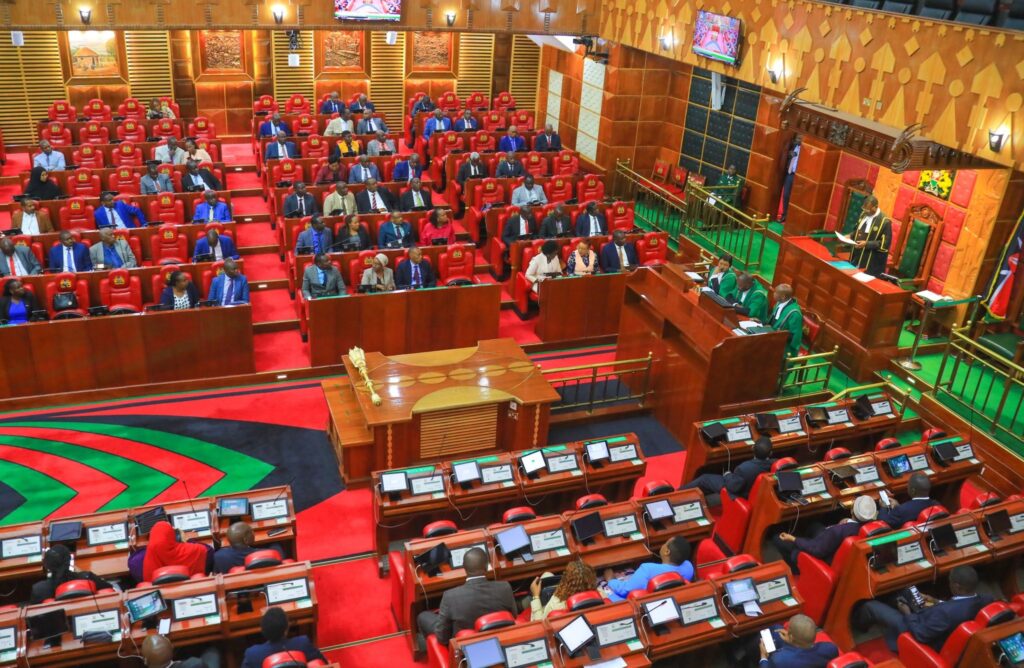
The country’s healthcare system has come under intense scrutiny as lawmakers question the inefficiencies of the Social Health Authority (SHA), citing mismanagement, funding cuts, and delays in implementation. Photo/Parliament of Kenya.
By Joy Jeelagat
The country’s healthcare system has come under intense scrutiny as lawmakers question the inefficiencies of the Social Health Authority (SHA), citing mismanagement, funding cuts, and delays in implementation.
A heated parliamentary session on February 10 exposed significant flaws, leading to urgent calls for reforms to ensure the smooth rollout of key health initiatives.
During the hearing, a Member of Parliament highlighted concerns over financial misallocation, revealing that while Parliament had allocated KSh 4 billion to SHA, only KSh 375 million had been utilized.
The MP argued that the funding was adequate to support full operationalization, questioning why progress remained slow.SHA officials countered these concerns by pointing out that the National Health Insurance Fund (NHIF) had left a substantial pending bill of KSh 30.9 billion.
They warned that this financial burden could hinder the implementation of Universal Health Coverage (UHC) and other essential programs aimed at improving healthcare accessibility.
Principal Secretary for Medical Services, Harry Kimtai, emphasized the need to review primary healthcare benefit packages.
“We have subjected this to a tariff review committee, which will provide a gazetted tariff set,” Kimtai stated.
The removal of necessary funds, he cautioned, could derail critical health programs, leaving many citizens without adequate medical support.
SHA’s capitation model is based on the number of registered Kenyans, specifically those in areas served by Level 2 and 3 hospitals.
Acting CEO of the Digital Health Agency, Anthony Lenaiyara, explained that SHA utilizes data analytics to determine hospital treatment trends, ensuring that capitation payments are made to facilities accordingly.
He confirmed that SHA had paid hospitals KSh 1.3 billion in the last quarter through direct facility payments.Lawmakers also raised alarms over drastic funding reductions for maternal health programs.
In response, Kimtai reassured Parliament that the Linda Mama program remains active, providing free maternity care for mothers and pregnant teenagers.
He stressed that coverage under the Social Health Insurance Fund (SHIF) includes the entire pregnancy period, delivery, and any complications that may arise.
The hearing also delved into concerns regarding renal healthcare, focusing on the allocation of funds for dialysis and transplant therapies.
Dr. Tracey John, a healthcare expert, explained that the tariffs were determined through a detailed cost analysis and extensive stakeholder engagement before being finalized.
“Post-renal transplant care is now included in the SHA package, covering dialysis patients who require transplants. Under SHIF, each household receives KSh 200,000 annually for this service,” Dr. John noted.
With mounting concerns over financial mismanagement and delayed implementation of key health programs, lawmakers are pushing for urgent reforms to enhance accountability and ensure timely healthcare service delivery to all citizens.
About Author